










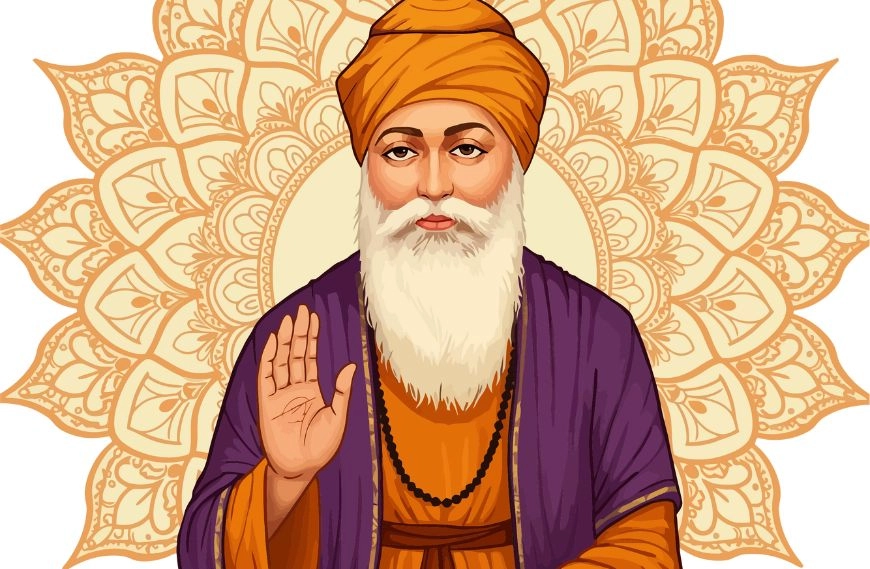
Every year, as the golden lights of Guru Nanak Jayanti illuminate gurdwaras across the world, there’s something deeply comforting about the aroma of langar wafting through the air. Rows of people sit shoulder to shoulder, sharing a simple meal made with devotion. It is not just food being served; it’s equality, compassion, and love being passed from one hand to another.
As Guru Nanak said, “Before becoming a Hindu, a Muslim, or a Christian, let us become human first.” These words carry even greater weight today, in times when divisions seem louder than love. His message was never about separation, but unity a call to see humanity as one shared family.
Guru Nanak Dev Ji, the founder of Sikhism and the first of the ten Sikh Gurus, was not just a spiritual leader but a voice of reason in a divided world. Born in 1469 in Talwandi (now Nankana Sahib in Pakistan), his message was simple yet revolutionary: there is one God, and all human beings are equal, regardless of caste, creed, or gender. His life was a reflection of these teachings, rooted in kindness, humility, and service.
Today, more than five centuries later, his words still echo through everyday acts of goodness. When people serve langar to strangers, teach underprivileged children, or lend a helping hand to someone in need, they are unknowingly walking the path Guru Nanak once showed. The idea of seva selfless service is not confined to temples or religious spaces anymore; it lives in the streets, homes, and workplaces of those who believe in doing good quietly.
Walk into any gurdwara today, and you’ll see Guru Nanak’s philosophy in motion. There is no hierarchy in the langar hall. A businessman, a farmer, a child, and an elder all sit together, eating the same meal. In a world that constantly reminds us of our differences, this shared experience reminds us of something greater than our shared humanity. That is the essence of sarbat da bhala, the welfare of all a principle that still defines Sikh life and continues to inspire millions beyond the community.
Guru Nanak’s teachings were never about rituals; they were about real life. He spoke of hard work (kirat karo), honest living, and sharing what you have (vand chakko). These are timeless lessons that fit perfectly even in our modern lives. When someone donates food to the needy, speaks truth in a tough situation, or chooses to treat everyone with respect they are celebrating Guru Nanak Jayanti in its truest sense.
This day is not only a festival; it is a reminder to pause and reflect on whether we are living by the values we admire in the Guru. In a world driven by competition, his message of simplicity and equality feels like a quiet voice calling us back to what really matters: compassion and connection.
Across India and the world, you’ll see this spirit come alive from grand Nagar Kirtans that fill streets with hymns and colour, to community kitchens that serve thousands without asking who they are or where they come from. It’s a day when faith transcends boundaries, when generosity replaces ego, and when the act of giving becomes an act of gratitude.
Guru Nanak’s legacy is not locked in the past; it flows through people who choose love over judgement, inclusion over exclusion, and peace over pride. As we celebrate Guru Nanak Jayanti, perhaps the best tribute we can offer is not in words or rituals, but in how we live every day with empathy, humility, and a willingness to serve.
Because in the end, Guru Nanak’s message was never just about prayer. It was about how we treat one another. From langar to love, his teachings continue to nourish hearts, reminding us that true faith lies not in what we believe, but in how we live.
Subscribe Deshwale on YouTube


