









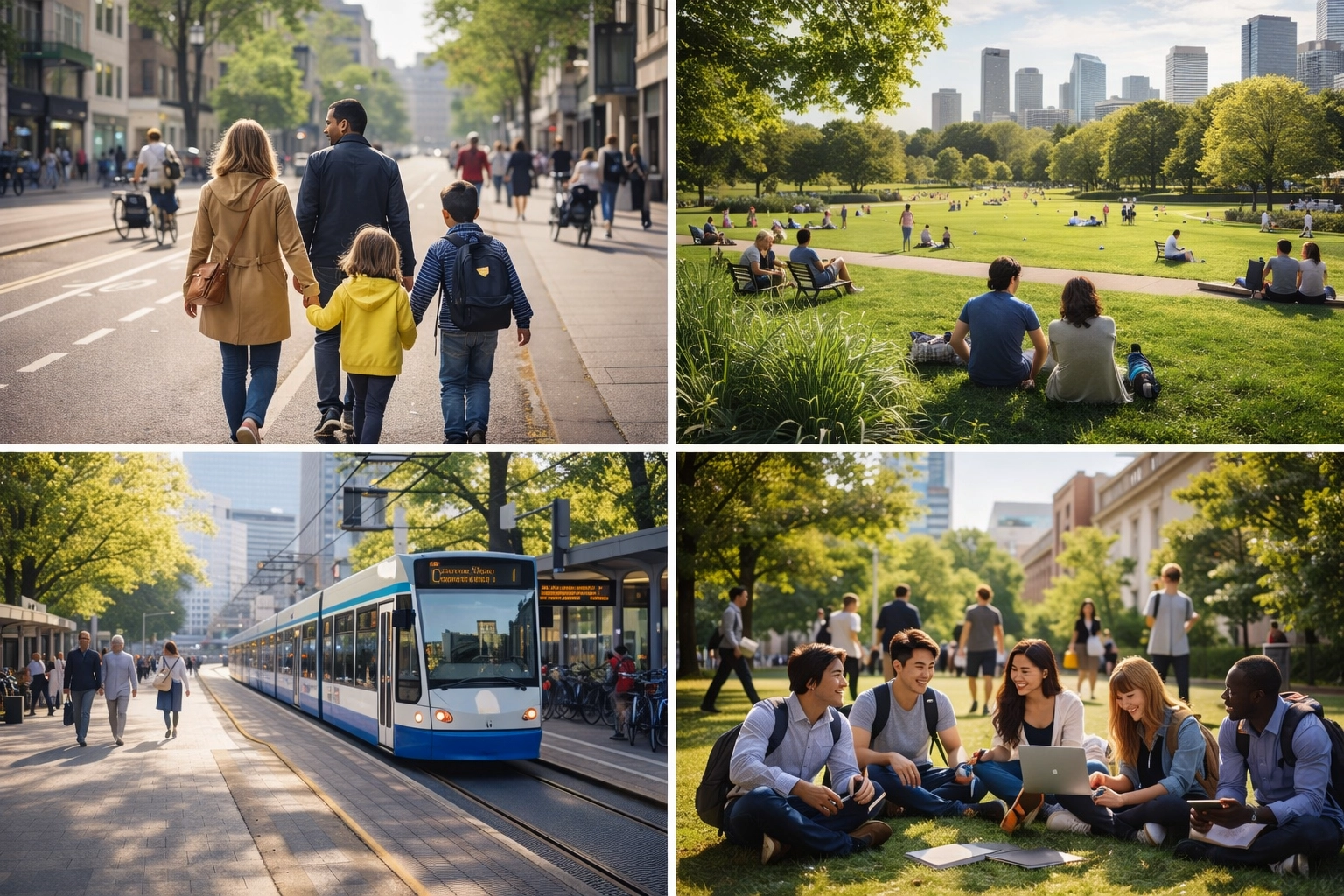
As we reflect on the examples of livable societies from across the globe, a question naturally emerges: are these conditions replicable? Can most of the world, including nations struggling with instability, learn from the models that combine security, opportunity and quality of life?
The short answer is that there is no single formula, but there are common principles that underlie livability. Across continents and cultures, societies that consistently rank high in quality of life tend to share certain foundations. These foundations do not always look identical in practice, yet their presence can be recognised in cities and countries where people feel safe, supported and able to build meaningful lives.
- Security of person and property: A society where people can walk its streets, raise families and conduct business without pervasive fear. Security is the bedrock upon which all other aspects of life are built. When citizens trust that their homes, communities and institutions will protect them, they are more willing to invest their time, creativity and resources in the future. The absence of constant insecurity allows everyday life to flourish in ways that outsiders often take for granted.
- Effective public services: Accessible healthcare, quality education and dependable infrastructure that reduce the risks in daily life. In countries where these systems function reliably, citizens are freed from the constant anxiety of navigating broken institutions. A parent sending a child to school, a patient entering a hospital, or a commuter relying on public transport can expect a basic standard of care and efficiency. These systems do not eliminate life’s uncertainties, but they significantly reduce the vulnerabilities that individuals must face alone.
- Social safety nets: Systems that cushion individuals and families against economic shocks, illness and life transitions. The modern world is inherently unpredictable. Jobs disappear, industries evolve, and personal circumstances change. Societies that recognise this reality tend to design mechanisms that soften the impact of such changes. Unemployment benefits, public pensions and community support programmes ensure that temporary setbacks do not permanently push people to the margins of society.
- Opportunity and inclusion: Economies that offer paths for meaningful employment and upward mobility to large segments of society. Livability is not merely about comfort; it is also about possibility. When citizens believe that effort and talent can translate into improved living standards, societies become more dynamic and cohesive. Opportunity fosters a sense of participation in a shared national project, where success is not restricted to a narrow elite but available, at least in principle, to many.
- Environmental quality: Clean air and water, access to nature and urban planning that prioritises human well-being. Increasingly, the most livable places are those that recognise the importance of environmental balance. Parks, public spaces and sustainable planning create cities that are not only efficient but also humane. The presence of nature in everyday life contributes to both physical health and psychological well-being, reinforcing the idea that development need not come at the expense of quality of life.
The countries we have examined in this series achieve these principles in different ways, shaped by their histories, cultures and public choices. What unites them is a recognition that the purpose of a society is not merely economic output but the well-being of its people. Economic growth, in these contexts, becomes a tool rather than an end in itself. It serves the broader objective of building communities where individuals can pursue fulfilling lives with dignity and security.
For nations still striving to escape cycles of insecurity, whether economic or political, these conditions offer a roadmap. They show that livability is not an abstract ideal reserved for the fortunate few, but a tangible combination of governance, investment and social cohesion. Achieving such conditions may take decades and require difficult reforms, but the experiences of livable societies demonstrate that progress is possible.
More than anything, these societies challenge a pervasive global assumption: that prosperity naturally trickles down or that security will automatically follow economic growth. The experience of livable countries suggests that deliberate public policy and collective commitment are required to translate wealth into widespread stability. Without intentional investment in institutions, services and social trust, economic expansion alone rarely produces genuinely livable environments.
In a world facing multiple uncertainties, from climate change to geopolitical tension, the existence of genuinely livable societies is not just an inspiration. It is evidence that human ingenuity, when aligned with social values, can produce environments where people live not in fear or mere subsistence, but with confidence and hope.


