



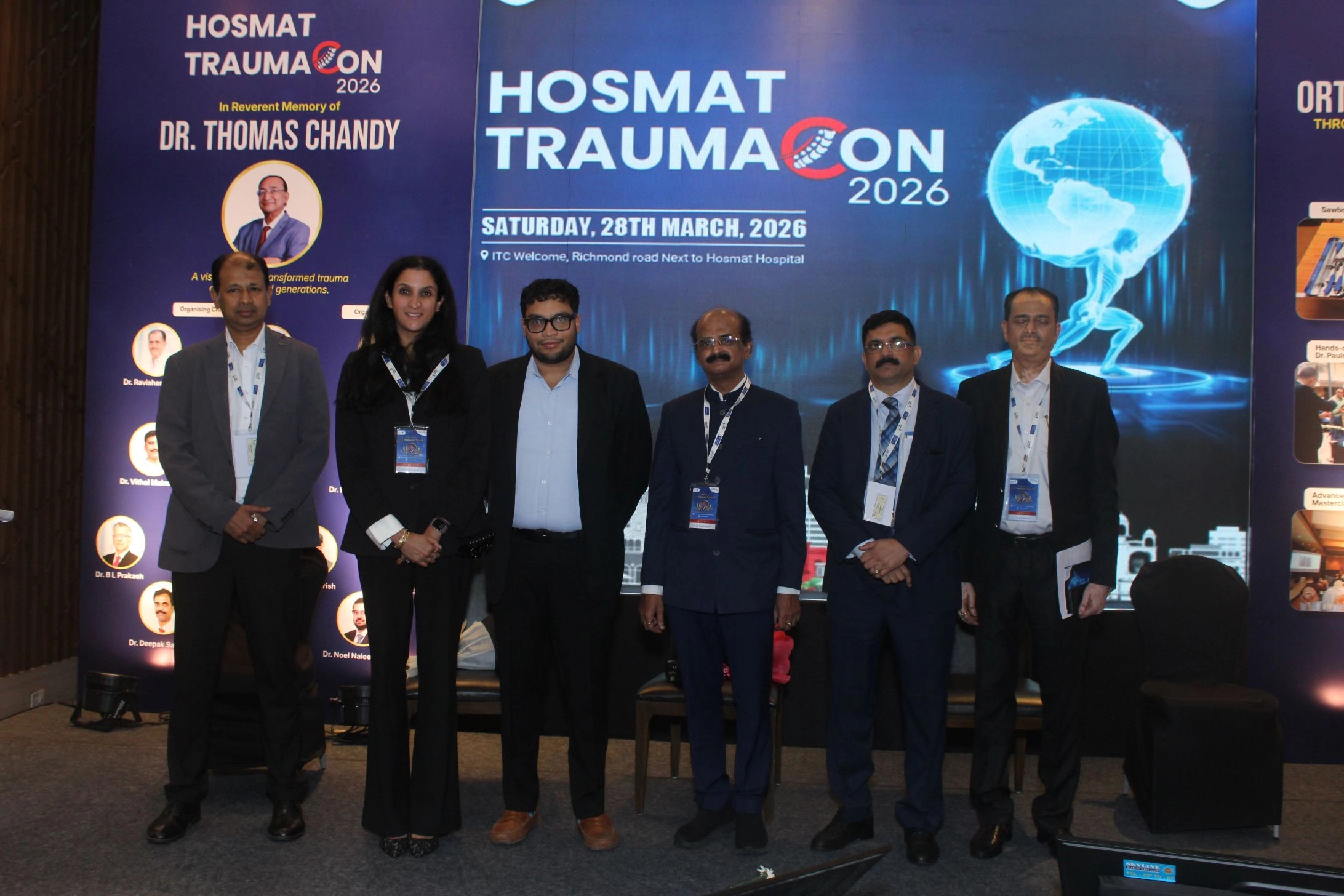
In a significant move to strengthen trauma care systems in India, HOSMAT Hospitals hosted a major trauma conference in Bengaluru where it launched the Golden Hour Network (GHN), a new professional platform aimed at improving emergency response and trauma outcomes across the country.
The initiative was unveiled during HOSMAT Traumacon 2026, a practice-driven trauma conference organised in collaboration with the Bangalore Orthopaedic Society. The event brought together more than 150 orthopaedic surgeons, trauma specialists and clinicians from across India to discuss real-world challenges in trauma management and explore new approaches to patient care.
The Golden Hour Network takes its name from the critical first hour after an injury, often considered the most important period for saving a patient’s life. Timely treatment during this window can significantly improve survival rates and reduce complications.
According to organisers, GHN is not simply an alumni group but a structured professional network that connects surgeons trained within the HOSMAT ecosystem. The initiative aims to encourage collaboration, knowledge sharing and rapid response among trauma specialists.
The network will operate through regular academic and clinical engagements. These include monthly clinical discussions, quarterly speciality-focused meetings and an annual Traumacon conference that will serve as the platform’s main gathering.
Officials said the network will spend the next six months establishing its governance structure, onboarding senior alumni surgeons and launching its first clinical collaborations.
The conference also highlighted the growing need for stronger trauma systems in India. The country records more than 4.8 lakh road accidents each year, resulting in approximately 1.7 to 1.8 lakh deaths annually. Trauma remains one of the leading causes of death among young adults, making timely and coordinated emergency care critical.
Over the past three decades, HOSMAT has emerged as one of the country’s major trauma centres. The institution currently performs between 25 and 30 trauma surgeries every day, placing it among India’s highest-volume trauma hospitals.
Beyond clinical care, the hospital has also played a major role in medical research and training. Over the years it has conducted more than 300 research initiatives and produced more than 80 publications in internationally indexed journals. It has also trained a significant number of orthopaedic specialists in Bengaluru.
Estimates from the Orthopaedic Society of India suggest that nearly 10 percent of orthopaedic surgeons practising in Bengaluru have received training at HOSMAT.
The conference was held in memory of Dr Thomas Chandy, a pioneering orthopaedic surgeon whose work helped shape modern trauma care in the country. Speakers at the event emphasised that his focus on precision, discipline and patient-centred care continues to guide the institution’s philosophy.
Medical experts at the conclave stressed that improving trauma outcomes in India requires stronger coordination between hospitals, surgeons and emergency response systems. Platforms such as the Golden Hour Network, they said, can play an important role in building that collaboration.
With strong participation and a practical focus on real clinical challenges, organisers expect Traumacon to evolve into a national platform for trauma education, research and collaboration in the coming years.
