










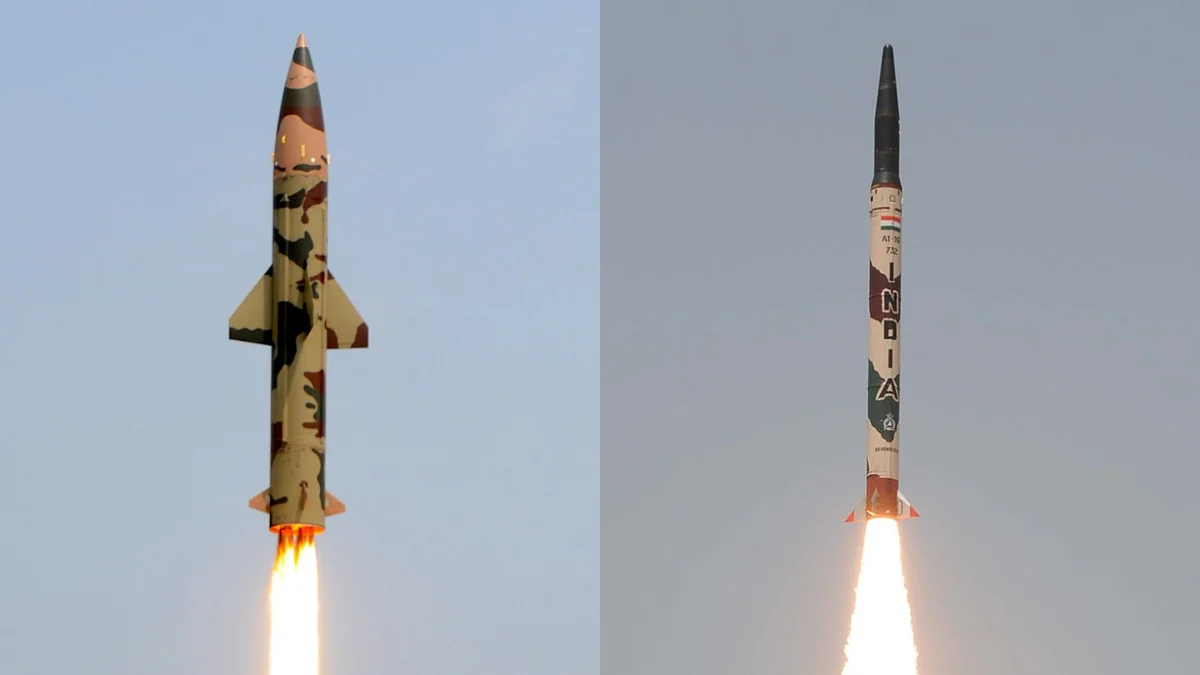
In a powerful show of military readiness, India on Wednesday successfully test-fired its nuclear-capable ballistic missiles Agni I and Prithvi II from two separate locations off the Odisha coast. The back-to-back launches were part of a routine user training exercise conducted by the Strategic Forces Command, showcasing the country’s robust deterrence capabilities and precision strike potential.
Coordinated Launch from Twin Sites
The Prithvi II missile was launched from the Integrated Test Range in Chandipur at around 7:30 pm. Shortly after, Agni I was test-fired from APJ Abdul Kalam Island, located further down the coast. Both launches were conducted under the operational control of the Strategic Forces Command.
These tests were part of routine military drills intended to validate the performance and operational readiness of India’s missile systems under real-time conditions.
No Public Warning Issued
Interestingly, there was no Notice to Airmen (NOTAM) issued for these launches, which is typically done in advance. However, sources confirmed that all necessary notifications were shared through official and diplomatic channels.
Missile Capabilities
- Prithvi II:
- Range: 350 kilometres
- Payload: Up to 500 kilograms
- Equipped with an advanced navigation system for high accuracy
- Designed for quick deployment and precision targeting
- Range: 350 kilometres
- Agni I:
- Range: 700 kilometres
- Payload: Around 1,000 kilograms
- Capable of carrying both conventional and nuclear warheads
- Forms part of India’s strategic deterrence programme
- Range: 700 kilometres
Strategic Message
Officials stated that the twin tests reaffirm India’s policy of credible minimum deterrence. While there was no official comment linking the launches to current geopolitical tensions, defence sources clarified that the drills were pre-planned and part of a scheduled training cycle.
Agni and Prithvi missiles remain a crucial component of India’s land-based nuclear delivery system, enhancing strategic stability in the region.


