









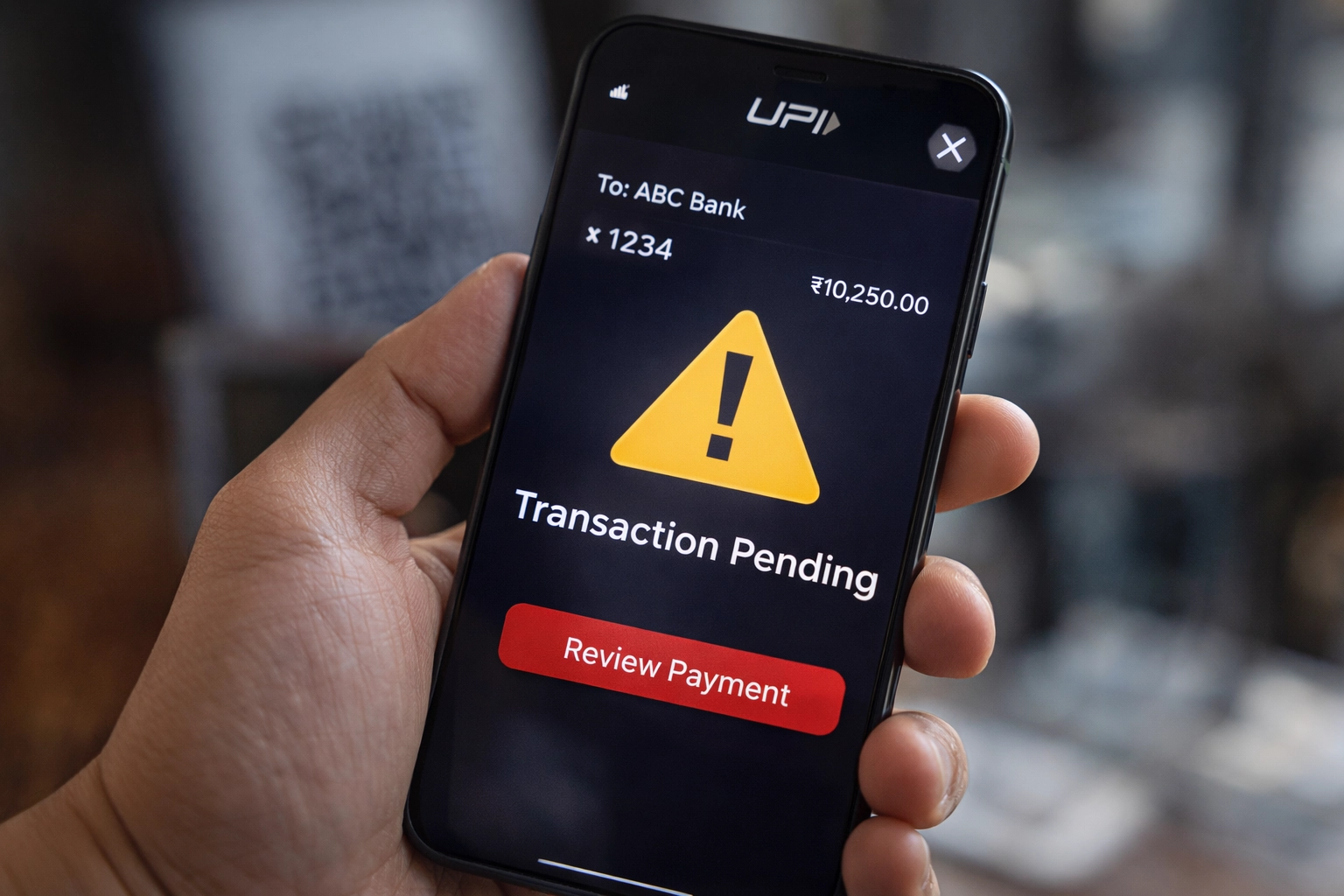
India built the world’s most enviable digital payments system on one promise: instant. Tap, confirm, and do money moves before you’ve put your phone back in your pocket. But that very speed, which made UPI a global benchmark, has quietly become a fraudster’s best friend. And now the Reserve Bank of India wants to slow things down, on purpose.
In a discussion paper released this week, the RBI has proposed introducing a one-hour cooling-off period for all account-to-account transfers above ₹10,000 covering UPI, IMPS, net banking, and cards. It’s a modest but potentially game-changing intervention that could reshape how hundreds of millions of Indians think about sending money.
The Numbers That Forced RBI’s Hand
The scale of digital payment fraud in India is no longer a footnote, it’s a headline crisis. Reported fraud cases jumped from 2.6 lakh in 2021, worth ₹551 crore, to a staggering 28 lakh cases in 2025, worth ₹22,931 crore. That’s more than a tenfold surge in just four years, and the trajectory shows no sign of flattening.
What makes this wave of fraud particularly difficult to fight is that it rarely involves hackers breaking into systems. The RBI’s paper is candid about this: the real weapon is psychology. Fraudsters pose as police officers, bank officials, or government agents, manufacture panic, and push victims into transferring money themselves, a category known as Authorised Push Payment, or APP fraud. By the time the victim realises what happened, the money has already cleared through instant channels with almost no chance of recovery.
Slowing Down to Stay Safe
The proposed one-hour delay is designed to break that psychological trap. Under the mechanism, a transfer above ₹10,000 would trigger a provisional debit; the funds leave your account and enter a holding state for sixty minutes. During that window, you can cancel the transaction entirely. The RBI’s reasoning is pointed: fraudsters thrive on urgency and psychological pressure. A forced pause takes that weapon away from them.
Everyday payments won’t be affected. Merchant transactions, your Swiggy order, electricity bill, or grocery run are exempt. The friction only kicks in when you’re moving larger sums person-to-person, which is precisely where most fraud is concentrated. Notably, 98.5% of reported fraud value comes from transactions above ₹10,000, which makes the threshold a logical one.
A Layered Shield for the Vulnerable
The one-hour delay is just one piece of a broader package the RBI is putting on the table. Three other proposals accompany it.
Senior citizens and persons with disabilities would get an additional layer of protection. Anyone aged 70 or above would need to nominate a trusted person, a family member or caregiver whose approval would be mandatory before any transfer above ₹50,000 could go through. It’s a friction point, but a meaningful one: this demographic accounts for nearly 92% of the total fraud value reported to the National Cyber Crime Reporting Portal.
Accounts with incomplete or low-grade KYC often used as conduit “mule accounts” by fraudsters to move stolen funds would face tighter restrictions on receiving large credits. This closes a back-end loophole that fraud networks have exploited for years.
Perhaps the most applauded idea in the proposal is the “kill switch” a single button that lets any user instantly disable all their digital payment capabilities the moment something feels wrong. Simple, powerful, and long overdue.
The RBI is also floating a 24-hour delay for transfers above ₹50,000 specifically for citizens aged 70 and above, adding an even stronger buffer for those most at risk.
The Tradeoffs Are Real
The RBI doesn’t pretend this comes without cost. The central bank itself acknowledges that a mandatory delay cuts against the founding principle of instant payments and that tension is genuine. What happens when someone needs to pay a medical bill urgently, or settle a time-sensitive business transfer? The whitelist feature, which would let users pre-approve trusted recipients for instant transfer, offers a partial workaround, but it adds its own layer of setup and management.
The RBI also flagged a darker concern: sophisticated fraudsters could simply pivot, pressuring victims into whitelisting them before initiating the transfer. No rule is scam-proof, and this one won’t be either. But the central bank’s bet is that introducing any meaningful pause will neutralise a large share of impulsive, pressure-driven fraud even if determined criminals find ways around it.
The proposals are not yet law. The RBI has invited public feedback through its Connect 2 Regulate portal, with comments open until May 8, 2026. After reviewing responses from banks, payment platforms, and the public, the central bank will decide whether to issue formal draft guidelines.
India’s UPI story has been one of the great fintech achievements of the century a country that leapfrogged credit cards and built a real-time payments infrastructure that the US and Europe are still trying to replicate. But with 28 lakh fraud victims in a single year, the cost of pure speed is becoming impossible to ignore. The RBI’s proposal is a bet that Indians would rather wait sixty minutes and keep their money than lose it in sixty seconds.
Subscribe Deshwale on YouTube


