





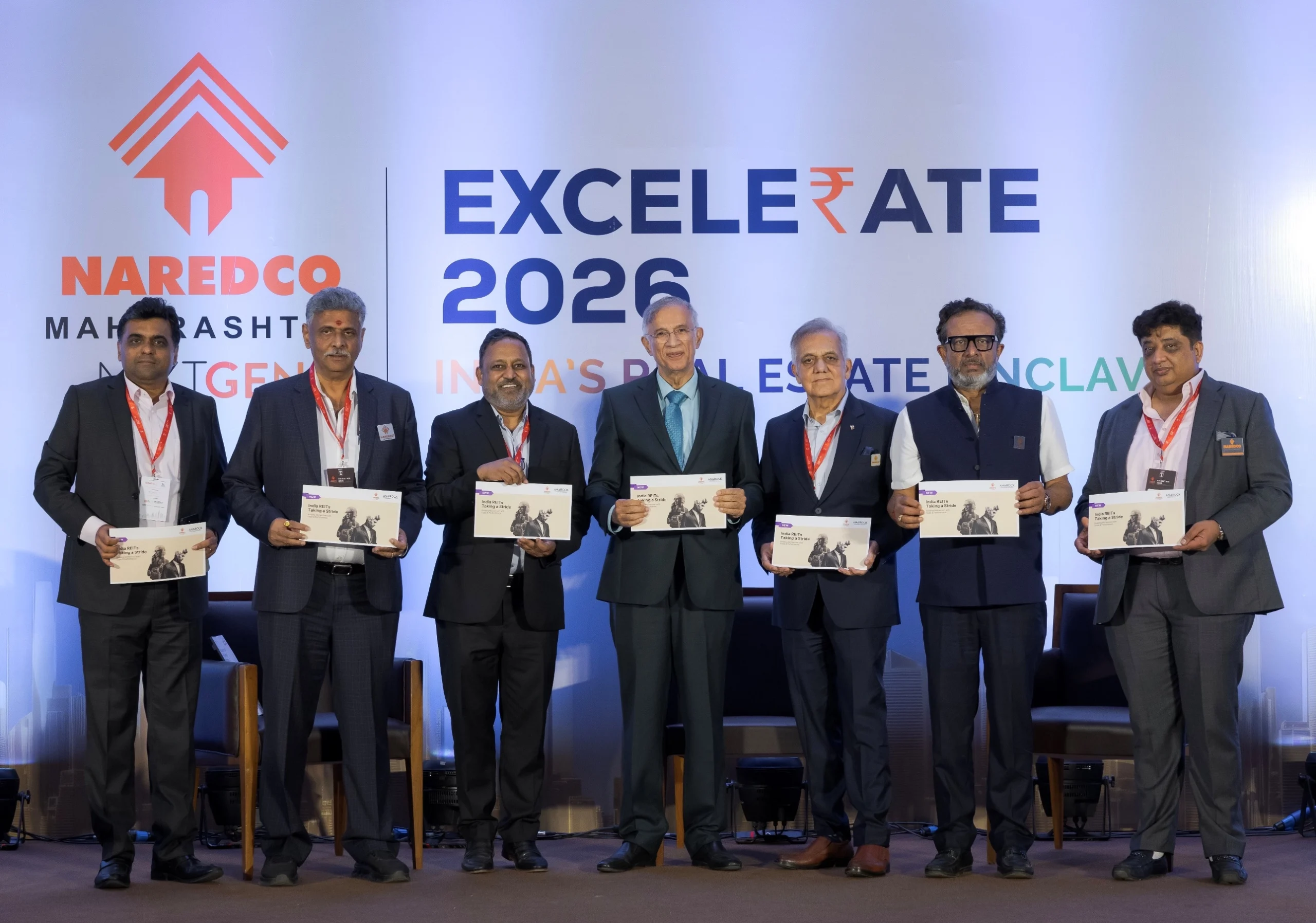
India’s real estate sector is undergoing a significant transformation, evolving from traditional, family-funded models into a globally integrated and institutionalised asset class. This shift was the central focus at EXCELERATE 2026, a leading international conclave organised by NAREDCO Maharashtra NextGen in Mumbai.
The event brought together over 750 delegates, including global investors, policymakers and industry leaders, to discuss the sector’s rapid evolution. Key growth drivers identified included increasing urbanisation, regulatory reforms and innovative financial instruments such as REITs and Small & Medium REITs (SM REITs).
Delivering the keynote address, Niranjan Hiranandani, Chairman Emeritus of NAREDCO Maharashtra, highlighted that India’s urban population is expected to grow from 35% to nearly 50% by 2047. He noted that this shift will fundamentally reshape demand patterns and accelerate the sector’s growth. He also emphasised that while the industry has made significant progress in attracting institutional capital through private equity and REITs, challenges such as land availability, pricing and financing still need to be addressed.
Hiranandani further stressed the importance of ESG principles, transparency and compliance, stating that the sector must move beyond constructing buildings to developing integrated platforms and asset classes. Emerging segments such as senior living, warehousing and asset management platforms are expected to drive the next phase of growth, supported by infrastructure development.
Prashant Sharma pointed out that a decade of reforms, including RERA implementation, GST rationalisation and supportive RBI policies, has significantly improved transparency and investor confidence. These changes have led to record property sales and a steady increase in institutional investments.
Vikas Jain noted that investor confidence, both domestic and international, is at an all-time high. He added that platforms like EXCELERATE 2026 play a crucial role in fostering dialogue, enabling partnerships and unlocking new investment opportunities, particularly in emerging asset classes such as branded residences, REITs and InvITs.
Panel discussions at the event highlighted the growing importance of family offices as a key source of capital. These investors are increasingly focusing on branded residences and hospitality assets as core holdings for long-term wealth creation. Another session on REITs and InvITs explored how these instruments are unlocking both institutional and retail capital, positioning India as a competitive investment destination in Asia.
A report by ANAROCK, titled India REITs: Taking a Stride, was also launched at the event. The report noted that the introduction of SM REITs in 2025 has enabled greater retail participation through fractional ownership models, unlocking a potential monetisation opportunity of ₹67,000 to ₹71,000 crore.
Discussions on sustainability underscored the financial viability of green development, alongside the growing importance of data centres, mixed-use projects and organised rental housing.
The conclave concluded that with rising incomes, stronger regulatory frameworks and deeper global integration, India’s real estate sector is well-positioned for sustained growth. Transparency-driven reforms have already led to foreign capital accounting for over half of institutional investments, signalling a new era for the industry.