



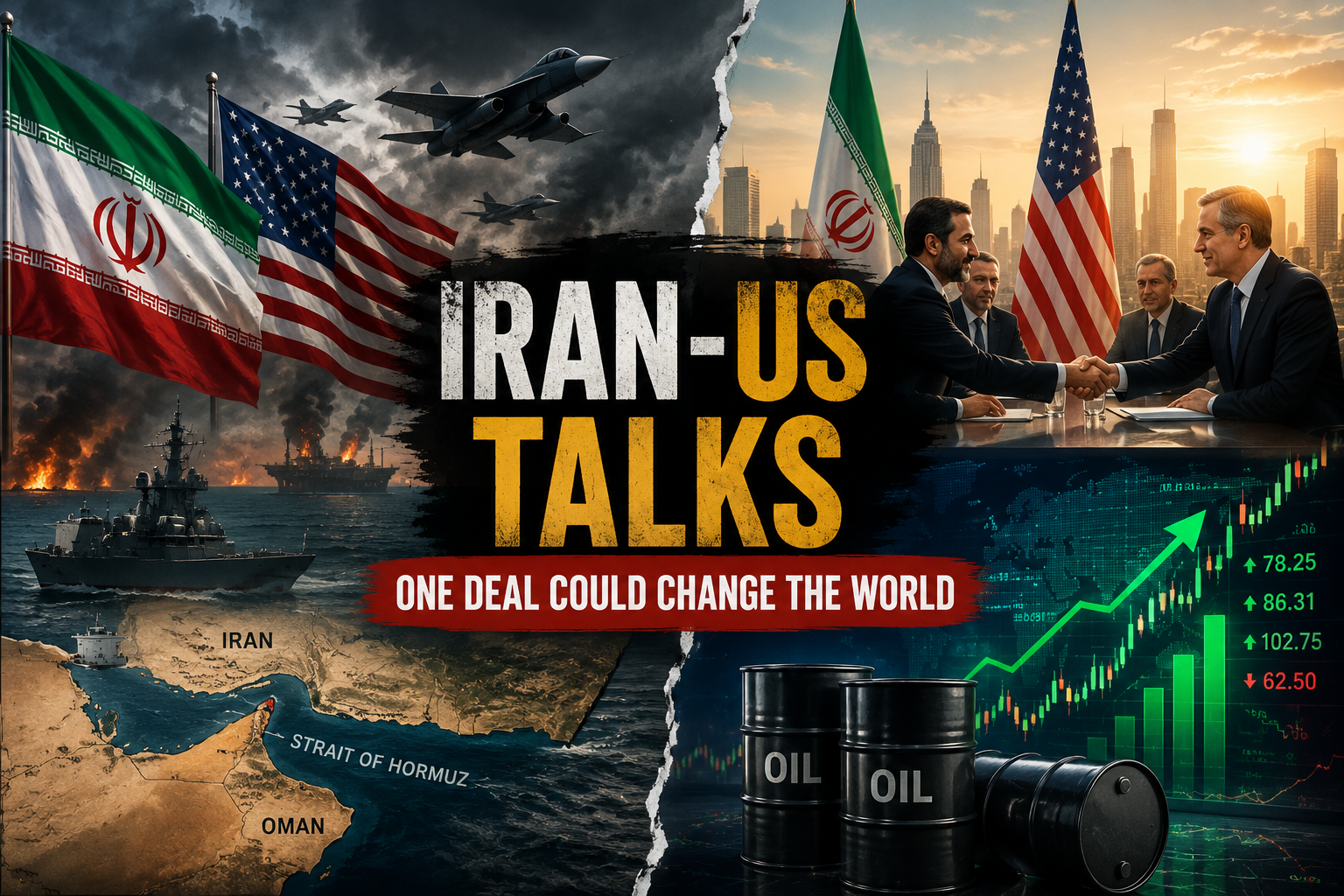
For months, rising tensions between the United States and Iran have kept the world worried about the possibility of a wider conflict in the Middle East. Military exchanges, threats around key shipping routes and growing fears over oil supply disruptions pushed the region into a dangerous situation. Now, fresh diplomatic talks between Washington and Tehran are offering a small but important hope that tensions may finally begin to reduce.
According to recent international reports, officials from both countries are involved in discussions aimed at easing the crisis and preventing further escalation. While no final agreement has been officially announced, both sides have indicated that negotiations are continuing and that some progress has been made on key issues.
At the centre of these talks is the future of the Strait of Hormuz, one of the world’s most important oil shipping routes. The narrow waterway connects the Persian Gulf to global markets and carries nearly 20 per cent of the world’s oil supply. Because of its importance, even small tensions in the region can affect fuel prices and global trade within days.
In recent months, fears of disruption in the Strait of Hormuz increased uncertainty in global markets. Oil prices became volatile and several countries started closely monitoring developments in the region. Experts believe that if tensions continue to reduce and shipping routes remain stable, it could help calm global energy markets and reduce pressure on fuel prices worldwide.
Reports suggest that the ongoing discussions may include issues related to maritime security, regional stability and future diplomatic engagement. There is also speculation that broader topics such as sanctions and Iran’s nuclear programme could become part of future negotiations, although no official breakthrough has been publicly confirmed so far.
This is why the current situation remains extremely delicate. While the talks have created cautious optimism, major disagreements between the two countries still exist. Both the United States and Iran have a long history of mistrust, and previous negotiations between them have collapsed in the past due to political and security disagreements.
US President Donald Trump has publicly spoken about the possibility of progress in the talks and suggested that diplomatic efforts are moving in a positive direction. However, officials from Iran have at times offered more cautious responses, showing that negotiations are still far from complete.
Analysts believe the talks are important not only for the Middle East but also for the global economy. Any major conflict involving Iran could affect international oil supply chains, shipping costs and inflation across many countries. Nations such as India, which import large quantities of crude oil, are especially sensitive to instability in the Gulf region.
The talks also reflect a broader shift taking place across the Middle East. After years of conflict and economic uncertainty, several countries in the region are increasingly focusing on stability, trade and economic recovery. Many governments are now trying to avoid another large-scale confrontation that could damage economies and create further humanitarian problems.
Another important factor is the pressure being felt by ordinary people. Rising fuel costs, inflation and economic uncertainty affect households across the world. Even people far away from the Middle East can experience the consequences of instability in the region through higher petrol prices, expensive transport and increased costs of essential goods.
At the same time, experts warn that diplomacy alone may not immediately solve all the deeper tensions between the United States and Iran. Issues related to regional influence, security concerns and nuclear activities remain highly sensitive. That is why many observers believe the current talks should be seen as an important step towards de-escalation rather than a guaranteed long-term solution.
Despite the uncertainty, the fact that both sides are still talking is itself being viewed as a positive sign. In recent years, direct communication between the two countries has often been limited, especially during periods of military tension. Continued negotiations could at least help reduce the risk of sudden escalation.
For now, the world is watching carefully. A successful diplomatic understanding may not solve every issue overnight, but it could help prevent a larger regional crisis at a time when global tensions are already high. In an increasingly unstable world, even a temporary reduction in conflict can have major importance for international peace, economic stability and energy security.
Subscribe Deshwale on YouTube
