










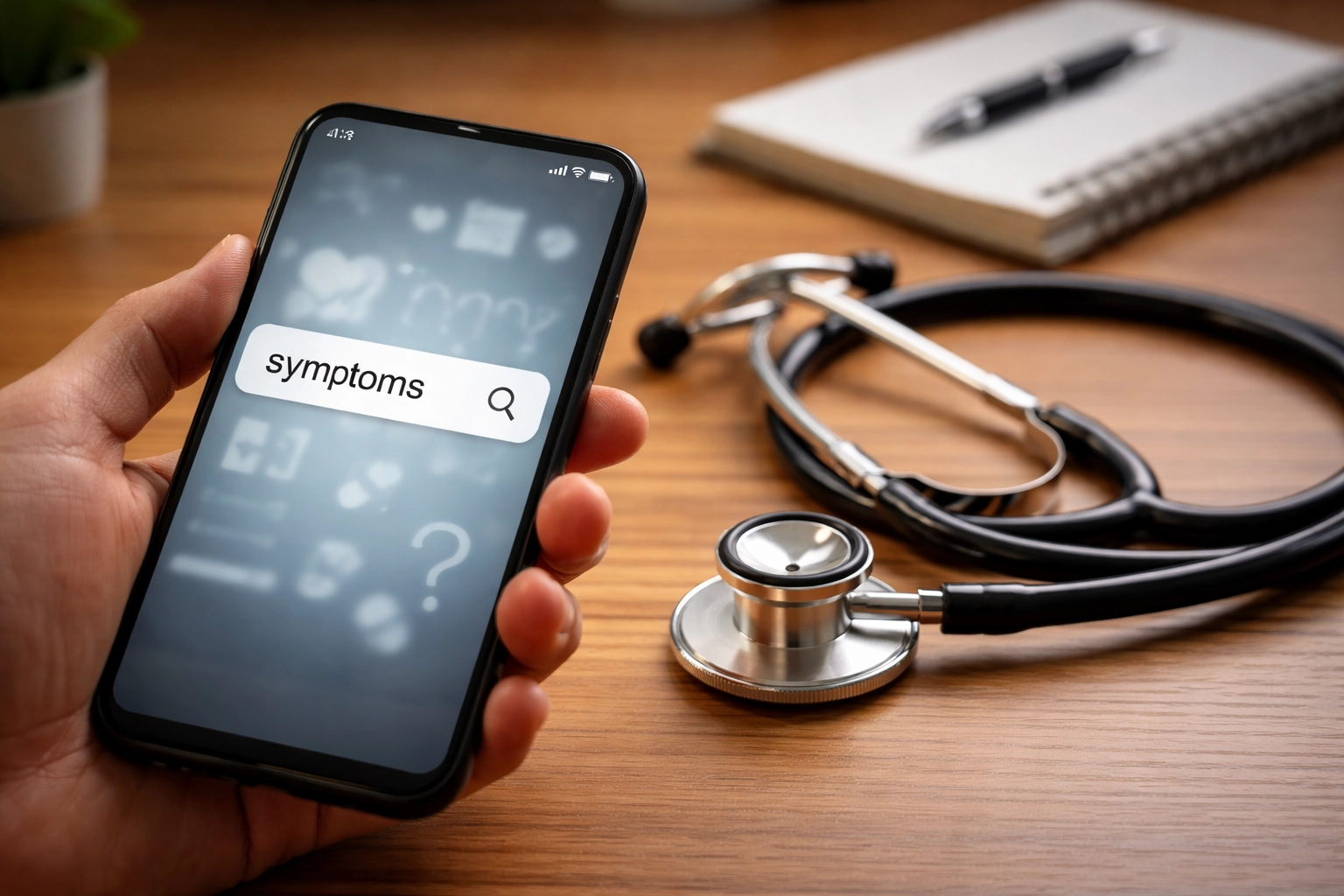
In today’s digital age, it is very common for people to turn to the internet when they feel unwell. A simple search for symptoms like headache, fever, or fatigue often leads to lists of possible illnesses and treatments. While this might seem convenient, relying on Google or health websites as a doctor can be risky.
Many people use online self-diagnosis to save time, avoid medical bills, or reduce anxiety. It can feel like a quick way to find answers without waiting for a doctor’s appointment. However, this approach has hidden dangers that most people do not consider.
One of the main risks is misdiagnosis. Online information cannot account for your personal health history, age, medications, or lifestyle. Two people with the same symptoms may have completely different conditions. Reading a generic list of possibilities can lead to wrong assumptions and unnecessary panic.
Another danger is delayed treatment. People sometimes ignore serious symptoms thinking they can manage the problem themselves. This can make a minor issue turn into a serious health problem. In some cases, waiting too long to see a real doctor can be life-threatening.
There is also the problem of unnecessary medication or remedies. Following online advice without proper consultation can lead to side effects, harmful interactions with other medicines, or worsening of the condition.
It is important to remember that a doctor does more than just look at symptoms. They listen to your full medical history, perform examinations, and order tests to confirm a diagnosis. No website or app can replace this careful process.
That said, the internet is not entirely bad. It can help you learn about your symptoms, understand medical terms, and find reliable sources for health information. The key is to use online tools responsibly, only as a guide, and never as a substitute for professional care.
While it is tempting to treat Google as your personal doctor, self-diagnosis online comes with serious risks. Always consult a qualified healthcare professional for accurate diagnosis and treatment. Using the internet wisely can help you stay informed, but it should never replace the advice of a real doctor.
The internet can help you understand your health better, but it cannot replace professional care. Think before you click and always prioritise expert guidance.
Subscribe Deshwale on YouTube


