









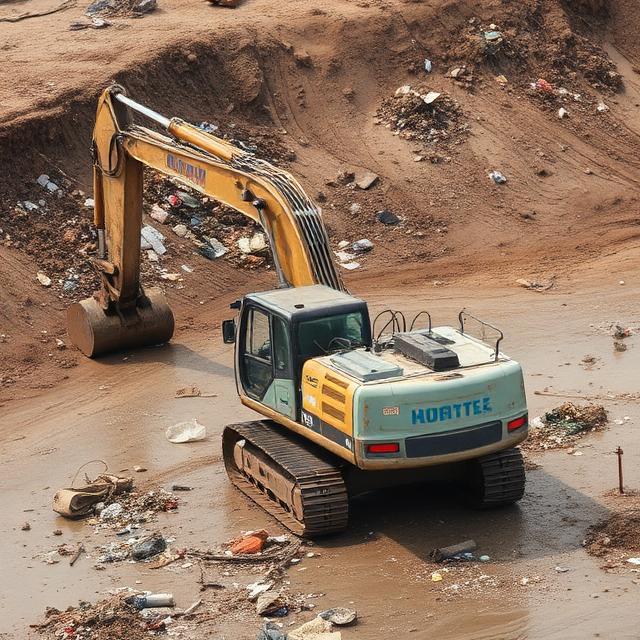
Every year, Mumbai makes the same promise to itself. This year, before the rains arrive, the Mithi River will be cleaned. And every year, in some form or another, that promise gets complicated. This time, the complication is sharper than usual.
With the monsoon roughly three months away, the Brihanmumbai Municipal Corporation (BMC) finds itself with no contractor willing to dredge the Mithi River. Not one. The civic body has extended its tender deadline to March 17, 2026, and in a significant concession, has relaxed eligibility norms to allow contractors with no prior desilting experience to apply. The decision reflects not ambition but desperation.
A River That Cannot Wait
The Mithi is not just another urban waterway. The 18-kilometre seasonal river flows through some of Mumbai’s most flood-prone neighbourhoods, including Kurla, LBS Road, and Chunabhatti. It serves as the city’s primary stormwater drainage channel and overflows with alarming regularity during heavy rain. When the Mithi chokes, large parts of Mumbai go under.
In Kranti Nagar, a densely settled locality in Kurla West that runs along the river’s bank, residents have learned to read the Mithi’s moods before the BMC does. The river’s danger mark sits at 2.7 metres. On 8 July 2024, after nearly 300 millimetres of rain fell over Mumbai, the Mithi overflowed at Chunabhatti with enough force to shut down Central Railway’s Harbour and Central Line services for several hours. Tracks were submerged between 12 and 15 inches deep. The city’s worst memory of the Mithi, though, remains 26 July 2005, when 944 millimetres of rain fell in 24 hours and the river, choked with silt and hemmed in by decades of unplanned construction, simply gave up. It spilled. Over 1,000 people died across Maharashtra that day, and many of the worst-affected areas sat along the Mithi’s banks.
Desilting typically takes 85 to 90 days. Work must begin no later than April 1 for any meaningful pre-monsoon clearance. That window is narrowing fast. If no contractor steps forward, the BMC has said it will deploy its own staff and machinery. It is not a preferred outcome. It is a contingency.
The Scam That Spooked the Industry
The reason seasoned contractors are keeping their distance is not hard to understand. The Mithi River desilting sector has, quite literally, become a crime scene.
The Economic Offences Wing (EOW) of the Mumbai Police registered an FIR in May 2025 against 13 individuals, including three BMC engineers and multiple contractors, for allegedly causing a loss of Rs. 65.54 crore to the civic body. Contractors allegedly submitted forged Memorandums of Understanding, fabricated vehicle tracking reports, and uploaded misleading photographs to the BMC’s Works Management System. In several cases, construction debris was allegedly dumped into sites while payments were claimed for silt removal. Five contractors have since been arrested.
The Enforcement Directorate also stepped in, freezing assets worth Rs. 49.8 crore across multiple raids. The probe reportedly covers irregularities spanning a decade, from 2013 to 2023. With arrests continuing and chargesheets running into thousands of pages, the Mithi desilting contract has become something no established contractor wants their name near.
Questions Over the Numbers
The opacity surrounding this project goes further. BJP corporator and Standing Committee member Tejinder Singh Tiwana has raised pointed questions about a 40% reduction in the volume of silt to be removed this year, alongside a reduction in the tender cost from Rs. 48 crore to Rs. 29.5 crore. His demand for a white paper covering ten years of desilting work reflects broader unease. If removing significantly less silt is now considered adequate, one has to ask on what basis the earlier estimates were ever made.
That question has not been cleanly answered.
Mumbai Mayor Steps In
Mumbai Mayor Ritu Tawde has chaired meetings with the civic administration on pre-monsoon work, with stormwater drain desilting as a central focus. The BMC’s stated plan is to complete 80% of desilting before the monsoon, 10% during it, and 10% after. Whether that is achievable without a contractor remains uncertain.
A Pattern Bigger Than One Tender
This crisis is not isolated. The BMC’s Rs. 2,000-crore floodgate project for the Mithi received zero bids even after being retendered four times. A separate Rs. 1,815-crore Package-III contract was eventually awarded to an Adani-Ashoka-Aakshaya joint venture in late 2025. Progress on the larger river improvement project remains slow.
What Happens If Nothing Changes
Mumbai does not have the luxury of a dry monsoon to absorb administrative delays. Twenty years after 2005, the settlements of Kranti Nagar and Bail Bazar in Kurla still sit within reach of the Mithi’s floodplain. When the river crosses its danger mark, residents abandon ground floors and move upward. Many have raised their home plinths by over a metre just to cope with routine flooding. That is not resilience. That is surrender dressed up as adaptation.
The BMC is running out of time. And right now, it is doing so alone.
Reporting based on BMC tender records, EOW and ED public disclosures, IMD rainfall data, and Central Railway operational logs.
Subscribe Deshwale on YouTube


