






Forty Years in the Making
Vijaydurg has not forgotten the sea. It never could. For centuries, this small port town at the tip of Devgad Taluka in Sindhudurg was one of the most strategically important harbours on the western coast of India. The Marathas built and fortified it. Kanhoji Angre made it the capital of his coastal territory. British and Dutch fleets tried, and largely failed, to take it. The fort still stands on a narrow peninsula, surrounded by the Arabian Sea on three sides, its laterite walls watching the same waters that once carried Maratha warships in and out under cover of darkness.
What those waters stopped carrying, somewhere around 1983, was a regular passenger service to Mumbai.
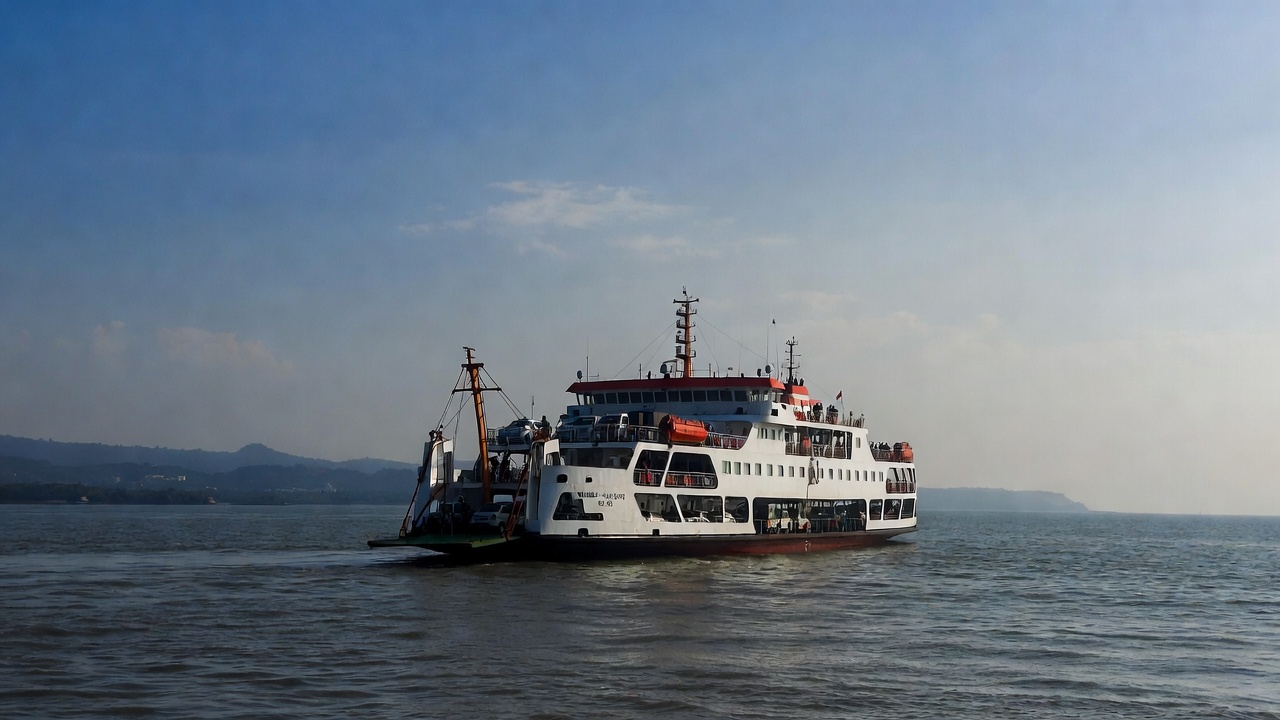
Now, four decades later, the sea route is back. The Mumbai-Vijaydurg Roll-on/Roll-off ferry service, operated by M2M Ferries aboard the M2M Princess, will commence its first commercial run on 1 March 2026, departing from Bhaucha Dhakka in Mumbai at 8 am and arriving at Vijaydurg by 3 pm. A total of 16 trips are scheduled across March. It is, by any measure, a significant moment for coastal Maharashtra.
But significance alone does not run a ferry service. The harder questions deserve asking.
The Konkani Connection
For the vast Konkani community in Mumbai, this is not merely a transport announcement. It is something more personal. For years, the journey home for Ganesh Chaturthi, Holi or a family emergency meant 10 to 12 hours on the Mumbai-Goa highway, wedged in festival traffic that routinely stretched journeys to 14 hours or more. The Konkan Railway, beloved as it is, runs full during every major festival. The idea that one could now sail home in roughly seven hours, with a vehicle, while watching the coastline pass from the deck, carries a weight that no timetable can fully capture.
That emotional dimension matters for sustainability. Passenger loyalty, particularly among communities with deep ties to origin towns, is what separates infrastructure that lasts from infrastructure that quietly closes.
What the Vessel Can Actually Do
The M2M Princess operates at 25 knots. For context, the existing Mumbai-Alibaug Ro-Ro service, which covers a far shorter distance, runs at 10 to 15 knots. Claims have been made that this makes the M2M Princess the fastest ferry service in South Asia, though no independent maritime authority has publicly verified or contested that ranking. The vessel can carry up to 656 passengers, 50 four-wheelers and 30 two-wheelers simultaneously, with four passenger categories from economy to first class. It is a serious piece of hardware for a serious maritime corridor.
The departure terminal at Bhaucha Dhakka has been upgraded to support Ro-Ro operations. Infrastructure at Vijaydurg has also been developed. On paper, both ends are ready.
What to Expect on Board
Passengers travelling on the M2M Princess will find a tiered experience designed to serve different expectations and budgets. The economy class offers standard seating for those who want the basic crossing without extras. Premium economy upgrades that to more comfortable, designated seating with better sightlines. The upper tiers, including business and first class, are expected to feature fully air-conditioned lounges, dedicated seating areas, and a more curated experience on board.
The vessel will have a food and beverage counter serving snacks, meals and beverages throughout the journey, modelled on the operator’s existing Mumbai-Mandwa service where passengers have access to cafes with coffees, sandwiches and hot meals. An open deck is available for passengers who want the sea air and the coastal views, which on a seven-hour sailing past the Konkan coastline is a genuine draw in itself. Luggage storage is provided, and the service is expected to be pet-friendly, in keeping with the Mandwa ferry’s existing policy of designated pet areas on board.
Passengers can remain inside their vehicles during the crossing or move freely between the vehicle deck and the passenger areas above. Given the length of this particular sailing, most travellers are expected to spend the majority of their time in the passenger sections. Washroom facilities are available on board. Online booking is operational, and tickets are fixed-price with no surge pricing.
One caution worth flagging: passenger reviews of the existing Mandwa service note that food on board has been a consistent weak point, with onboard catering described as overpriced and limited in quality. The operator’s decision, on that route, to restrict outside food has been a point of friction. Whether the longer Vijaydurg sailing prompts a rethink on catering standards remains to be seen.
Who Can Afford It
Here is where the analysis must slow down. Passenger economy fares are set at Rs. 2,500, premium economy at Rs. 4,000. Transporting a four-wheeler costs Rs. 6,000, a two-wheeler Rs. 1,000 and a cycle Rs. 600. A family of four travelling with a car faces a one-way outlay of Rs. 16,000, and a return trip brings that to Rs. 32,000.
This is not a service for the migrant worker from Sindhudurg who rents a single room in Dharavi and sends money home every month. It is pitched, structurally, at the salaried middle class and the weekend-tourist market. That is a legitimate market to serve, but calling it accessible connectivity for the people of Konkan requires some qualification. The highway remains the only realistic option for a large section of those who actually need an alternative.
A Record of Delays
The M2M Ferries service was originally announced for Ganesh Chaturthi 2025. It was then pushed to Anant Chaturdashi. After further regulatory and technical hurdles, including pending approvals from the Directorate General of Shipping, the launch slipped entirely out of 2025. The March 2026 rollout is a one-month trial. If it succeeds, full commercial operations are expected from April 2026 onwards.
That delay history is not trivial. Previous catamaran services on the Mumbai-Konkan route have launched and folded. The Konkan Steamer service, which stopped calling at Vijaydurg in 1983, was not replaced for over four decades. Maharashtra has a pattern of announcing coastal connectivity and then struggling to sustain it past the inaugural press conference.
The 16-trip trial in March is designed precisely to test whether this time is different. Passenger response, load factors and operational reliability over this period will determine whether the service becomes permanent infrastructure or another entry in a long list of near-misses.
Konkan Tourism and What Comes After the Jetty
If the service does stabilise, it will give Konkan tourism the single largest boost it has seen in a generation. Sindhudurg district, with its clean beaches, historic forts, Konkani cuisine and relative lack of commercialisation, has long been positioned just slightly beyond the comfortable reach of Mumbai’s weekend-travel market. The car ferry changes that calculus meaningfully.
Local homestays and small hotels will benefit first. Larger hospitality investment, which has already begun circulating around the Alibaug-Mandwa corridor after that service’s 2020 launch, will follow if the numbers hold. The broader question is whether Sindhudurg’s physical infrastructure, its internal roads, accommodation capacity and last-mile connectivity from Vijaydurg town, can absorb the increase without losing the very character that makes it worth visiting.
The Political Dimension
Sindhudurg Guardian Minister Nitesh Rane has been the most visible political force behind this service, symbolically booking the first ticket himself. For a region that has historically felt peripheral in Maharashtra’s infrastructure planning, a working sea link to Mumbai is a concrete deliverable rather than a promise. The timing, with the launch falling just before Holi, is not coincidental.
What is worth acknowledging is that delivering this service required more than political will. Securing clearances from the Directorate General of Shipping, coordinating approvals between the Maharashtra Maritime Board and the Union Ministry of Ports, and structuring a workable arrangement with a private operator across multiple failed deadlines demanded sustained administrative effort. That work is less visible than a ribbon-cutting but more consequential. Whether the Rane-led push would have succeeded without the broader Maharashtra government’s backing in Delhi remains an open question, but the local political ownership of this project has been consistent and, on the evidence, useful.
The Mandwa Benchmark
The existing Mumbai-Mandwa service, launched in March 2020 and connecting Mumbai to Alibaug, offers the most useful reference point. That route, covering a far shorter distance, has settled into a functional rhythm and is generally considered a modest success. The Mumbai-Vijaydurg corridor is significantly more demanding in terms of distance, sea conditions and the logistical complexity of sustaining a seven-hour sailing. The Mandwa model shows what is possible. It does not guarantee replication at this scale.
What India’s Other Ro-Ro Services Tell Us
The Mumbai-Vijaydurg service does not arrive in a vacuum. India has been building out a coastal Ro-Ro network for nearly a decade, with instructive results both ways.
The Ghogha-Dahej service in Gujarat, launched in October 2017 as India’s first major Ro-Ro ferry service, was inaugurated by Prime Minister Narendra Modi and was considered a landmark moment for coastal transport. The route cut a road journey of over 360 kilometres to a 31-kilometre sea crossing, reducing travel time from seven to eight hours to roughly one hour. The vessel carried passengers alongside cars and trucks, and the logic of connectivity was compelling. The subsequent history, however, included a period of suspension, operational disruptions due to extreme tidal conditions in the Gulf of Khambhat, and a service that has taken years to stabilise. It is now running under the DG Sea Connect brand, connecting Ghogha in Bhavnagar to Hazira in Surat, but the early euphoria of 2017 was followed by a longer, harder period of finding commercial viability.
The Brahmaputra river services in Assam tell a quieter story. Inland Waterways Authority of India vessels operate on National Waterway 2, connecting Majuli island and Dhubri Port, carrying passengers alongside a handful of vehicles. These services are modest in scale but essential to the communities they serve, where the river is the road. They do not carry the ambitions of a coastal Ro-Ro corridor, but they demonstrate that Ro-Ro operations in India can sustain themselves when they serve captive, need-based demand rather than aspirational demand.
Goa launched a Ro-Ro service on the Mandovi River in July 2025, connecting Chorao Island with Ribandar and Panaji. Built by a local firm under a Build-Own-Operate-Transfer model, each vessel carries around 100 passengers, up to 40 two-wheelers and 15 cars. Pedestrians and two-wheelers travel free. Cars pay a nominal Rs. 15 per trip. The contrast with the Mumbai-Vijaydurg pricing is stark and deliberate: the Goa service is community infrastructure first and a commercial product second. Whether that distinction matters for long-term viability is a genuinely open question, but the early response has been positive.
Lessons from Abroad: What Global Ro-Ro Networks Show
The global precedents are worth reading carefully, not for direct comparison but for the patterns they reveal about what makes a Ro-Ro passenger-vehicle service endure.
The Dover-Calais corridor in the English Channel is the world’s busiest Ro-Ro ferry route and perhaps the most studied. Operated by multiple carriers including DFDS and P&O Ferries, it handles millions of vehicle crossings annually and has survived the opening of the Channel Tunnel, which many predicted would end ferry traffic. It did not, partly because the ferry offers something the tunnel does not: a crossing that feels like a journey, with deck space, food, sea air and a genuine interval between departure and arrival. That experiential quality has proven commercially durable. Passenger surveys consistently show that travellers on longer ferry crossings rate the onboard experience as central to their satisfaction, and operators on the Channel have invested heavily in facilities accordingly. The lesson for shorter, newer routes is clear: if the crossing is to be a product and not just a transfer, it has to feel like one.
Stena Line’s Irish Sea operations offer a slightly different lesson. The Stockholm-headquartered operator has run Ro-Ro services between Britain and Ireland for decades, and its Belfast-Holyhead and Liverpool routes have outlasted multiple competitors by investing consistently in larger, more comfortable vessels while keeping freight and passenger operations integrated. In September 2025, Stena introduced its hybrid vessel Stena Futura on the Belfast-Heysham route, a freight-oriented Ro-Ro with methanol-ready propulsion that increased route capacity by 40 per cent. The environmental dimension of new vessel investment is no longer peripheral in Europe. It is increasingly central to regulatory compliance, port access, and long-term commercial licensing. India’s Ro-Ro operators, including M2M Ferries, will face similar pressures as Indian port and environmental regulations tighten over the coming decade.
Norway’s coastal ferry network is perhaps the most instructive model for what India’s Konkan coast could eventually become. Bastø Fosen operates smaller Ro-Ro car ferries on short routes connecting towns along the Norwegian coast, integrating vehicle transport, passenger movement and local tourism into a single, publicly subsidised but commercially operated network. The result is coastal mobility that feels organic rather than exceptional, where taking a ferry with your car is as routine as boarding a bus. That normalisation is precisely what Maharashtra’s coastal transport planners should be aiming for, even if it is still many years away.
The Philippines, closer to India’s development context, offers a cautionary note. The country has a vast island ferry network, but it has been plagued by safety failures, inadequate regulation and the prioritisation of volume over quality. In January 2026, criminal charges were filed against a Philippine ferry operator for safety lapses involving one of its passenger vessels. The lesson is not that Ro-Ro services are inherently unsafe but that rapid expansion without rigorous safety infrastructure and independent inspection creates risk. India’s requirement for nearly 150 clearances before the M2M Princess could operate is, in that context, a feature rather than a bureaucratic burden.
Three Risks That Cannot Be Wished Away
The M2M Princess is a different class of vessel from the riverboats and retrofitted fishing craft responsible for most of India’s ferry tragedies. It has been purpose-built to modern specifications, crewed professionally, and cleared nearly 150 regulatory checkpoints before its first commercial sailing. Following the December 2024 collision near the Gateway of India, in which a naval craft lost control and struck the passenger ferry Neel Kamal killing at least 13 people, the Maharashtra Maritime Board mandated life jackets for all ferry passengers across the state. That requirement now applies on every sailing of the M2M Princess. These are not small things. They reflect a safety baseline that India’s inland ferry network has historically failed to maintain.
But three risks specific to this service deserve sustained attention rather than a passing nod at launch.
The first is weather exposure. The open-sea corridor between Mumbai and Vijaydurg is far more exposed to monsoon conditions, rough swells and rapidly shifting weather patterns than any river or backwater route in India. The vessel will need robust, real-time weather monitoring protocols and clearly defined abort criteria that hold firm under commercial pressure. A 656-passenger vessel in deteriorating sea conditions on an open coastal route is not a situation that allows for improvisation. Whether the operator has built those protocols into daily operations, and whether the Directorate General of Shipping will audit them consistently, are questions that matter more than any ribbon-cutting.
The second is harbour traffic. The approach to and from Bhaucha Dhakka passes through one of the busiest and most congested port corridors in India. The Neel Kamal collision happened in exactly this stretch of water, in broad daylight, involving a naval craft undergoing trials. Mumbai Harbour is not a controlled waterway. It carries naval vessels, cargo ships, fishing boats, tourist ferries and now a high-speed Ro-Ro service, all sharing a channel without adequate traffic separation systems. Coordination between M2M Ferries, the Mumbai Port Authority and the Indian Navy requires a formal, standing protocol, not an informal arrangement that relies on experience and goodwill.
The third risk is the most systemic and the hardest to regulate. Commercial pressure on a high-cost route will be real, consistent and quietly corrosive if left unchecked. India’s ferry accident record, read across decades and states, is fundamentally a story of what happens when the pressure to fill a vessel overrides the discipline to manage it safely. Overcrowding, deferred maintenance, relaxed inspection cycles and the creeping normalisation of small safety compromises have preceded almost every major ferry disaster in this country. The 150-clearance threshold the M2M Princess cleared before its first sailing is meaningful and commendable. Keeping it meaningful after the cameras leave, across monsoon sailings and lean commercial months and festival-season peaks, will require independent inspection, transparent load reporting and genuine regulatory oversight on every sailing, not just the inaugural one.
The sea is patient. It does not distinguish between a well-run service and a poorly run one until the moment it does.
The Sea as Infrastructure
Perhaps the most important frame through which to read this ferry is not tourism, not politics and not nostalgia. It is infrastructure logic. Maharashtra has a 720-kilometre coastline. It has, until very recently, treated that coastline primarily as a scenic backdrop rather than a transport corridor.
The Mumbai-Vijaydurg Ro-Ro service, if it survives its trial phase, is the beginning of a coastal mobility network. Plans already exist to extend services towards Shrivardhan, Mandwa and eventually Goa. That is a different kind of Maharashtra: one where the sea carries people, not just fish.
Vijaydurg has been waiting a long time for this. So has the idea that infrastructure should follow the coast.
Subscribe Deshwale on YouTube


