








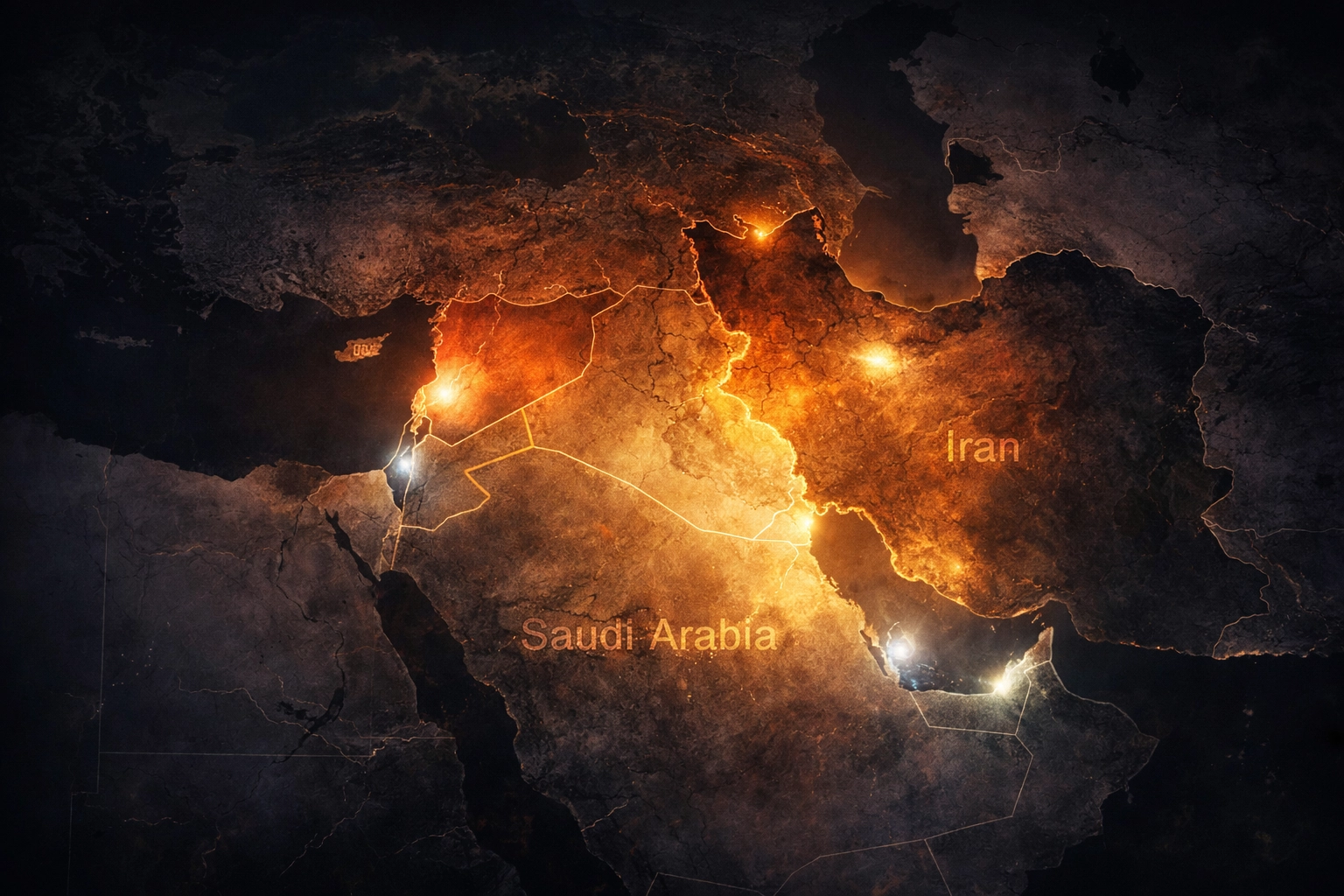
As of 9 April 2026, the two-week ceasefire between the United States, Israel and Iran is holding barely. Announced on 7 April after 40 days of devastating strikes, it has reopened the Strait of Hormuz, halted major Iranian missile barrages and given both sides a chance to claim victory. Khamenei is dead. Iran’s nuclear sites and military command are crippled. Hezbollah has been battered yet again in Lebanon. The “Axis of Resistance” that defined the region for two decades lies in ruins.
The war is not over. Fragile talks continue in Islamabad. Yet the fighting has already redrawn the map of power across the Muslim world more dramatically than any event since the 1979 Iranian Revolution. The old order built on Iranian-led Shia militancy, proxy wars and ideological confrontation is collapsing. What replaces it is not a neat new alliance, but a fragmented, pragmatic and fiercely competitive landscape.
Here is the shape of the new Muslim world order that is already taking form. Or maybe, a possibility.
1. Iran: From Regional Hegemon to Isolated Survivor
The Islamic Republic has suffered its most humiliating defeat since 1988. Supreme Leader Ali Khamenei’s assassination, the destruction of key nuclear and missile facilities, and the heavy losses inflicted on the IRGC have shattered Tehran’s aura of invincibility.
The “Axis of Resistance” Hezbollah, the Houthis, Iraqi Shia militias and Hamas is no longer a coherent fighting force. Hezbollah is reeling from Israeli ground operations in southern Lebanon. The Houthis have stayed largely quiet this time. Iraqi militias are fragmented. Syria, once Iran’s land bridge to the Mediterranean, is lost.
Iran will survive as a state. But it will be a diminished power economically strained, diplomatically isolated and forced to focus inward on regime survival rather than regional dominance. The dream of a Shia crescent stretching from Tehran to Beirut is, for now, over.
2. The Sunni Gulf States: Winners by Default, Architects of a New Pragmatism
Saudi Arabia, the UAE and their smaller neighbours emerge as the clearest relative winners. They absorbed Iranian missile and drone strikes on energy infrastructure, yet their economies and regimes have proved resilient. With Iran weakened, the existential threat that defined Gulf politics for 45 years has receded.
This creates space for a more confident, less ideological Gulf. Saudi Arabia is already accelerating Vision 2030 diversification. The UAE is deepening ties with Israel and India. Both are quietly expanding security partnerships beyond Washington with China, Russia and even Turkey when it suits them.
The Abraham Accords are not dead; they are likely to expand quietly. Normalisation with Israel is no longer politically toxic when Iran is no longer the unifying bogeyman. Expect more economic and technological cooperation, even if public rhetoric remains cautious.
The Gulf’s new mantra is “stability first”. Ideology is taking a back seat to investment, energy security and hedging against great-power rivalry.
3. Turkey: The New Powerbroker in a Multipolar Muslim World
While everyone else was bombing or staying silent, Turkey positioned itself as the indispensable mediator. Working with Egypt, Pakistan and Saudi Arabia, Ankara helped broker the ceasefire framework. President Erdoğan has seized the moment.
With Assad gone in Syria, Turkey now enjoys unprecedented influence in the Levant. It controls key water resources, has military footholds in northern Syria and is cultivating ties with the new Syrian leadership. In the broader Muslim world, Turkey presents itself as the champion of Sunni pragmatism strong enough to talk to everyone, independent enough not to be anyone’s vassal.
Turkey’s rise marks a shift from the old Saudi-Iran binary to a more fluid triangle: Gulf money, Turkish diplomacy and military reach, and Iranian survival instincts. This is not a formal alliance. It is competitive cooperation, the new normal.
4. The Death of Ideology, the Rise of Transactional Politics
The 2026 war has accelerated a trend already visible for years: the decline of grand ideological projects in the Muslim world.
– The Shia-Sunni sectarian cold war is cooling. Without a strong Iran projecting power through proxies, the old dividing lines matter less.
– Muslim Brotherhood-style political Islam has been marginalised. Gulf states that once feared it now see it as yesterday’s threat.
– Pan-Islamic solidarity rhetoric remains for domestic audiences, but real decisions are driven by economics, energy and great-power hedging.
China and Russia are not replacing America; they are adding options. India is emerging as a quiet but significant player through trade, technology and the large Indian diaspora in the Gulf. Pakistan remains a wildcard useful to everyone, trusted by none.
The new order is multipolar, transactional and ruthlessly focused on national interest.
5. The Human and Economic Cost and the Next Flashpoints
This is not a peaceful order. It is a more stable but still dangerous one.
Lebanon, Yemen and parts of Iraq face reconstruction nightmares. Millions of refugees and displaced people strain already fragile societies. Oil prices have swung wildly; the Hormuz toll experiment, even if temporary, has reminded everyone how fragile global energy security remains.
Future flashpoints are shifting. The Israel-Palestine conflict is no longer the automatic trigger for regional war it once was but it remains a deep wound. Water wars, cyber attacks and competition for African and Central Asian influence will define the next decade.
A Pragmatic, Competitive Muslim World
When the two-week ceasefire becomes permanent and it probably will, the Muslim world will not return to the pre-2026 status quo. It will enter a new era defined by:
– A weakened but still defiant Iran
– A more assertive and economically focused Gulf
– A diplomatically ambitious Turkey
– Reduced room for ideological proxy wars
– Greater space for China, India and Russia to play balancing roles
The era of the “Axis of Resistance” as the dominant story is over. In its place is a messier, more fluid order less dramatic on television, but potentially more sustainable for the 1.8 billion Muslims who simply want to live, trade and raise their families without another war.
The bombs have stopped for now. The real test begins when the dust settles and the new players start drawing the new lines. The Muslim world is not united. But for the first time in decades, it is no longer defined by a single overarching confrontation.
That, in the brutal arithmetic of geopolitics, counts as progress.
Subscribe Deshwale on YouTube


