










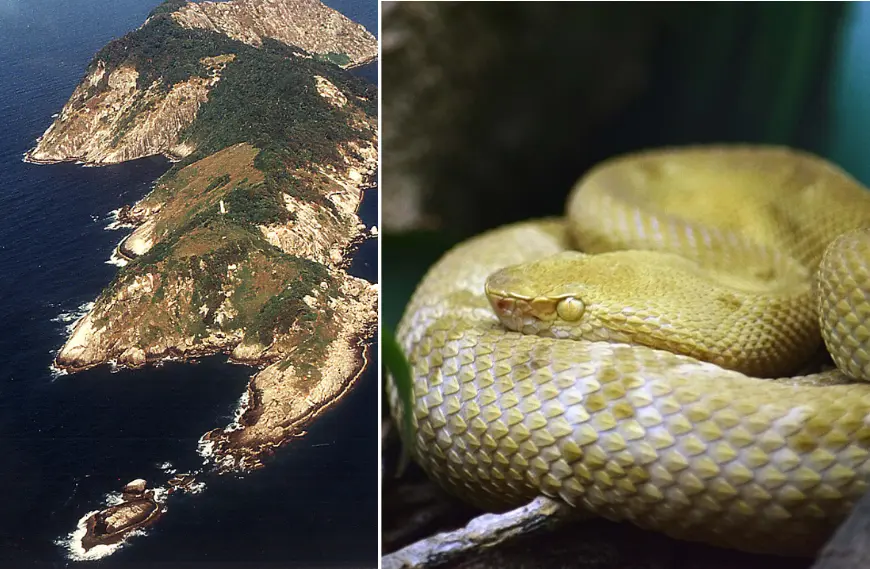
Ever heard of a place so wild it’s called Snake Island? Ninety miles off Brazil’s São Paulo coast, Ilha da Queimada Grande is a tiny, 43-hectare jungle packed with thousands of deadly golden lancehead vipers. One wrong step, and their venom could end you in hours. It’s off-limits to everyone except a few scientists and the Brazilian Navy. But it’s not just the snakes that make this place legendary. The myths of Snake Island… stories of doomed fishermen, cursed lighthouse keepers, and eerie curses… grab you and don’t let go. These tales are not just spooky, they show how we humans wrestle with nature’s raw power. So, what’s behind these myths? Why do they stick with us?
The stories that haunt snake island
The myths of Snake Island hit hard. One says there’s a snake for every square metre, ready to strike. Picture a tired fisherman rowing to shore, hoping for a break, only to find vipers everywhere, their golden scales flashing as they bite. Some say he collapsed in his boat, venom burning him up. Another tale is darker… a lighthouse keeper and his family, asleep in their remote home, get swarmed by snakes creeping through windows. By morning, they are gone, found tangled with serpents. Then there’s talk of a curse, where the snakes guard something ancient, striking down anyone who dares step foot there. These stories make the island feel like a place humans aren’t meant to touch.
Where the myths come from: Nature’s role
These tales start with the island’s wild history. About 11,000 years ago, rising seas cut Snake Island off from Brazil. The snakes trapped there evolved into golden lanceheads, unique to this spot. With no mammals around, they hunt birds, and their venom’s five times stronger than mainland snakes. It kills fast. Roughly 2,000 to 4,000 snakes live here… not one per square metre, but enough to make you jump at every twig snap. A bite can cause brutal pain, bleeding, or even death without quick help. The Navy keeps the island locked down to protect these rare snakes and curious visitors. That secrecy? It lets these stories grow wild, turning a real danger into epic legend.
Real-life roots of the tales
Those myths are not pure fantasy. Coastal Brazilians know snakebites from jararacas, cousins of the lanceheads. A fisherman landing on the island could easily get bitten. The lighthouse story? No proof, but keepers lived there alone until the 1920s, when the light went automatic. Life was tough, and snakes were a real threat. Those risks turned into stories that warn: stay away. The island’s name, ‘Big Burned Island,’ hints settlers tried burning it clear, only for the snakes to survive. That could have sparked tales of nature fighting back, making the island feel like it’s got its own rules.
Culture and fear: Shaping the legends
Local Indigenous groups, like the Tupinamba, might have seen the island as sacred. Snakes often mean power or protection in their stories. An island full of vipers? That’s a place you respect, maybe even fear as cursed. When European settlers arrived, they brought their own baggage. The New World scared them… untamed, full of threats. Snake Island became a symbol of that fear, like something out of old tales about cursed lands or biblical serpents. These myths mixed local reverence with settler dread, creating a vibe that the island’s not just dangerous… it’s otherworldly.
Why we can’t let these myths go
Why do these stories stick when we know the snakes are just animals? It’s how our minds work. We love tales that explain scary things. Snake Island, with its no-go zone and real risks, is perfect for that. Stories of fishermen and keepers tap into fears of being alone or nature striking back. The ‘snake per square metre’ bit is over-the-top to scare people off… curiosity could kill here. With no tourists to check the facts, the myths just grow. The Navy’s rules keep the island mysterious, like a secret we are dying to know but can’t.
The internet keeps the myths alive
Today, the myths of Snake Island are all over the internet. YouTube videos call it ‘the deadliest place on Earth.’ A 2019 tweet saying you would not last an hour there got thousands of likes. Clickbait loves the horror… shaky drone clips, creepy music, you name it. But there’s a cool twist… the snakes’ venom might save lives. Scientists are studying it for heart disease cures. People on X get a kick out of that… a place so scary could help us. These modern takes keep Snake Island’s stories buzzing, mixing old fears with new fascination.
What snake island says about us
These myths are not just about snakes. They are about us. Snake Island’s untouched, a rare spot where nature rules because we are not there. The fisherman’s story says, ‘Know your limits.’ The lighthouse tale warns we can’t control everything. The curse? It’s a reminder some places belong to the wild. In a world where forests vanish, this island stands firm. Its myths push us to respect nature, to see its power and beauty. They are not just scary stories… they are about finding our place in a world bigger than us.
The island’s spell
Snake Island is not just a dot in the ocean. It’s a legend that grabs us… part venom, part mystery. Its stories, born from slithering snakes and whispered tales, show how we face what scares us. They warn us, thrill us, and stick with us. As long as this island stays off-limits, its myths will keep growing. We’ll never set foot there, but we’ll keep dreaming of it… a place where nature sings a song we can’t ignore.
Aslo Read: वेटिकन सीक्रेट आर्काइव: इतिहास के रहस्यों का खुलासा


