



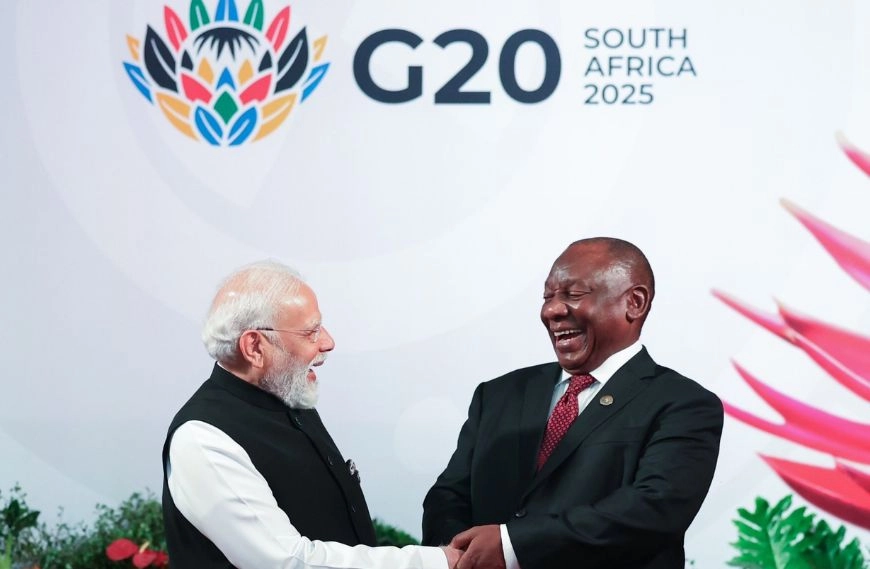
At the ongoing G20 summit, Prime Minister Narendra Modi has urged world leaders to join hands in tackling a growing threat that links drug trafficking to terrorism. Speaking on the global stage, Modi stressed that drug networks are no longer just a law enforcement issue, they have become a major source of funding for terrorist organisations.
Highlighting the urgency of the problem, Modi pointed out that synthetic drugs like fentanyl have been increasingly used to finance terror activities across borders. He explained that these substances are easy to produce, highly addictive, and can move quickly through global networks, making them a critical concern for both security and public health.
To address this, Modi proposed a unified mechanism within the G20 framework. The idea is to combine financial intelligence, law enforcement cooperation, and policy coordination among countries. This approach aims to track and disrupt the flow of funds from drug trafficking to terror groups. Modi emphasised that only a collective effort can effectively dismantle these networks and prevent them from supporting acts of violence.
The Prime Minister’s call comes at a time when the international community is increasingly recognising the threat posed by drug‑funded terrorism. He noted that many regions have seen a rise in terrorist financing through narcotics, and unilateral actions by individual countries are not sufficient to tackle the scale of the problem.
In addition to security measures, Modi highlighted the importance of preventive steps, including public awareness campaigns, stricter regulation of synthetic drug production, and enhanced border controls. He stressed that such steps must go hand-in-hand with international collaboration to ensure that the fight against drug-terror networks is both effective and sustainable.
Modi’s appeal at the G20 summit has already drawn attention from global policymakers and counter-terrorism experts. By framing the issue as both a security and health challenge, he has urged countries to rethink traditional approaches and adopt a more coordinated global strategy.
The proposal is seen as a significant move in India’s efforts to promote international cooperation on security issues. It underlines the growing recognition that drug trafficking is not just a local problem but a global threat that requires joint action from all nations.
Subscribe Deshwale on YouTube
