









Sky High Stats: A Snapshot of Global and Indian Aviation
Birth of the Airline Industry
- The first commercial airline flight took place on 1 January 1914 between St. Petersburg and Tampa, Florida (USA), covering 21 miles.
- Over 110 years later, the industry carries billions of passengers every year.
Global Aviation at a Glance
- Total number of airports worldwide: Over 41,700
- Number of commercial airlines: More than 5,000
- Annual global air passengers (2023): Approx. 4.7 billion (IATA)
- Projected passengers by 2040: Over 10 billion annually
- Global aviation market value (2024): ~$841 billion
- Top busiest airport (2023): Hartsfield-Jackson Atlanta International (USA) with 104 million passengers
India’s Aviation Boom
- Number of operational airports (2025 target): 200+ (from 157 in 2023)
- Domestic air passengers (2023): Over 153 million
- International air passengers (2023): Around 63 million
- Projected total passengers by 2047: 1.3 billion/year
- India’s global rank: 3rd largest domestic aviation market (after the US and China)
- Govt investment in airport infra (by 2025): ₹92,000 crore (~$11 billion)
- Airlines operating in India: 15+ commercial carriers
Did You Know?
- India’s Digi Yatra app crossed 3 million registered users by March 2025.
- Indian airports like Delhi, Kochi and Hyderabad are leading in carbon-neutral initiatives, setting benchmarks for sustainable aviation.
- Over 45 Indian airports now offer biometric boarding using facial recognition.
Looking Ahead
- The global shift towards Digital Travel Credentials (DTCs) is expected to be standardised by 2030, creating a seamless, paperless flying experience.
- ICAO estimates that global air traffic will double in the next 15 years, with Asia-Pacific—especially India—driving most of this growth.
For over half a century, boarding a flight has followed a familiar drill—check in, print your boarding pass, show IDs at multiple counters, and shuffle through endless queues. But that era is drawing to a close. The future of flying is not just fast—it’s facial-recognition fast. And the old paper trail of air travel is about to vanish into the cloud.
The International Civil Aviation Organization (ICAO), a United Nations agency, is rolling out a global overhaul in how we take to the skies. At the heart of this transformation is a slick new concept: the Digital Travel Credential (DTC). This isn’t just a tech tweak. It’s a full-blown reboot of international aviation protocols, the likes of which haven’t been seen in decades.
The digital boarding revolution
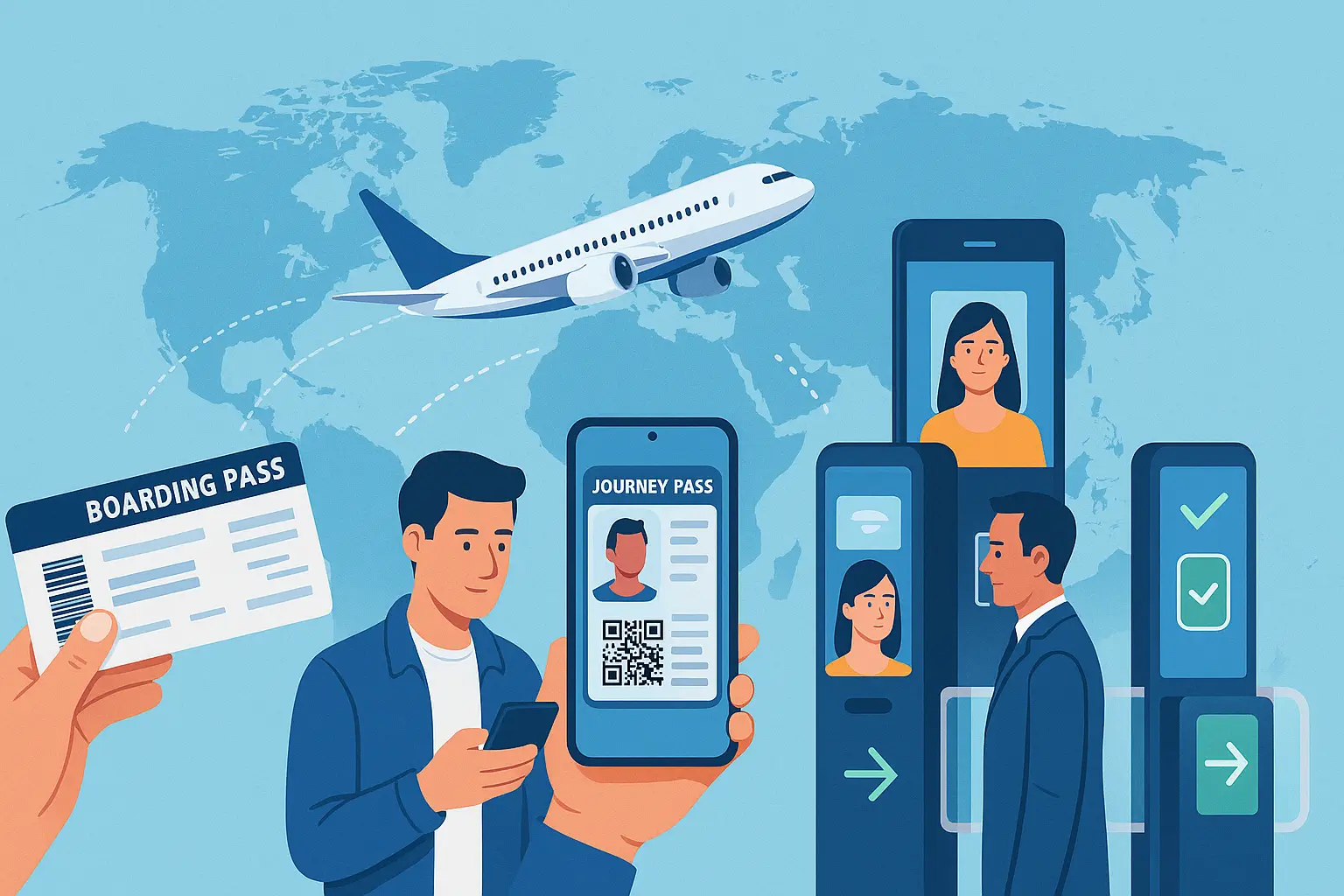
Imagine arriving at the airport and walking straight to security without ever pulling out your passport. That’s the promise of DTC. Passengers will soon be able to store a secure, digital version of their identity on their mobile devices. Upon booking a flight, you’ll receive a dynamic “journey pass” that combines all your travel information into one encrypted package.
No check-in counters. No boarding pass printouts. Just facial recognition kiosks and automated gates. Your face becomes your pass. ICAO says this new system will not only cut wait times but also enhance security and reduce human error. What’s more, sensitive data won’t be permanently stored—biometric scans are deleted shortly after identity verification, addressing a key privacy concern.
Why now?
For decades, the boarding process has remained largely untouched. While airlines have dabbled in online check-ins and mobile boarding passes, the core system was still rooted in manual document checks and airport queues. The COVID-19 pandemic, with its emphasis on contactless processes, served as the final nudge toward this digital leap.
ICAO’s move is a global play, but it’s already seeing traction. Airlines like British Airways, Air France-KLM, and Saudia are trialling DTCs. Some airports in Europe and the Middle East have begun experimenting with biometric corridors where passengers can breeze through without ever flashing an ID.
India is already on board
While the world talks about the future, India is already living it. In 2022, the Ministry of Civil Aviation launched Digi Yatra, a homegrown solution that mirrors the DTC concept. Using facial recognition and government-issued IDs like Aadhaar, Indian passengers can pass through airport checkpoints with minimal friction.
By early 2025, Digi Yatra has already been implemented at 24 major airports, covering nearly 90% of India’s air traffic. The user base is booming. More than 3 million passengers have registered, and the feedback? Overwhelmingly positive. Faster security checks. Shorter queues. Less chaos.
The bigger Indian picture
India isn’t stopping at facial recognition. The country’s aviation ambitions are sky-high. With one of the world’s fastest-growing flying populations, the government has committed over ₹92,000 crore for infrastructure upgrades. The number of operational airports is set to rise from 157 to over 200 by the end of 2025.
In April 2025, Parliament passed the Protection of Interests in Aircraft Objects Bill, aligning Indian law with the Cape Town Convention. The law reassures aircraft lessors, making India a more attractive destination for aviation investment. This could lower leasing costs for airlines, possibly leading to cheaper fares for passengers.
Challenges ahead
Of course, no tech leap is without turbulence. Implementing DTC and Digi Yatra at scale requires massive investment in biometric infrastructure, secure databases, and staff training. And then there’s the critical issue of data protection. With digital identity at the core of this revolution, robust cybersecurity measures are non-negotiable.
There’s also a generational learning curve. Not every traveller is tech-savvy. Ensuring inclusivity will be key to making digital air travel work for all—not just the smartphone elite.
Final boarding call
But make no mistake: the transformation is real, and it’s already taxiing for takeoff. Whether you’re flying from Delhi to Dubai or Boston to Berlin, the future will soon look paperless, painless, and powered by algorithms. The boarding pass, once a souvenir of travel, might soon become a relic of the past.
As aviation sheds its analog skin, passengers can expect smoother skies ahead. Less time in lines. More time to relax. And maybe, just maybe, a world where flying feels less like a chore and more like the marvel it was always meant to be.


