



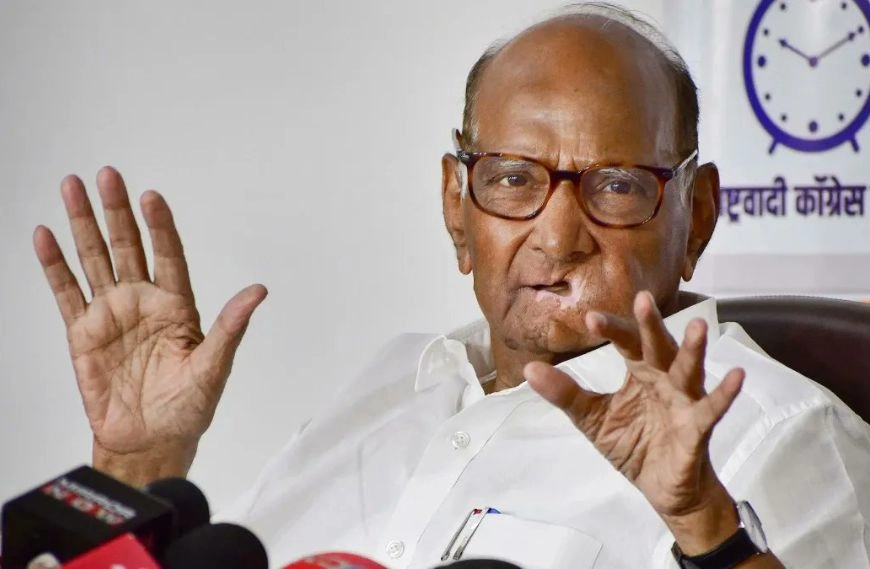
Veteran leader Sharad Pawar recently compared the opposition rally in Mumbai to the historic Samyukta Maharashtra Movement, recalling his days as a student and the spirit of unity that defined the earlier struggle. Addressing a massive gathering protesting alleged irregularities in voter lists, Pawar said the march reminded him of the people’s movement that once fought for the creation of Maharashtra with Mumbai as its capital.
The Samyukta Maharashtra Movement began in the mid-1950s with a clear goal to unite all Marathi-speaking regions into one state and make Mumbai its capital. The agitation saw participation from people across castes, classes, and political lines. It was not merely a political campaign but a cultural movement rooted in the pride and identity of Marathi speakers. On 1 May 1960, this demand was fulfilled with the formation of the state of Maharashtra and Gujarat under the Bombay Reorganisation Act. The movement, however, came at a great human cost, as over a hundred protesters lost their lives during demonstrations.
Sharad Pawar’s comparison of the recent opposition protest to the Samyukta Maharashtra Movement is more than symbolic. By evoking that powerful history, he positioned the rally as a continuation of Maharashtra’s tradition of collective resistance. According to Pawar, just like the 1960 movement united people beyond party lines, the present-day opposition should come together to protect democratic values and ensure fairness in governance.
The rally was seen as a message of solidarity among opposition parties in Maharashtra. Pawar emphasised that the fight was not only political but also a moral fight for justice, transparency, and people’s rights. His words reignited memories of how unity once changed the course of Maharashtra’s history, inspiring people to believe that collective will can still bring transformation.
The reference to the Samyukta Maharashtra Movement serves as both inspiration and caution. That historic struggle succeeded because it represented the aspirations of ordinary people and was built on years of groundwork and sacrifice. Pawar’s remarks remind political leaders that any modern movement must connect deeply with the people’s concerns and emotions to have the same impact.
Maharashtra’s political landscape has always been defined by movements that combine regional identity with democratic ideals. By invoking the Samyukta spirit, Pawar not only appealed to nostalgia but also urged a return to issue-based politics, one that prioritises people’s welfare over partisan interests.
Sharad Pawar’s call to revive the spirit of 1960 resonates with both emotion and purpose. It connects the present to a defining chapter in Maharashtra’s past, urging citizens and leaders alike to rediscover the values of unity, courage, and integrity. Whether today’s movement will achieve the same transformative power as the Samyukta Maharashtra struggle remains to be seen, but its message is clear Maharashtra’s strength has always come from the collective voice of its people.
Subscribe Deshwale on YouTube
