









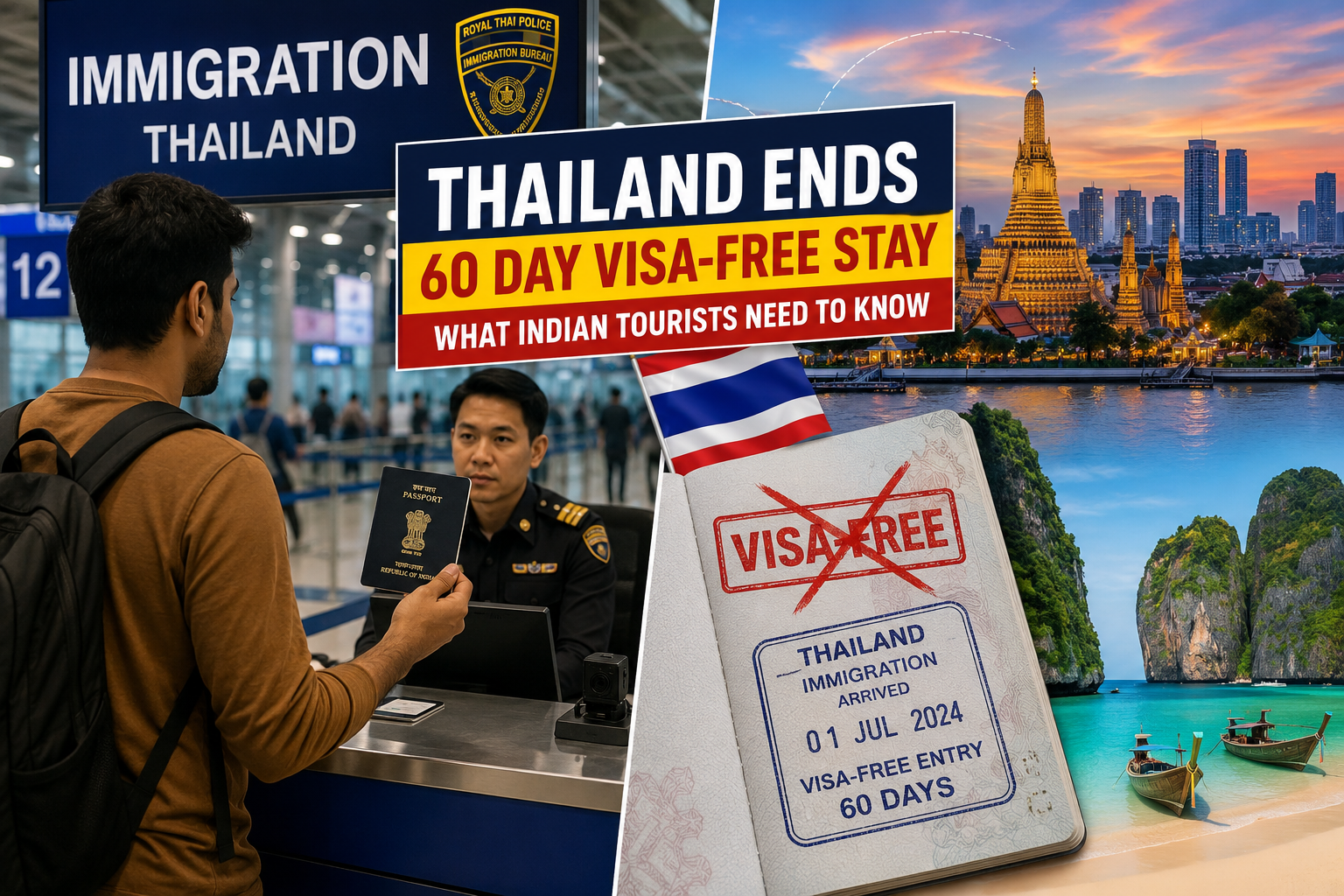
Thailand has decided to end its 60 day visa-free stay policy for travellers from 93 countries and territories, including India. The move marks a major shift in the country’s tourism policy and is expected to affect Indian travellers planning longer holidays in one of Southeast Asia’s most popular tourist destinations.
The Thai government had introduced the 60 day visa-free entry scheme in July 2024 as part of its efforts to revive tourism after the Covid-19 pandemic. Under the programme, citizens from 93 countries, including India, were allowed to enter Thailand without a visa and stay for up to 60 days for tourism purposes.
Before this expansion, most travellers from visa-exempt countries could stay only for 30 days. The extended stay period was introduced to encourage international tourism, attract digital nomads, and boost spending by foreign visitors.
However, Thailand has now decided to roll back the policy. According to Thai officials, authorities noticed growing misuse of the relaxed visa rules. The government said some foreign nationals were using the extended visa-free stay for illegal business activities, unauthorised work, overstaying, and other unlawful operations.
Thailand’s Tourism and Sports Minister Surasak Phancharoenworakul confirmed that the Thai Cabinet had approved the decision to end the 60 day visa-free scheme. Reports suggest that most countries covered under the programme, including India, are likely to return to the earlier 30 day visa-free arrangement.
The Thai government believes the change will help improve immigration monitoring and strengthen security measures while still supporting tourism. Officials have also said that future visa policies may be reviewed country by country depending on bilateral relations and tourism trends.
For Indian travellers, the change is important because Thailand remains one of the most visited international destinations from India. Every year, millions of Indian tourists visit the country for holidays, honeymoons, shopping, beach vacations, nightlife, and family trips.
Thailand is especially popular among Indian tourists because of its easy connectivity, relatively affordable travel costs, visa-friendly policies, and wide range of tourist attractions. Cities such as Bangkok, Pattaya, Phuket, Krabi, and Chiang Mai attract Indian visitors throughout the year.
Bangkok is known for its shopping markets, temples, nightlife, and street food culture. Pattaya remains popular for beach tourism and entertainment activities, while Phuket and Krabi attract tourists looking for island vacations and water sports.
The earlier decision to allow 60 day visa-free stays was welcomed by Indian travellers, especially those planning longer holidays or combining work with travel. Some tourists also used the extra stay period for slow travel, remote work arrangements, or exploring multiple cities within Thailand.
Now, with the expected return of the 30 day limit, travellers planning extended stays may need to make changes to their travel plans. Those wishing to stay longer than the permitted period may have to apply for a tourist visa or seek an extension through Thai immigration authorities.
Travel experts believe short-term holidaymakers may not be affected much because many Indian tourists usually visit Thailand for one or two weeks. However, budget travellers, backpackers, digital nomads, and people planning month-long stays may feel the impact of the revised rules.
Thailand’s decision also reflects a broader trend seen in several countries that are trying to balance tourism growth with tighter immigration control. Since the pandemic, many governments introduced relaxed visa rules to revive tourism industries that suffered major financial losses during global travel restrictions.
Thailand’s tourism sector is one of the biggest contributors to its economy. The country depends heavily on international visitors for employment, hotel businesses, restaurants, transport services, entertainment industries, and local markets. After the pandemic, Thailand aggressively promoted tourism by easing visa rules and simplifying entry procedures.
The 60 day visa-free policy was part of that recovery strategy. It helped increase tourist arrivals and encouraged travellers to spend more time and money in the country. However, Thai authorities now believe stricter controls are needed to prevent misuse of the system.
Officials have said the country wants to focus more on “quality tourism,” meaning visitors who contribute positively to the economy while following local laws and immigration regulations.
At present, the Thai government has not officially announced the exact implementation date for the revised visa-free rules. Travellers are therefore advised to regularly check updates from official Thai immigration channels or the Royal Thai Embassy before booking flights or accommodation.
Indian tourists planning Thailand trips in the coming months should also keep track of visa requirements, permitted stay durations, and any new immigration guidelines. Travel agencies and airlines are also expected to update passengers once the revised rules come into effect.
Despite the change, Thailand is expected to remain a favourite destination for Indian travellers. The country continues to offer a mix of natural beauty, cultural attractions, modern city life, beaches, luxury resorts, adventure tourism, and affordable holiday packages.
The rollback of the 60 day visa-free stay may slightly affect long-term visitors, but Thailand’s popularity among Indian tourists is unlikely to decline significantly. For most travellers planning short vacations, the overall travel experience is expected to remain largely unchanged.
Subscribe Deshwale on YouTube


