










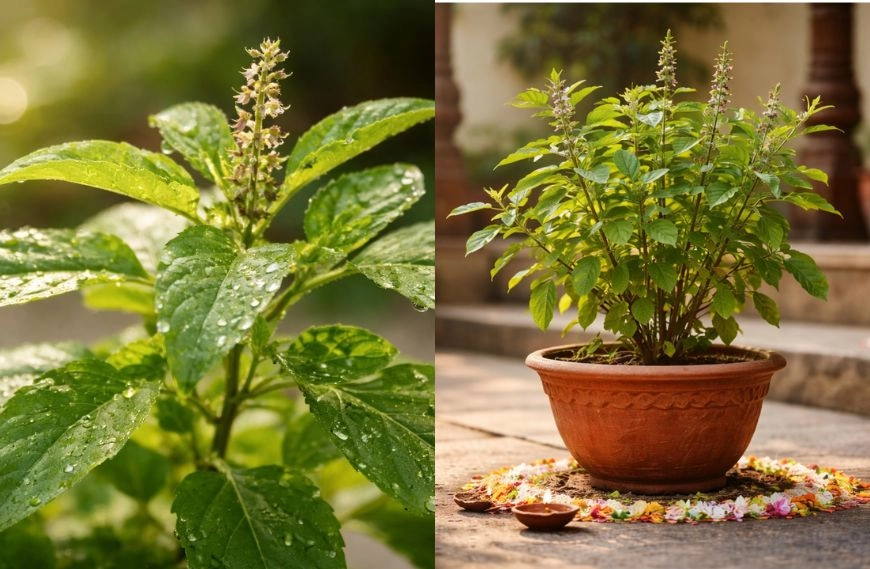
In my years roaming the globe, from the bustling markets of Marrakech to the serene temples of Kyoto, I’ve often found that the greatest treasures lie not in distant lands but right under our noses or rather, in our backyards. Here in India, where ancient wisdom intertwines with modern hustle, this rings especially true. As we navigate the stresses of 2026 urban pollution, fast-paced lives, and lingering health concerns post-pandemic it’s the humble plants in our neighbourhoods that offer quiet salvation. This series delves into these everyday botanicals, exploring how they can enhance our well-being. We begin with Tulsi, the holy basil that graces countless Indian homes, a plant revered not just in rituals but as a powerhouse for healthier living.
Tulsi, or Ocimum tenuiflorum, is ubiquitous across India, from the humid coasts of Kerala to the arid plains of Rajasthan. Often planted in courtyards or pots on balconies, its aromatic leaves waft through the air during morning pujas. But beyond spirituality, Tulsi is a medicinal marvel, backed by Ayurveda and increasingly by modern science. In a country where respiratory issues plague millions due to smog-choked cities like Delhi, Tulsi’s anti-inflammatory properties shine. Studies from the Indian Journal of Physiology and Pharmacology highlight its eugenol content, which combats oxidative stress and boosts immunity. Brewing a simple Tulsi tea steeped in a handful of leaves in hot water can alleviate colds, coughs, and even asthma symptoms, a boon for urban dwellers battling pollution.
Consider the daily grind in Mumbai, where I reside. Amid the cacophony of horns and the haze from construction, a potted Tulsi on my windowsill serves as a natural air purifier. Research from the Central Pollution Control Board shows that Tulsi absorbs toxins like benzene and formaldehyde, common in Indian households from paints and fuels. It’s not just folklore; NASA-inspired studies on indoor plants confirm this. For families, incorporating Tulsi into routines fosters better health: add leaves to salads for a peppery kick rich in vitamins A and C, or chew them raw to fight oral infections, prevalent in regions with poor water quality.
Economically, Tulsi empowers rural India. In villages across Uttar Pradesh and Bihar, women-led cooperatives cultivate organic Tulsi for teas and essential oils, exported globally. This humble plant supports livelihoods, reducing migration to overcrowded cities. A 2025 report by the Ministry of Agriculture notes that Tulsi farming yields up to ₹50,000 per acre annually, sustainable and low-input. For urban gardeners, growing Tulsi is effortless, thriving in India’s tropical climate with minimal water, it’s resilient against erratic monsoons exacerbated by climate change.
Mentally, Tulsi offers solace. In a nation grappling with rising anxiety over 50 million affected, per WHO Tulsi’s adaptogenic qualities reduce cortisol levels. Ayurvedic texts like the Charaka Samhita prescribe it for stress relief, and recent trials at AIIMS Delhi corroborate this, showing improved sleep and mood. In my own life, an evening ritual of Tulsi infusion calms the mind after a day of deadlines, reminding me of my grandmother in Gujarat, who swore by it for longevity.
Yet, Tulsi’s benefits extend environmentally. In biodiversity hotspots like the Western Ghats, it attracts pollinators, supporting ecosystems strained by deforestation. Community initiatives in Tamil Nadu plant Tulsi borders to deter pests naturally, reducing pesticide use that contaminates groundwater.
Challenges exist: overharvesting in wild areas threatens native strains, and urban sprawl shrinks green spaces. But solutions abound: seed banks in Hyderabad preserve varieties, and apps like PlantNet help identify and propagate them.
As I reflect on Tulsi’s unassuming presence, it symbolises India’s blend of tradition and resilience. This plant doesn’t demand much, yet gives abundantly, urging us to live better by reconnecting with nature. But Tulsi is just the start; another neighbourhood staple awaits, one with bitter leaves but sweet rewards. In the next article, we’ll explore Neem, the village pharmacy that guards against modern maladies.
Subscribe Deshwale on YouTube


