











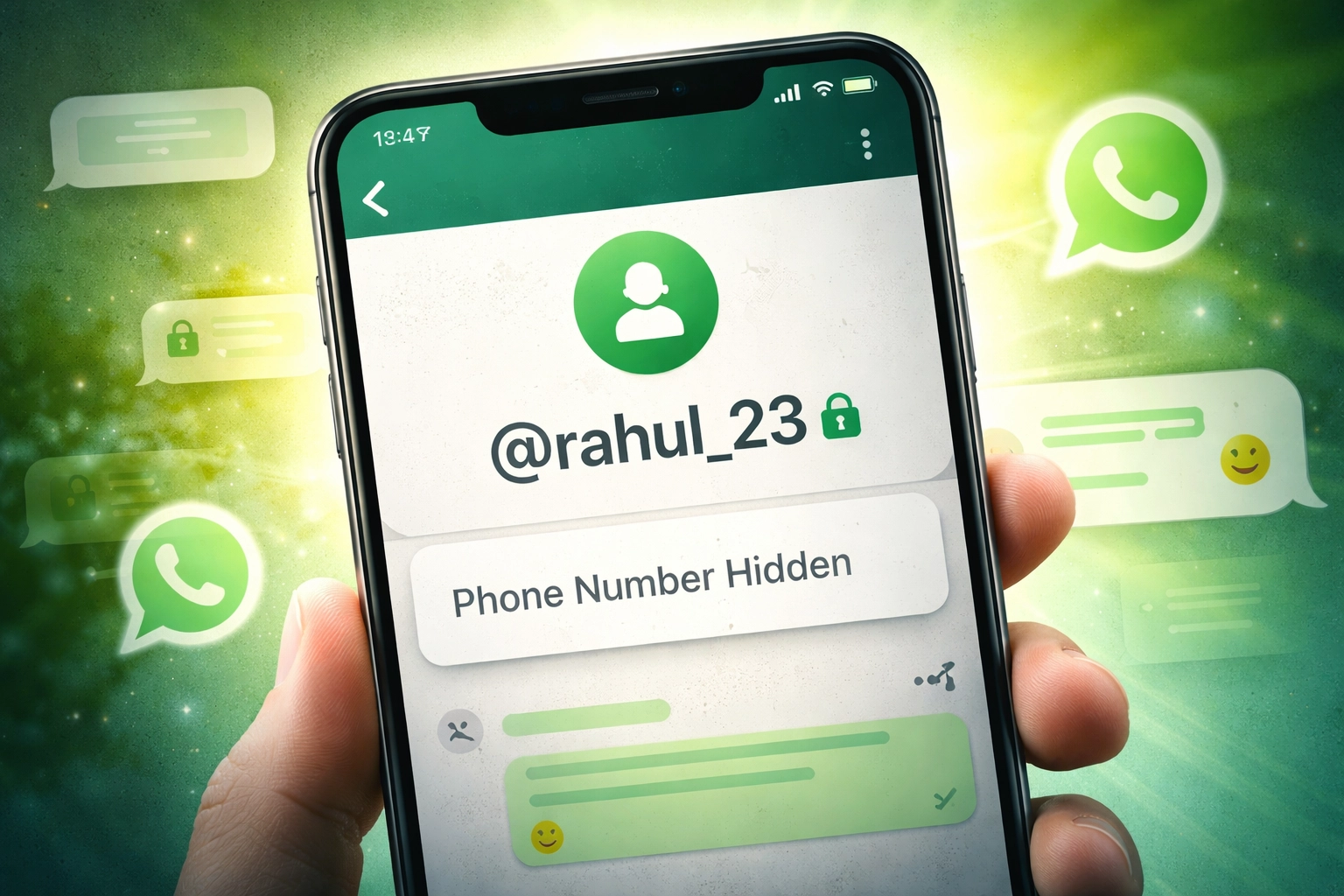
In a move that millions of Indian users have long been waiting for, WhatsApp has quietly begun rolling out one of its most significant privacy features to date. As of 8 April 2026, a limited number of users on both Android and iOS can now create and use usernames allowing them to message, call, and connect with others without ever revealing their personal phone number.
The feature, which was first teased in reports from March 2026 with a planned global launch by June, has now entered its initial phased rollout. For India’s 500-million-plus WhatsApp users, the largest single-country base in the world, this change could transform how we share contacts, conduct business, and protect ourselves from spam and unwanted messages.
How the New Username Feature Works
Setting up a username is straightforward and appears directly in your WhatsApp profile settings once the update reaches your account. Here’s what you need to know:
– Username rules: Must be 3–35 characters long, include at least one letter, and can only use lowercase letters, numbers, periods (.), and underscores (_). You cannot use anything that looks like a website address (no “www.” or “.com” endings).
– Optional extra protection: You can enable a four-digit username key. Without this code, even someone who knows your username cannot message you for the first time adding a powerful layer of control.
– Discovery and sharing: Friends or customers can simply search for your username to start a chat. Your phone number stays hidden. Existing chats and groups continue exactly as before; nothing changes for current contacts.
– Cross-platform note: If your chosen username already exists on Instagram or Facebook, WhatsApp may ask you to verify ownership through Meta’s Accounts Center. For maximum privacy, many users are choosing entirely new handles.
The feature is completely optional. You can continue using your phone number as before, or switch to username-only mode for new connections.
Why This Matters Especially in India
For years, Indian users have complained about spam calls, marketing messages, and random strangers obtaining their numbers through groups or public listings. During festivals, elections, or even IPL season, unsolicited messages flood inboxes. Usernames directly address this pain point.
Businesses stand to gain hugely too. Companies using WhatsApp Business API can now reserve branded handles (think @HDFCBank or @YourLocalClinic) so customers can reach support or place orders without exchanging personal numbers. Meta has already told businesses to update their CRM systems by June 2026 to support the new Business Scoped User ID (BSUID).
Privacy experts in India have welcomed the development. It brings WhatsApp in line with apps like Telegram and Signal, where usernames have long been standard, while maintaining the end-to-end encryption that made WhatsApp India’s messaging backbone.
Benefits at a Glance
– Stronger privacy: Share a username on social media, business cards, or websites without risking your real number.
– Less spam: Random strangers can no longer message you simply because they have your digits.
– Easier networking: Freelancers, content creators, and small businesses can now publish a single public handle.
– Better control: The optional four-digit key acts like a digital gatekeeper.
A Few Things to Keep in Mind
The rollout is still gradual, not every user has it yet. WhatsApp has confirmed it will expand quickly over the coming weeks. Usernames are not mandatory, and your existing phone-based chats remain fully functional.
One potential downside for some: if you use the same username across WhatsApp, Instagram, and Facebook, your profiles become easier to link. For those who prefer strict separation between platforms, choosing a unique WhatsApp-only handle is advisable.
By mid-2026, usernames are expected to be available to everyone globally. This update marks WhatsApp’s biggest shift since it introduced disappearing messages and end-to-end encryption for calls. It signals Meta’s continued focus on privacy amid growing competition and regulatory scrutiny in markets like India.
For now, if the feature has reached your account, head to Settings > Profile and claim your username before someone else does. In a country where sharing phone numbers has long been the default way to connect, this small change could quietly revolutionise how safely and comfortably we communicate.
WhatsApp has finally given Indian users what they asked for: a simple, powerful way to stay reachable without staying exposed. The era of “number dena padega” may soon be over.
Subscribe Deshwale on YouTube


