









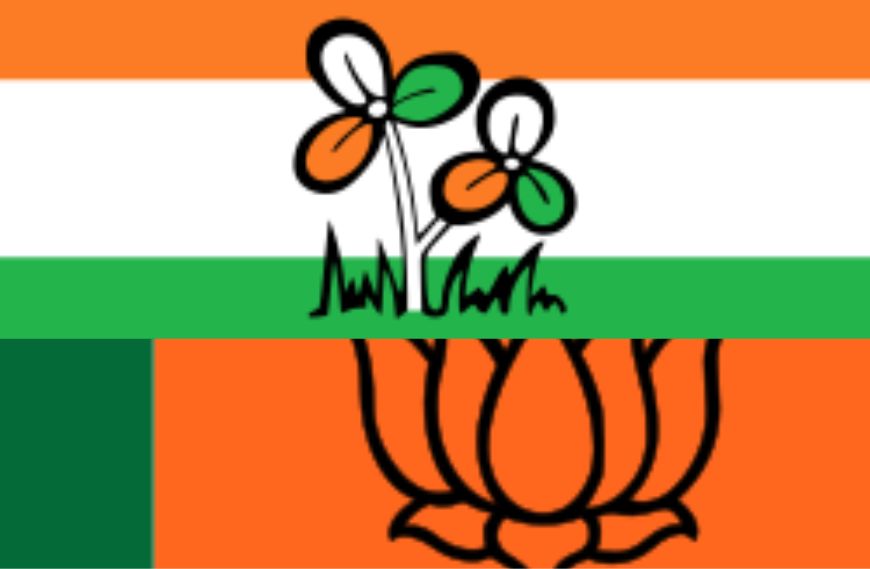
In West Bengal, power does not fall. It is dislodged.
Political Analysis | West Bengal | Strategic Affairs
The Bharatiya Janata Party learnt this the hard way in 2021. It surged from marginality to become the principal opposition, secured 77 Assembly seats, consolidated Hindu votes at scale, and still failed to defeat Mamata Banerjee and the All India Trinamool Congress.
Five years later, the question remains structurally unchanged: can the BJP convert momentum into regime change in Bengal?
The answer is neither rhetorical nor emotional. It is organisational.
What the BJP has built in Bengal
The BJP’s most significant achievement in Bengal has been psychological, not electoral. It has constructed a consolidated Hindu political identity in a state where voting historically followed class and patronage lines rather than overt religious polarisation.
The Matua community in North 24 Parganas and Nadia, sections of Rajbanshis in North Bengal, and urban Hindu middle classes now view the BJP as a long-term vehicle of assertion. This bloc is real. It is ideologically motivated. And it is unlikely to disappear.
In the 2019 Lok Sabha election, the BJP won 18 of Bengal’s 42 seats. Even in 2024, despite setbacks, it retained significant vote share across large geographies of the state. That footprint delivers financial muscle, central leverage, and a cadre base in districts once organisationally barren. For a party that barely existed in rural Bengal fifteen years ago, this is tectonic progress.
After more than a decade in power, the Trinamool Congress also faces accumulating fatigue. Corruption scandals, particularly around recruitment and municipal contracts, have eroded the moral high ground once claimed by Mamata Banerjee. The arrest of senior leaders has fed a narrative of systemic rot. While the Trinamool retains loyalty among welfare beneficiaries, resentment simmers beneath that loyalty. The BJP has ammunition.
The leadership deficit that defines everything
The BJP’s single biggest deficit in Bengal is leadership authenticity.
Mamata Banerjee is not merely a Chief Minister. She is a cultural-political figure rooted in Bengali subaltern imagination. She speaks the idiom. She embodies resistance. She projects vulnerability and authority simultaneously. The BJP’s Bengal leadership, by contrast, appears fragmented and Delhi-dependent.
Without a credible chief ministerial face, someone unmistakably Bengali, culturally embedded, and politically agile, the BJP’s campaign risks being framed as external intervention. In Bengal, that framing is fatal.
The booth-level gap
The Trinamool Congress operates like a decentralised electoral machine. Its strength lies not in ideology but in granular control: panchayat networks, welfare distribution channels, local patronage circuits, and informal enforcement capacity.
The BJP’s cadre network has expanded, but it lacks the embedded density of the Trinamool in rural belts of South Bengal, particularly in districts like Birbhum, Murshidabad, and parts of Hooghly. In Bengal, elections are not won in rallies. They are won at booths.
The narrative problem
The BJP frames Bengal politics around corruption, law and order, and religious identity. The Trinamool frames it around Bengali pride, welfare protection, and resistance to outsiders. This cultural-national narrative, Bangla nijer meyekei chay, remains potent.
Unless the BJP learns to speak in the grammar of Bengali self-respect rather than central authority, it will continue to face psychological resistance among undecided voters.
The minority arithmetic
Muslims constitute approximately 27% of Bengal’s population, and the Trinamool retains overwhelming support in this demographic. For the BJP to win an outright majority in the Assembly, it would need near-total Hindu consolidation, significant inroads among Scheduled Castes and tribal communities, and fragmentation of minority voting. The first is achievable. The third is improbable without opposition fragmentation.
The three scenarios for a BJP victory
The BJP can defeat the Trinamool only under one of three conditions. First, a severe corruption implosion that decisively fractures Trinamool’s organisational discipline. Second, a charismatic Bengali BJP leader emerging who can rival Mamata Banerjee’s cultural legitimacy. Third, a broad anti-Trinamool coalition that prevents vote consolidation against the BJP.
At present, none of these conditions is fully operational.
The Mamata variable
It is tempting to reduce this contest to arithmetic. That would be a mistake.
Mamata Banerjee remains the BJP’s most formidable obstacle, not because of policy brilliance, but because of emotional capital. She has survived the Singur agitation, the Saradha scandal, the 2021 insurgent challenge, and sustained central investigative pressure. Her political reflexes are sharp. Her welfare architecture is electorally effective. Her narrative discipline is intact.
Toppling her requires more than anger. It requires replacement credibility.
Can the BJP win in 2026?
Yes, but not automatically.
The BJP today is competitive in Bengal. It is not yet dominant. It has a committed vote base, central power leverage, and a motivated ideological constituency. It lacks a singular state leader, full booth-level supremacy, and narrative indigenisation.
Until those deficits are addressed, Mamata Banerjee remains structurally advantaged.
Final assessment
West Bengal does not vote out regimes casually. It tolerates them until a culturally legitimate alternative emerges.
The BJP has created the conditions for bipolar politics in Bengal. But to replace the Trinamool Congress, it must transform from an insurgent force into a rooted Bengali alternative, organisationally, linguistically, and emotionally.
Until then, Mamata Banerjee stands not merely as an incumbent but as the embodiment of a political ecosystem the BJP still struggles to penetrate.
In Bengal, the battle is not just for votes.
It is for belonging.
Subscribe Deshwale on YouTube


