









The fire along the Durand Line
Before dawn on 27 February 2026, residents of Kabul were woken by explosions. A trader sheltering near the Torkham crossing, the busiest land transit point between Pakistan and Afghanistan, told a Pashto-language broadcaster that he had not heard shelling this close since the American withdrawal. “We did not know which direction to run,” he said. He locked his shop and sat in the dark. Around him, the border had become a wall of sound.
Pakistani Air Force jets had struck targets in the Afghan capital, in Kandahar and in Paktia province. Pakistan’s Defence Minister Khawaja Asif confirmed that the country had launched Operation Ghazab Lil Haq, meaning Righteous Fury, after Afghan Taliban forces allegedly opened fire on multiple Pakistani border posts in Khyber Pakhtunkhwa. Afghanistan’s defence ministry said its forces had struck back first, in retaliation for Pakistani airstrikes earlier in the month that Kabul said killed civilians.
The casualty figures, as always in this part of the world, are contested. Pakistan claimed 133 Taliban fighters killed and 27 military posts destroyed. Afghanistan said 55 Pakistani soldiers died and that its forces captured over a dozen Pakistani army positions. The UN Secretary General called for adherence to international humanitarian law. Russia urged both sides to halt cross-border attacks immediately. Iran’s Foreign Minister offered to facilitate dialogue. The world watched, and issued statements. The bombs kept falling.
This is not a sudden crisis. It is the violent culmination of 77 years of unresolved history, contested geography, tribal loyalty, imperial cartography, and a singular fact that Pakistan has never quite wanted to accept: sharing a religion with a neighbour is not the same as sharing interests with one.
Islam has not been enough
The Organisation of Islamic Cooperation has 57 member states. There is no Islamic superstate. There has never been one. The Ummah, the theoretical global community of Muslim believers, has functioned as a moral concept and an occasional rhetorical device. It has never produced a unified political unit capable of resolving territorial disputes, managing border insurgencies, or overriding national sovereignty.
Pakistan and Afghanistan are both overwhelmingly Muslim nations. Both constitutions are rooted in Islamic identity. Yet as of this week, they are in a state of declared open war. Pakistan’s own defence minister accused the Taliban-governed state, arguably the most fundamentally Islamic government on earth today, of having turned Afghanistan into what he called a colony of India. That a Pakistani minister would reach for such language to describe a Taliban administration tells you precisely how far Islamic solidarity extends when national interests diverge.
The lesson is not new. Arab states have fought each other across decades. Iran and Iraq, both Muslim majority, fought an eight-year war in the 1980s that killed hundreds of thousands. Turkey and Saudi Arabia pursue openly competing foreign policies. In South Asia, ethnicity, territory and tribal loyalty have consistently proven more durable than religious brotherhood. Pakistan and Afghanistan are simply the latest and most violent confirmation of this pattern.
Seventy-seven years of a bad border
The root of this conflict is colonial in origin and permanent in consequence. In 1893, British India’s Foreign Secretary Sir Mortimer Durand drew a 2,611-kilometre line through the Pashtun tribal belt, dividing one ethnic group between two administrative zones. It was a frontier of convenience, not of consent. The Pashtuns living in the hills and valleys along what became the Afghanistan-Pakistan border were not meaningfully consulted.
When Pakistan came into existence in 1947, it inherited this line. Afghanistan’s response was immediate and unambiguous: Kabul voted against Pakistan’s admission to the United Nations, becoming the only country in the world to do so. The reason was straightforward. Afghanistan did not recognise the Durand Line as an international border and still does not. It viewed the Pashtun populations on the Pakistani side as peoples whose political future remained unsettled. The idea of an independent Pashtun homeland, Pashtunistan, surfaced repeatedly in Afghan political discourse through the 1950s and 1960s and never fully disappeared.
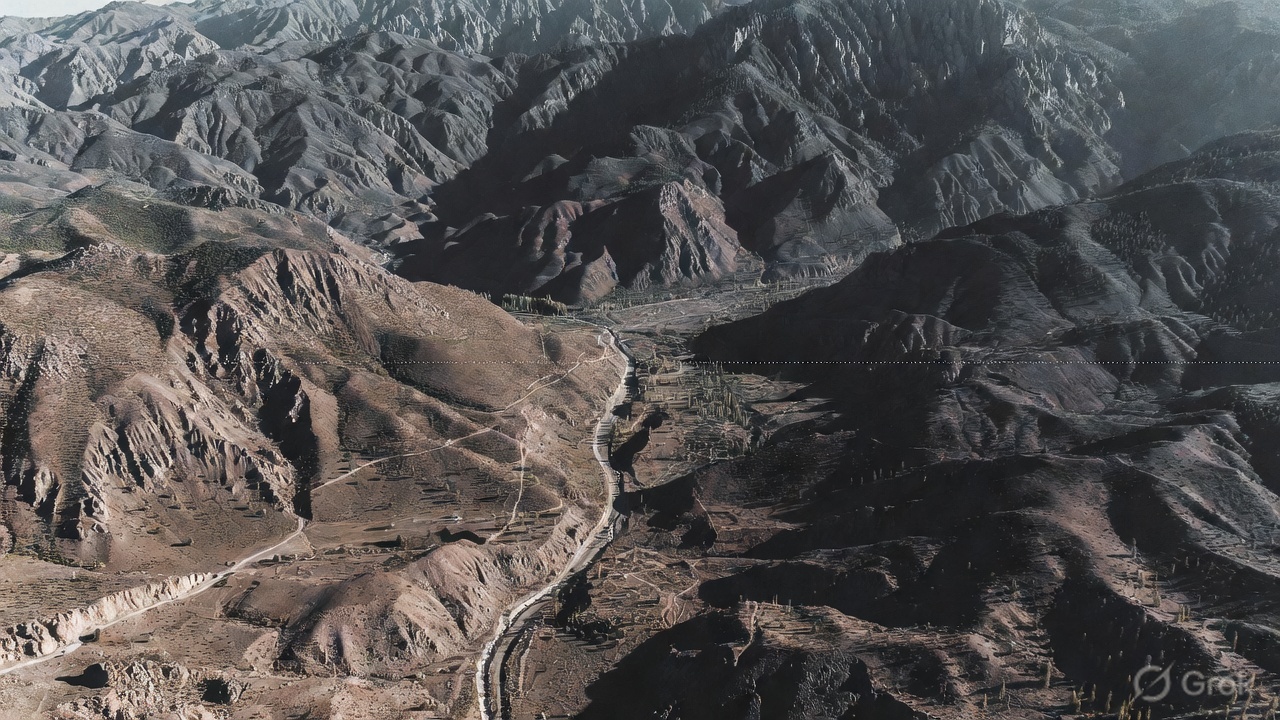
What has deepened the problem over the decades is geography itself. The terrain along the Durand Line, the Khyber Pass, the Mohmand hills, the Kurram Valley, is among the most ungovernable on earth. Neither Islamabad nor Kabul has ever exercised full administrative authority over these zones. This vacuum was filled, as it always has been, by tribal structures, by jirgas and khans and local codes of honour that predate both modern states by centuries.
Tribe beats religion every time
This is a point that outside observers consistently underestimate. A Waziri tribesman’s primary loyalty runs to his clan, his valley and his tribe’s honour code. The Pakistani state and the Afghan state are both, in a meaningful sense, abstractions to him. This is not backwardness. It is a functioning social order with its own logic, its own dispute resolution mechanisms and its own geography of allegiance.
It is precisely this reality that explains one of the central paradoxes of the current conflict. The Tehreek-e-Taliban Pakistan (TTP), the militant group that has killed thousands inside Pakistan and which Islamabad blames Kabul for sheltering, shares deep tribal and family ties with the Afghan Taliban. Many Afghan Taliban figures still have property and families in Pakistan. Pakistan’s own defence minister acknowledged this fact in an interview late last year. The Afghan Taliban’s reluctance to move against the TTP is not simply ideological solidarity, it is tribal solidarity. Pashtun tribal networks span the border in ways that no military operation can sever.
More than 1,200 people, including military personnel and civilians, were killed in militant attacks across Pakistan in 2025 alone, double the number recorded in 2021 when the United States withdrew from Afghanistan. The Pakistani military’s patience has not suddenly run out. It has been eroding for four years.
Pakistan’s Frankenstein problem
To understand why Pakistan is in this position, you have to go back to the 1990s. The ISI, Pakistan’s Inter-Services Intelligence, played a central role in cultivating the Taliban as a strategic instrument. The logic was seductive: a friendly Pashtun government in Kabul would give Pakistan strategic depth against India, a rear base in the event of conflict on the eastern front. The Taliban, drawn heavily from Pashtun refugee communities in Pakistan, particularly in Quetta and Peshawar, was to be Islamabad’s client.
It is worth pausing on the phrase strategic depth because it has done enormous damage for a two-syllable idea that was never particularly coherent. The notion that a nuclear-armed state of 200 million people required a friendly government next door as a fallback position in the event of war with India always said more about the Pakistani military establishment’s siege mentality than about any rigorous strategic calculation. India has never shown the slightest interest in a land war that would require it to fight through Afghanistan. The strategic depth doctrine was, in retrospect, a wish dressed up as a concept, a way of giving institutional justification to an intelligence operation that was already underway for other reasons, principally the desire to keep Afghanistan out of India’s orbit at any cost. The cost, as it turns out, has been considerable.
After the United States invaded Afghanistan in 2001, Pakistan officially allied with Washington while simultaneously, according to multiple Western intelligence assessments made public over the years, maintaining covert ties with Taliban factions. The Taliban’s leadership structure, operating out of Quetta, survived. It regrouped. In August 2021, it returned to power in Kabul.
Then came the reckoning. The Taliban, once in power, behaved not as Pakistan’s client but as an independent Pashtun nationalist government with its own interests and its own borders to defend. It declined to act decisively against the TTP. It refused to formally recognise the Durand Line. It began engaging diplomatically with India. Pakistan had spent decades building the Taliban’s legitimacy and credibility. The Taliban, in power, said thank you and went its own way.
The operation launched this week followed Pakistan’s previous airstrikes on 21 February, which had targeted TTP and ISIS-Khorasan camps inside Afghanistan. The current conflict did not erupt from nowhere. It was the product of months of escalating exchanges, a fragile Qatar-mediated ceasefire that had held only partially since October 2025, and a pattern of mutual accusations that both sides have been unable or unwilling to break.
Why Kabul looks towards Delhi
This is the part of the story that consistently surprises people unfamiliar with regional dynamics.
Afghanistan is landlocked. To access Indian markets, it needs to pass through Pakistani territory. Pakistan has repeatedly used this leverage, blocking or restricting transit access when bilateral relations deteriorated. India responded with a different kind of statecraft. It built the Salma Dam in Herat, the Zaranj-Delaram highway linking Afghanistan to Iran’s Chabahar port, and the Afghan Parliament building in Kabul. These were not charity. They were geopolitical investments that deliberately bypassed Pakistani territory.
Even the current Taliban government, whose world view has little in common with India’s constitutional liberalism, finds strategic value in the relationship with New Delhi. India reopened its embassy in Kabul after the Taliban takeover in 2021. The Taliban, for its part, has not closed the door. Both sides have an interest in a stable Afghanistan that does not become permanently dependent on Pakistan’s goodwill. Pakistan’s defence minister said publicly that Afghanistan had become a colony of India. That a minister of a nuclear-armed state uses such language about a neighbouring Islamic government reflects how threatening the India-Afghanistan relationship looks from Islamabad.
India’s investment in Iran’s Chabahar port is the structural foundation of this alignment. Chabahar gives Afghanistan and Central Asia an alternative trade corridor that owes nothing to Pakistani cooperation. It is strategic geography expressed in concrete and shipping lanes.
And then there is Bangladesh
The Bangladesh angle here is worth noting, though it operates on a somewhat different register from the Afghanistan-Pakistan dynamic. After Sheikh Hasina’s government fell in 2024 and Muhammad Yunus’s interim administration took office in Dhaka, Bangladesh’s foreign policy began a cautious but visible reorientation. Relations with Pakistan, frozen for decades by the unresolved wounds of 1971 and Hasina’s firmly India-aligned posture, began to thaw.
For India, this matters. Bangladesh has historically been the most stable element of India’s eastern neighbourhood. A Bangladesh that tilts towards Islamabad, combined with China’s deepening economic presence in both countries, creates a different strategic geometry on India’s eastern flank. It is not a conspiracy. It is a smaller state hedging its bets as regional power balances shift. But the consequences for New Delhi’s neighbourhood calculations are real.
Iran, America and a region already stretched thin
Add to this the constant background radiation of United States-Iran tensions. Iran’s Foreign Minister offered this week to mediate between Pakistan and Afghanistan, framing the appeal around the sanctity of Ramadan. The offer was not purely altruistic. Tehran has its own reasons to seek stability on its eastern borders: a long frontier with Afghanistan, a sizeable Hazara Shia population inside Afghanistan that Iran considers under its protection, and the perpetual threat of a refugee crisis if the conflict spirals.
Iran and Pakistan have their own unresolved border tensions. In January 2024, the two countries exchanged strikes on each other’s territory, Iran targeting the Jaish-e-Adl militant group in Pakistani Balochistan, Pakistan retaliating against alleged Iranian-supported targets. The episode was de-escalated quickly but demonstrated how many fault lines run through this region simultaneously.
The United States-Iran nuclear standoff adds another layer of instability. Ongoing tensions over Iran’s nuclear programme, combined with American military positioning in the Middle East, mean that a miscalculation between Washington and Tehran could send shockwaves across every economy and security structure in the region, from energy prices to refugee flows to the strategic calculations of every government between Islamabad and New Delhi.
India watches and says nothing
India has said almost nothing publicly about Operation Ghazab Lil Haq. This silence is policy, not absence.
New Delhi’s interests in the current conflict are layered and, to some degree, contradictory. A weakened Pakistani military is not unwelcome in South Block, particularly after the tensions of May 2025. A stable Afghanistan that continues engaging with India serves long-term Indian interests. But a Pakistan that collapses into genuine state failure is a nightmare scenario: a nuclear-armed, economically broken country on India’s western border is not a strategic asset for anyone.
India therefore does what it always does in moments of regional turbulence. It keeps the Chabahar corridor operational. It maintains the Afghan embassy relationship. It watches Islamabad’s internal fractures, the civil-military tensions, the political opposition, the economic fragility, with careful attention. And it says nothing that can be used against it.
China and a region with no architecture
No honest account of South Asian instability can omit China. Beijing maintains continuous territorial pressure on India from Ladakh to Arunachal Pradesh, funds and diplomatically shields Pakistan, and simultaneously courts Afghanistan as a potential extension of the Belt and Road Initiative through Gwadar and Central Asia. China wants a stable Afghanistan to protect its Xinjiang frontier and extend economic influence northwards. It also wants Pakistan strong enough to be useful as a counterweight to India. These two interests are not always compatible, and China navigates the contradiction with the patience of a state that measures strategy in decades.
The broader picture is one that should concern any serious observer of global order. China’s territorial assertiveness on India’s borders, Pakistan’s military adventurism in Afghanistan, Afghanistan’s state fragility, Bangladesh’s political transition, Iran’s nuclear brinkmanship and the United States’ fluctuating regional attention are all active simultaneously. South Asia has not faced a denser, more overlapping matrix of instability in the post-Cold War era.
SAARC is effectively dead, paralysed for years by India-Pakistan hostility. There is no functional regional security architecture. Every state navigates alone, hedging against every neighbour, trusting no multilateral forum to hold.
What happens next
The immediate task is stopping the shooting. Russia has called for dialogue. The UN Secretary General has issued a statement. Iran has offered its services. Whether any of these appeals produce a ceasefire in the coming hours will depend on whether the Pakistani military, having made its point with airstrikes on Kabul and Kandahar, considers its deterrence restored. It will also depend on whether the Afghan Taliban, having demonstrated that it will fight back, judges further escalation to be in its interest.
The structural questions will not be resolved by a ceasefire. The Durand Line will remain unrecognised by Kabul. The TTP will continue to use Afghan terrain. The tribal networks that straddle both states will continue to function according to their own logic. Pakistan will continue to feel encircled. Afghanistan will continue to pursue relationships with India, Iran and others as a hedge against Pakistani pressure.
The umbrella of Islam has not held. Pashtun tribal identity has proven more durable than Islamic brotherhood. Colonial borders have proven more explosive than anyone in 1947 imagined. And the great powers, America distracted, China expanding, Russia repositioning, have left a vacuum that no regional actor has the credibility or capacity to fill.
But perhaps the most honest way to understand what is happening along the Durand Line this week is to return to the trader at Torkham, sitting in the dark with his shop locked and the sound of someone else’s war pressing in through the walls. He did not create this border. Neither did his father. A British official drew it in 1893 with a pen and a strategic purpose that has long since expired. Every post-colonial border settlement in South Asia, the Line of Control in Kashmir, the frontier between Bangladesh and Myanmar, the contested edges of Arunachal Pradesh, carries the same original sin: lines drawn for imperial convenience, inherited by nations that had no say in where they fell, and defended ever since with blood that was never the cartographer’s to spend. Military operations can silence a crossing point for days or weeks. They cannot resolve what a line on a map left unresolved over a century ago. The trader will eventually unlock his shop. The border will still be there, exactly where Mortimer Durand put it, meaning exactly as little as it always has.
Subscribe Deshwale on YouTube


