









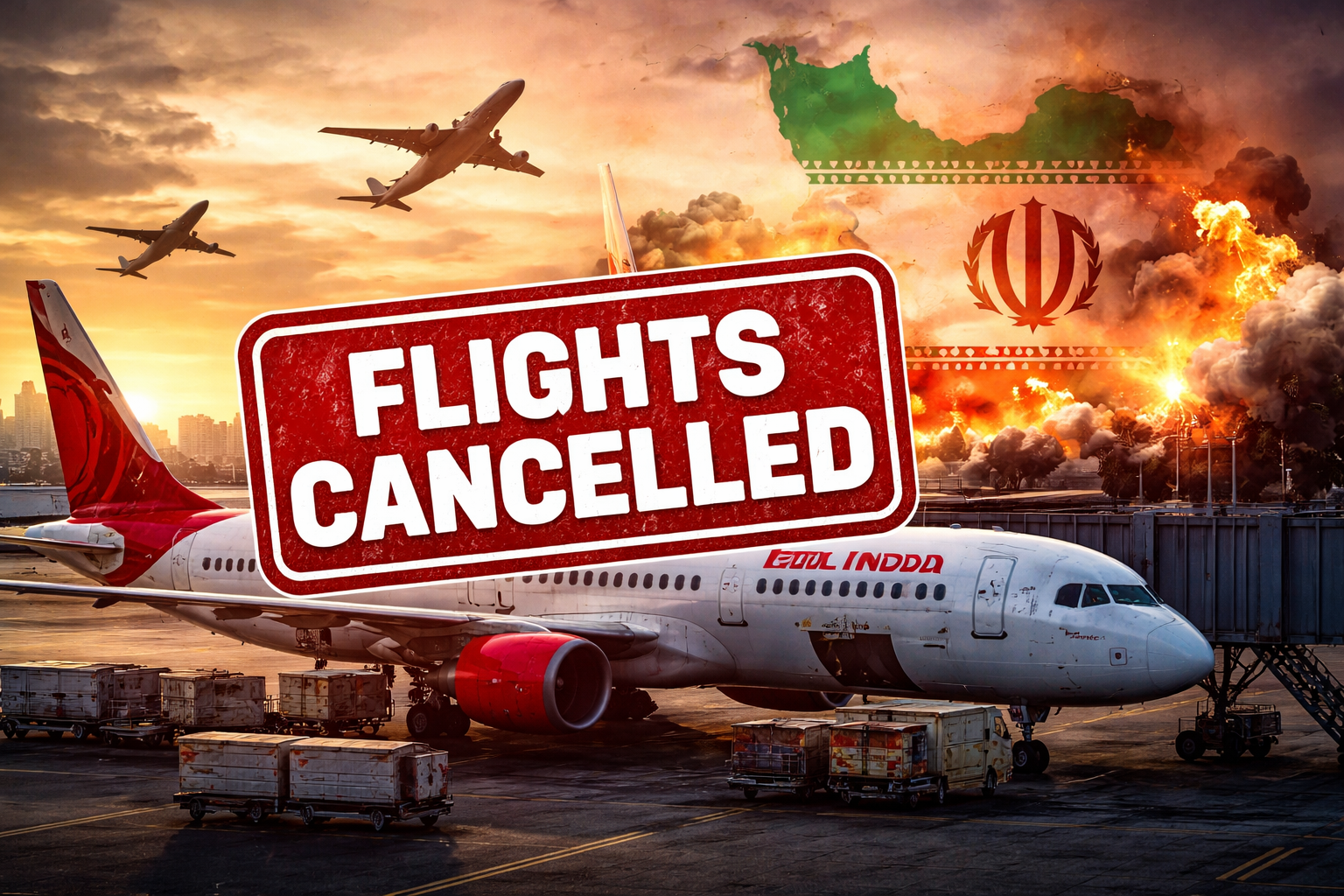
India’s aviation sector has faced significant disruption in recent days after a major military strike by the United States and Israel on Iranian territory. The geopolitical eruption in West Asia has led to airspace closures and a ripple effect that cancelled flights across the country. For Indian travellers and airlines, the impact has been immediate and widespread.
Safety First in Aviation
Safety is central to all decisions made by airlines and regulators worldwide. When airspace over Iran and neighbouring regions was restricted, airlines responded by cancelling or rerouting flights. Civilian aircraft avoid areas of potential conflict as standard procedure. That is a risk management norm, not a reactionary choice. Indian carriers like Air India and others adjusted their schedules to ensure passengers were not put at risk.
Operational Disruptions at Major Airports
Airports in Delhi, Mumbai and Bengaluru reported multiple cancellations on westbound international routes. Long haul flights that usually cross Gulf or Iranian airspace were particularly hit. Flights to Europe and North America were rerouted or did not operate at all for a few days. Some passengers faced confusion at terminals as they tried to understand sudden changes in itinerary. It was difficult for some people because they had little notice. Others simply waited at boarding gates not knowing what would happen next.
Flight Cancellation Summary
| Airline | Flight Number | Origin Airport | Destination Airport | Cancellation Date | Status |
|---|---|---|---|---|---|
| Air India | AI 141 | Delhi | London Heathrow | 1 March 2026 | Cancelled |
| Air India | AI 173 | Mumbai | New York JFK | 1 March 2026 | Cancelled |
| IndiGo | 6E 33 | Bengaluru | Dubai | 1 March 2026 | Cancelled |
| SpiceJet | SG 105 | Delhi | Doha | 28 February 2026 | Cancelled |
| Vistara | UK 51 | Mumbai | London Heathrow | 28 February 2026 | Cancelled |
| Air India | AI 145 | Delhi | Frankfurt | 1 March 2026 | Cancelled |
| IndiGo | 6E 27 | Mumbai | Abu Dhabi | 28 February 2026 | Cancelled |
| Air India | AI 147 | Delhi | New York JFK | 3 March 2026 (Upcoming) | Cancelled |
| IndiGo | 6E 35 | Bengaluru | Dubai | 3 March 2026 (Upcoming) | Cancelled |
| SpiceJet | SG 107 | Delhi | Doha | 3 March 2026 (Upcoming) | Cancelled |
Note: Table includes a representative set of past and upcoming cancelled flights based on official airline advisories. Other routes may also be affected.
Economic and Business Impacts
Flight cancellations have economic consequences beyond passenger inconvenience. Indian aviation was already operating with tight margins. Rising fuel costs and intense competition squeeze profits. Now, unplanned route changes add costs and disrupt airline schedules. Business travellers have had to reschedule meetings. Foreign tourists have reconsidered plans. Cargo services are also affected because many of the same routes carry goods.
Regulatory Response and Coordination
The Directorate General of Civil Aviation instructed airlines to monitor national and international advisories closely. Safety notices for airmen were updated regularly. Airports set up help desks to provide information to passengers. Regulators emphasised that decisions were based on available aerial security assessments. This is standard in global aviation practice. It does not suggest panic. It reflects caution.
Passenger Experience Varies
Some travellers were lucky and received timely updates from airline communication services. Others were not so lucky. There were reports of long waits at customer service counters. That part was messy. There was frustration in some cases. Individuals with connecting flights struggled the most. Many had to rebook via different hubs or adjust travel dates. That was stressful for a few families.
Global Connectivity and Geopolitics
India’s heavy connectivity with the Middle East means that any unrest in that region tends to affect Indian flights disproportionately. Gulf hubs like Dubai and Doha serve as major transit points. When those corridors close, airlines must take longer routes if available. In some cases, the extra distance pushes flight duration beyond crew duty limits, forcing cancellations.
Outlook for Restoration
There is no clear timeline for a return to normal flight patterns. Much depends on diplomatic and security developments. Airlines are expected to continue adjusting operations based on fresh intelligence. Passengers are advised to stay in touch with airlines and check official updates before planning travel.
The recent cancellations serve as a reminder that global geopolitics and commercial aviation are intricately linked. In a connected world, distant events can disrupt routines at home. Anyone planning international flights this month should expect possible changes and build flexibility into plans.
Subscribe Deshwale on YouTube


