



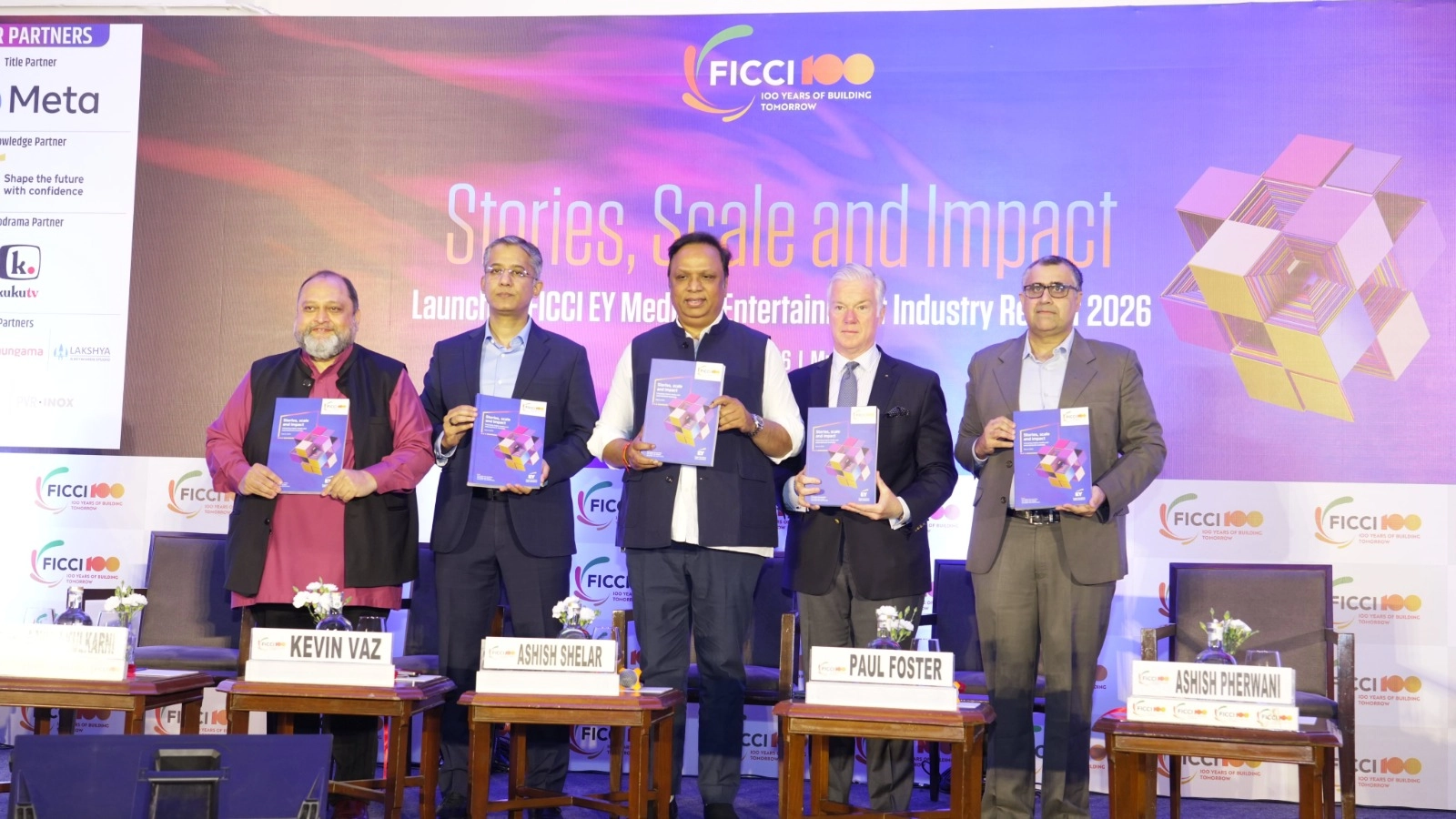
India’s media and entertainment (M&E) sector continued its strong upward trajectory in 2025, growing 9% year on year to reach ₹2.78 trillion, according to the latest report by FICCI and EY India. Titled Stories, scale and impact: Unlocking India’s media and entertainment economy, the report highlights how digital media, advertising and live experiences have emerged as the key growth drivers of the industry.
One of the most significant milestones in 2025 was the rise of digital media as the largest segment of the M&E sector, crossing the ₹1 trillion revenue mark for the first time. Digital advertising alone grew 26% to ₹947 billion, contributing nearly two-thirds of total advertising revenues. This surge reflects a clear shift in brand spending towards measurable, performance-driven and commerce-linked formats.
Overall advertising revenues rose by 13.5%, reaching ₹1.5 trillion and contributing 0.41% to India’s GDP. Growth was largely led by digital platforms, including e-commerce and point-of-sale advertising, signalling a deeper integration of media and commerce.
The report also underscores a changing consumption pattern in India, where audiences are increasingly engaging with content across multiple screens. Television, while still dominant, is evolving into a more dynamic ecosystem. The concept of India as an “AND market” is gaining ground, where traditional and digital platforms coexist rather than compete. The rise of Connected TVs, which reached around 40 million units in 2025, further supports this integrated viewing experience.
Live events emerged as one of the fastest-growing segments, expanding by an impressive 44% in 2025. This growth was driven by ticketed concerts, large-scale public events, weddings and religious gatherings, reflecting a strong demand for experiential entertainment. Meanwhile, filmed entertainment also performed well, with revenues reaching ₹205 billion and over 1,900 films released during the year.
Despite global declines, print media in India showed resilience, with advertising revenues rising modestly. However, segments like radio and animation and VFX faced challenges due to reduced ad rates and global production slowdowns.
Speaking at the report launch, Ashish Shelar emphasised the sector’s growing importance to the economy. He noted that Mumbai continues to be the creative capital of India and highlighted the government’s commitment to building a future-ready ecosystem that integrates creativity with advanced technology.
Industry leaders also stressed the need for sustainable monetisation and innovation. Anant Goenka pointed out that the interplay of storytelling, scale and impact will define the sector’s future, while Ashish Pherwani highlighted the importance of adapting to evolving consumer behaviour and regulatory frameworks.
Looking ahead, the report projects the M&E sector to reach ₹3.3 trillion by 2028, growing at over 7% CAGR. Digital media, live events and new-age content formats are expected to lead this expansion, supported by rising smartphone penetration, regional content demand and the growing appeal of experiential entertainment.
