







Mumbai’s autorickshaw drivers aren’t just protesting a fee. They’re fighting to prove that honest work shouldn’t come with a forced price tag.
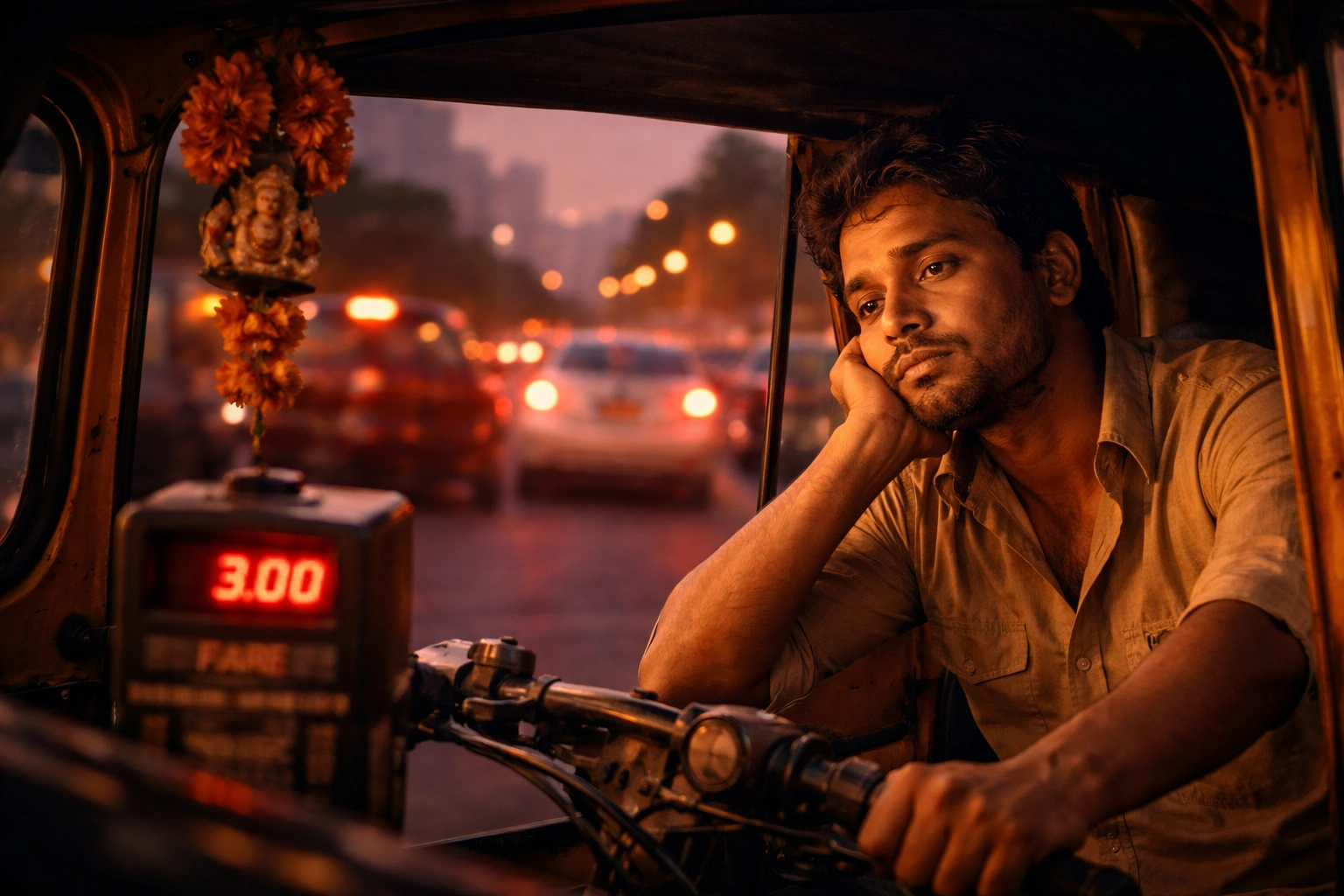
Raju gets up at 5:30 every morning.
Not because he wants to. But because if he doesn’t hit the road before 6, he misses the early office crowd and that first hour can mean the difference between a decent day and a bad one.
He drives his autorickshaw through Mumbai’s suburban streets for nearly 12 hours. He skips lunch most days, eating a vada pav at a signal when he gets the chance. By the time he parks and gets home, his back aches, his eyes are tired, and his earnings for the day sit somewhere between ₹700 and ₹1,000 before fuel costs.
After petrol, his net take-home is often closer to ₹500.
He has a family to feed. A school fee is coming up. And a monthly installment on the autorickshaw itself because like most drivers in Mumbai, he doesn’t own the vehicle outright. He’s still paying it off.
Now, the government wants ₹800 more. Just to let him keep working.
What is this ₹800 fee?
About a year ago, the Maharashtra government set up a body called the Dharmaveer Anand Dighe Maharashtra Autorickshaw and Meter Taxi Drivers Welfare Board.
The stated purpose sounds good on paper as a welfare scheme for auto and taxi drivers, offering them some form of social protection.
To enrol, each driver has to pay:
- ₹500 as a one-time joining fee
- ₹300 every year after that
That’s ₹800 upfront, just to get into the system.
Now here’s where it stops being a welfare scheme and starts feeling like something else entirely.
The catch nobody talks about
Drivers say that when they go to the RTO to get their fitness certificates or renew their transport documents paperwork they legally need to keep their vehicle on the road they are being told, unofficially, to pay the ₹800 welfare fee first.
No payment. No documents. No documents, no driving.
This isn’t written anywhere in any rule. No official notice says your fitness certificate depends on this fee. But drivers across Mumbai’s suburbs say it’s happening anyway quietly, at the counter, with no paper trail.
Union leaders have called it exactly what it is: coercion.
Think about what that means for someone like Raju. His fitness certificate isn’t optional. Without it, he can’t legally run his auto. If he can’t run his auto, he has no income. So he has no real choice to pay, even if he doesn’t want to, even if he thinks the scheme is unfair, even if ₹800 is two days of his net earnings.
That’s not welfare. That’s a toll.
The number that raises questions
Maharashtra has an estimated 15 lakh auto drivers.
If every one of them pays ₹800, the government collects roughly ₹120 crore.
That’s a significant amount of money. And it’s a number that auto unions haven’t been able to stop thinking about.
Where does this money go? Who audits the welfare board? What exactly does a driver get in return for his ₹800? These questions don’t have clear public answers yet and that silence is exactly what has pushed drivers from frustration to the streets.
Why April 8?
Tomorrow, Wednesday April 8, auto unions across Maharashtra are marching to the Andheri Regional Transport Office (RTO).
This is their way of saying: we’ve complained, we’ve waited, and nothing has changed.
Union leaders have warned that the protest could disrupt autorickshaw services across the suburbs through the day. If you take an auto to the station in the morning, or rely on one for school runs or a hospital appointment it’s worth having a backup plan ready. Consider BEST buses, the metro, or booking a cab in advance.
This isn’t about ₹800
Here’s the thing about this protest that’s easy to miss if you only read the surface.
Raju and the lakhs of drivers like him aren’t necessarily saying they don’t want a welfare scheme. Many of them would welcome genuine support: insurance, medical cover, something for their families if something happens to them on the road.
What they’re saying is: don’t make it compulsory through the back door. Don’t hold our documents hostage. Don’t call it welfare when it feels like a shakedown.
There’s a dignity question underneath all of this. These are men who wake up before sunrise, who navigate Mumbai’s impossible traffic, who get shouted at when fares don’t match expectations, who have no sick leave and no paid holidays. They’ve built their lives around one simple deal: work hard, earn your keep.
The ₹800 isn’t just money. It’s a message that even their right to work comes with strings attached.
And that’s why they’re marching tomorrow.
Subscribe Deshwale on YouTube


