



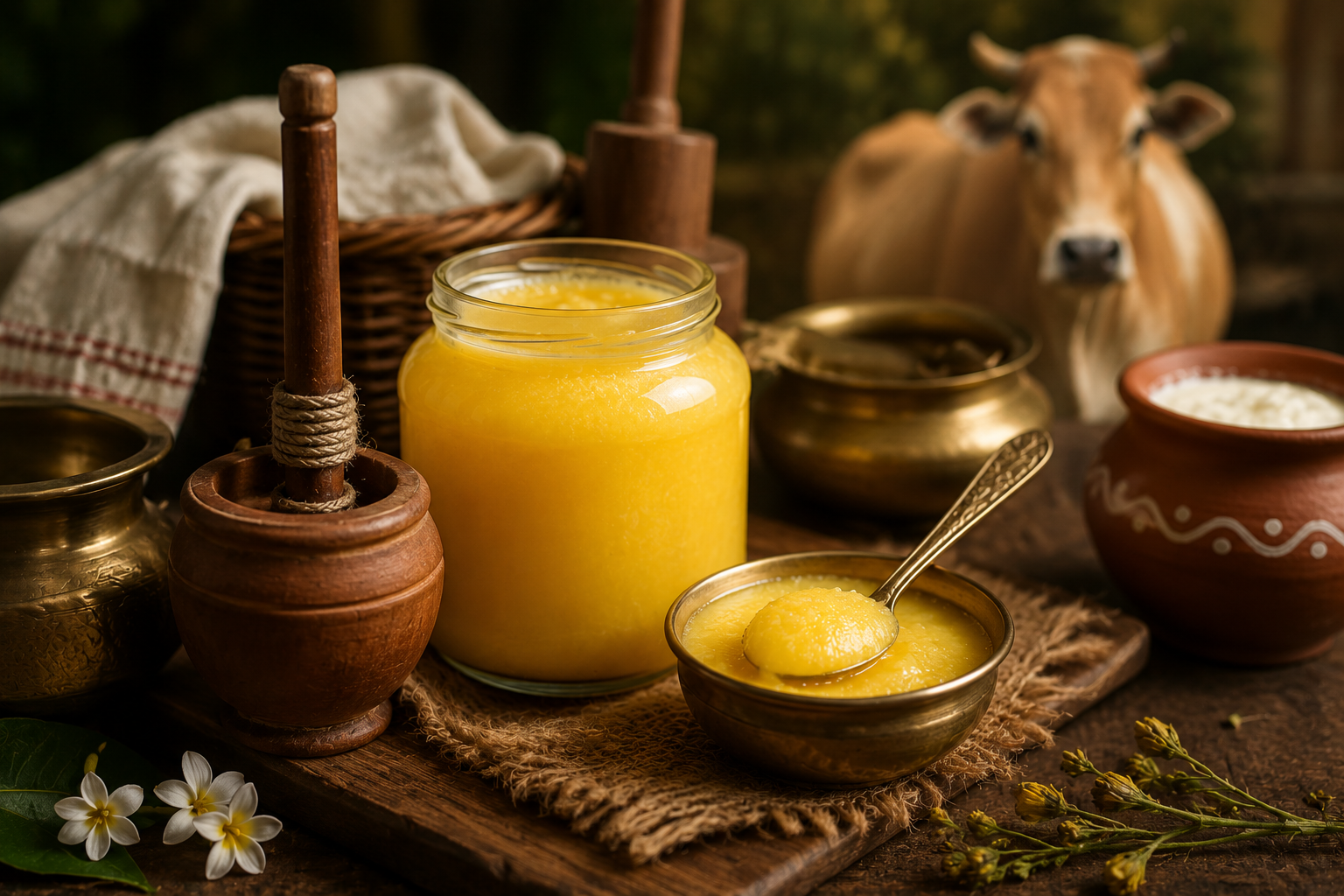
AI Generated image

Walk into any supermarket or browse an online grocery app today, and one thing becomes immediately noticeable. Almost every premium ghee brand has something special to offer. One claims to be made from Gir cows, another highlights grass-fed cattle. Some focus on Bilona, while others use terms such as Vedic, farm fresh, single-origin, wood-churned, cultured ghee, handcrafted, ancient Ayurvedic process and chemical-free.
For consumers, the number of choices has grown rapidly. But so have the claims. While some of these descriptions may genuinely reflect how the ghee is produced, others are marketing terms that do not always have a clear scientific or legal definition. As a result, many buyers may find it difficult to understand what exactly they are paying for.
When branding becomes as important as the product
India is the world’s largest producer and consumer of milk, and ghee has been a part of Indian households for generations. As more consumers have started looking for premium and traditional food products, many new brands have entered the market.
Unlike earlier, when a few dairy cooperatives dominated the market, today’s premium ghee industry has become highly competitive. Attractive packaging, social media marketing and online shopping have made it easier for brands to reach consumers across the country.
Many people first hear about a product through Instagram influencers, YouTube channels, fitness coaches or lifestyle creators. While these platforms help consumers discover new products, personal opinions shared online should not be confused with scientific evidence.
Does a premium price always mean better quality?
Another common belief is that a higher price automatically means a better product.
In some cases, premium pricing may reflect genuine factors such as traditional Bilona preparation, smaller-scale production or milk sourced from indigenous breeds. However, pricing alone does not always indicate superior nutritional quality.
The word “pure” appears on almost every jar of ghee. But what does it actually mean? Does it refer to the absence of adulteration, the method of preparation or compliance with food safety standards? Without proper explanation, such terms can mean different things to different consumers.
The same applies to labels like farm fresh, Vedic, chemical-free and single-origin. These descriptions may provide useful information, but consumers should also look for clear details about the production process instead of relying only on attractive branding.
Why transparency matters
One important aspect that often receives less attention is traceability.
If a company claims that its ghee is prepared only from milk collected from indigenous cow breeds, can that claim be independently verified? Modern dairy supply chains involve multiple collection centres and processing units, making traceability an important part of consumer confidence.
Another area where consumers would benefit is independent testing. India has well-equipped food laboratories, but very few comparative public studies examine premium ghee brands for factors such as adulteration, fat composition, contaminants or quality consistency.
Greater transparency can help both consumers and responsible manufacturers. Companies following high-quality production standards also benefit when reliable information is available in the public domain.
The responsibility is shared
Food regulators establish standards and take action against violations, but they cannot test every batch of every product sold in the country. This makes responsible manufacturing and accurate labelling equally important.
Consumers also have a role to play. Before paying a premium price, it is worth asking a few simple questions. Is the claim supported by evidence? Does the label clearly explain the production method? Am I paying more because of better quality, or because of branding?
There is nothing wrong with premium products or traditional methods of making ghee. Many producers genuinely invest in better sourcing, improved hygiene and high-quality manufacturing practices. However, premium pricing should also come with greater transparency.
As India’s premium dairy market continues to grow, clear labelling and reliable information will become increasingly important. Consumers deserve to know whether they are paying for the breed of cow, the production method, independently verified quality or simply a well-presented marketing story.
To be continued in the final part…
The concluding part of this investigation will look at whether India’s current food labelling rules are enough, whether premium dairy products need stricter disclosure requirements, and how consumers can make informed choices while buying premium ghee.
Subscribe Deshwale on YouTube
