




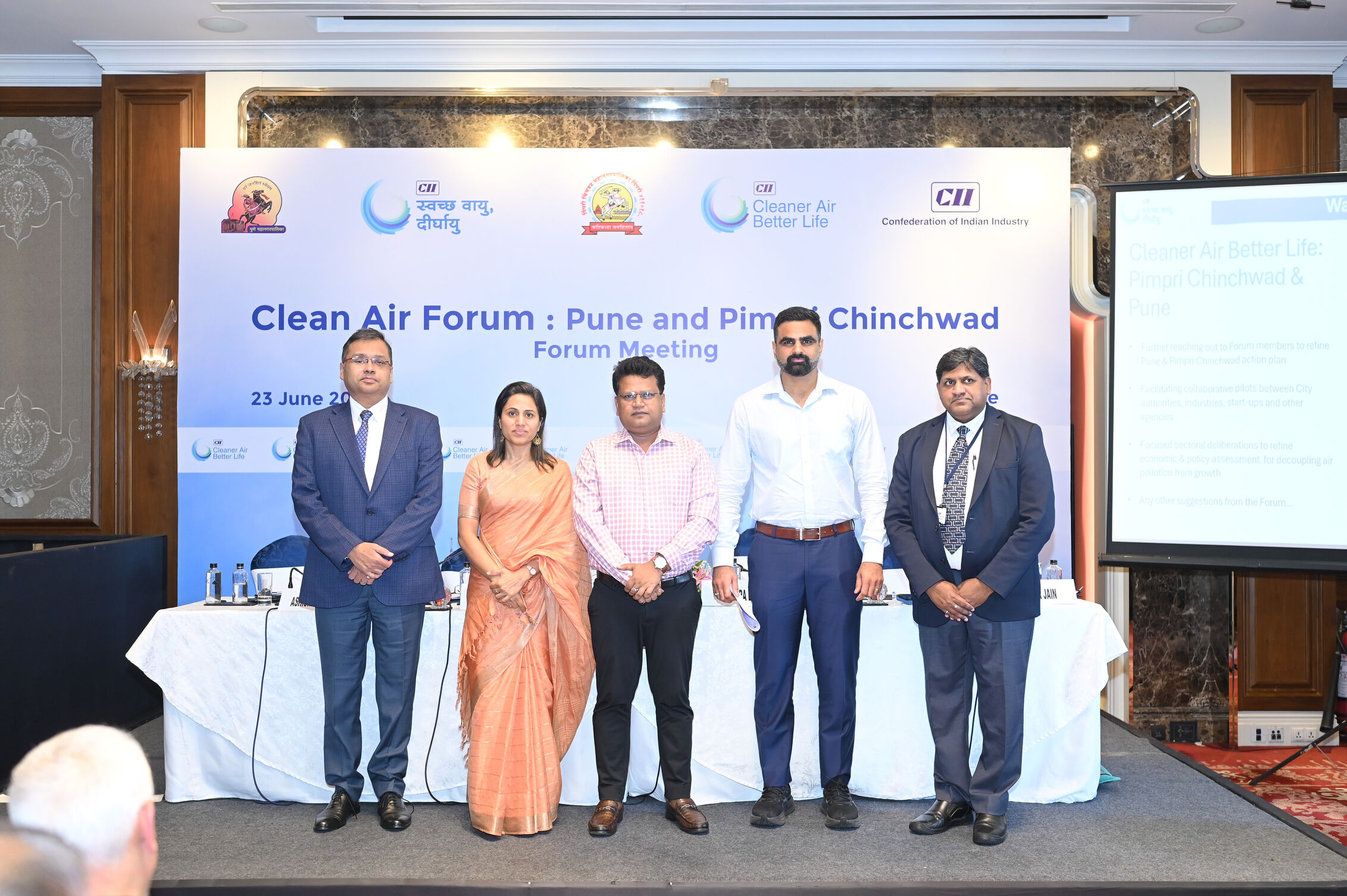
Cummins in India and the Confederation of Indian Industry (CII) have taken another step towards improving urban air quality with the launch of an advanced Decision Support System (DSS) for Pune and Pimpri Chinchwad. Introduced under the Cleaner Air Better Life (CABL) initiative, the new platform is designed to help city authorities predict pollution levels, identify emission hotspots and take timely action through data driven planning.
Developed in collaboration with the Pune Municipal Corporation (PMC), Pimpri Chinchwad Municipal Corporation (PCMC) and technology partner Airvoice, the system provides up to 72 hour air quality forecasts along with actionable insights. These forecasts will enable civic authorities to monitor changing pollution levels, investigate emerging air quality events and implement preventive measures before pollution reaches critical levels.
The launch marks another milestone for the Cleaner Air Better Life initiative, which was conceptualised by Cummins in India, the Confederation of Indian Industry and NITI Aayog. Over the years, CABL has evolved into a national platform that brings together government bodies, industries, academic institutions, civil society organisations and local communities to address air pollution through collaborative solutions.
The initiative focuses on four major areas including clean transport, clean fuel, clean industry and biomass management. By combining technology with policy support and stakeholder participation, CABL aims to create practical solutions that can be replicated across Indian cities.
Speaking at the launch, Shveta Arya, Managing Director of Cummins India Ltd. and Chairperson of CII Cleaner Air Better Life, said every city faces unique air quality challenges and therefore requires solutions tailored to its specific needs. She noted that expanding the collaborative model from Delhi to Pune demonstrates how government, industry, research institutions and technology partners can work together to develop hyperlocal strategies for reducing emissions from transport, construction and other urban activities.
The initiative has already delivered significant environmental impact beyond urban centres. Since its inception, CABL has reached more than one lakh farmers across rural India, helped prevent the burning of 6.4 lakh tonnes of crop residue, conserved approximately 71 billion litres of water, reduced an estimated 1.3 lakh tonnes of carbon dioxide emissions, and expanded its work across 432 villages covering more than 4.8 lakh acres.
Highlighting Cummins’ broader sustainability goals, Ashish Aggarwal, Executive Director and Chief Administrative Officer of Cummins India, said the company’s environmental commitment extends beyond its business operations to the communities where it operates. He added that CABL demonstrates how partnerships can deliver measurable environmental improvements while supporting healthier and more resilient communities.
Shikhar Jain, Executive Director at CII’s Centre of Excellence for Sustainable Development, said predictive technologies such as the Decision Support System enable cities to make smarter decisions that benefit both air quality and public health. According to him, collaboration between governments, industries and technology providers is essential to tackling pollution effectively.
The launch event was attended by senior government officials, including Naval Kishore Ram, Municipal Commissioner of Pune Municipal Corporation, and Jitendra Dudi, District Collector of Pune, along with representatives from PMC, PCMC, industry, academia and research organisations. Their participation highlighted the growing importance of public private partnerships in addressing environmental challenges.
With the introduction of the Decision Support System, Pune and Pimpri Chinchwad are expected to strengthen their air quality management capabilities while setting an example for other Indian cities looking to adopt technology driven environmental solutions. The initiative reflects a growing shift towards proactive pollution management, where real time data and collaborative governance play a central role in creating healthier and more sustainable urban environments.
Subscribe Deshwale on YouTube
