



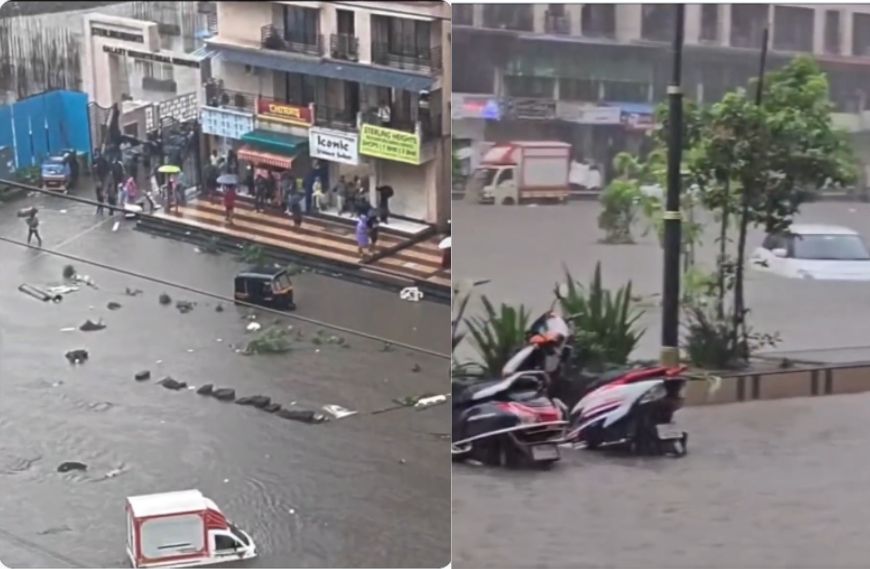
On Saturday morning, Mumbai woke up to a word flashing across every phone screen: red alert. The India Meteorological Department had issued its highest-level warning for Mumbai, Thane, Palghar and Raigad. The next forty-eight hours would bring heavy to extremely heavy rain, along with gusts of fifty to sixty kilometres an hour. At 2:50 pm, the sea would rise to a tide of over four metres. On paper, this was the kind of warning that should bring a city to a standstill.
Mumbai didn’t stop.
Local trains ran on schedule. Offices stayed open. Traffic crawled along as it always does. A city that once held its breath at the first sign of monsoon fury has learned to treat a red alert almost like routine weather trivia: something to glance at, not something to act on.
That’s what makes this strange. Because this is the same city that keeps losing lives to the same monsoon, year after year. This week alone, a man died after falling into an open manhole in Chandivali. Days earlier, an eleven-year-old boy was killed when a tree fell on his school bus in Chembur. These aren’t isolated tragedies; they’re a pattern that repeats every monsoon, with only the names and locations changing.
And yet, when the real warning comes like this red alert the city’s response is close to nothing.
The numbers tell their own story. In just twenty-four hours, Mumbai’s civic body logged ninety-one complaints of trees and branches falling. Thirty short-circuit incidents were reported across the city. Santacruz alone recorded over 109 millimetres of rainfall in the same period, with Colaba close behind at 90 millimetres. These aren’t small figures but walk down any street, and you wouldn’t know it.
So what does a red alert actually mean anymore?
When the same warning repeats every year, every monsoon, it slowly loses its power to alarm. Meteorologists have a term for this: warning fatigue. When repeated alerts don’t translate into visible, immediate disaster, people gradually stop reacting to them. For Mumbai, this habit is risky because there’s no guarantee that every year will play out exactly like the last.
What’s also telling is how inconsistent the response is across different areas under the same alert. In Palghar district, the same red alert led authorities to shut down schools and colleges. In Mumbai, no such call was made. One warning, two very different reactions which only adds to the confusion over how seriously residents are supposed to take it.
Then there’s the water paradox. Mumbai draws its water from seven lakes, and while the current stock is better than it was two years ago, it’s significantly lower than it was last year at this time. So even as the rain pours down relentlessly, the city’s water security picture isn’t as simple as it looks. Heavy rainfall and adequate water storage are two very different things and conflating them can be dangerous.
Perhaps the real problem isn’t the rain itself, but the indifference that has grown around it. A city that sees a red alert every year and carries on as usual is quietly building a dangerous kind of confidence the belief that things will simply work out, the way they always seem to. But for the families who lost someone this week, that confidence turned out to be hollow.
A red alert shouldn’t just be something to scroll past. It’s a moment to pause, to think, and to prepare. The real question isn’t whether the weather department did its job by issuing the warning. It’s whether the rest of us actually did ours by listening.
Subscribe Deshwale on YouTube
