










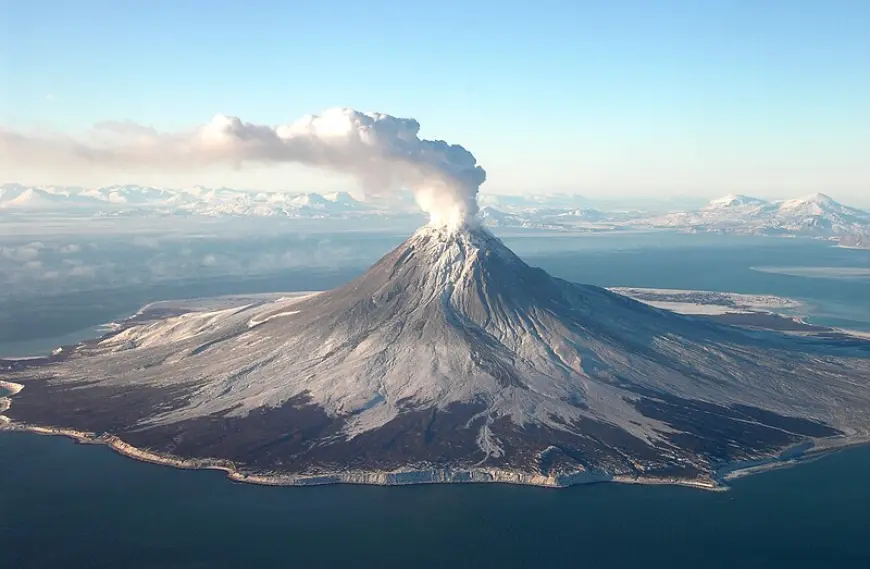
When most people think of volcanoes, they imagine lava flows or towering mountains belching ash – but supervolcanoes are in a league of their own. These titanic underground cauldrons can release thousands of times more material than ordinary eruptions, altering global climate, ecosystems, and human history.
What Is a Supervolcano
A supervolcano is defined by the US Geological Survey as one that has had an eruption with a Volcanic Explosivity Index VEI of 8 or higher, ejecting more than 1000 cubic kilometres of material. That’s enough to bury entire countries under ash.
Unlike classic cone-shaped volcanoes, supervolcanoes form massive calderas – sunken basins created when the ground collapses after a colossal eruption empties the magma chamber beneath.
The Titans of Earth
- Yellowstone Caldera USA – Sitting under Wyoming, it last erupted 640000 years ago, releasing an ash layer found across North America. If it erupted today, scientists estimate global temperatures could drop several degrees for years due to the sunlight-blocking aerosols.
- Toba Indonesia – About 74000 years ago, Toba’s super-eruption is thought to have triggered a volcanic winter, possibly shrinking the human population in a near-extinction event.
- Taupo New Zealand – Taupo’s eruption around 26500 years ago created Lake Taupo, one of the world’s largest volcanic lakes.
Global Impacts
Supervolcanoes don’t just devastate locally; they can push the entire planet into a brief ice age by releasing sulphur dioxide, which forms reflective particles in the upper atmosphere. This cooling can trigger crop failures, famine, and social upheaval, as seen with smaller eruptions like Tambora 1815, which caused the Year Without a Summer.
Are We Due for Another Eruption
While supervolcanoes operate on cycles of hundreds of thousands of years, scientists use ground deformation, seismic activity, and gas emissions to monitor them. Yellowstone’s caldera shows signs of uplift but no immediate danger.
Dr Jacob Lowenstern, former head of the Yellowstone Volcano Observatory, says – There’s no sign of an imminent super-eruption, but studying these giants helps us prepare for even small eruptions that can still be disruptive.
Learning from the Past
Understanding past super-eruptions helps climatologists and disaster planners anticipate impacts and craft response strategies. Supervolcanoes remind us that, despite human progress, Earth still holds forces powerful enough to reshape civilisation overnight.


