









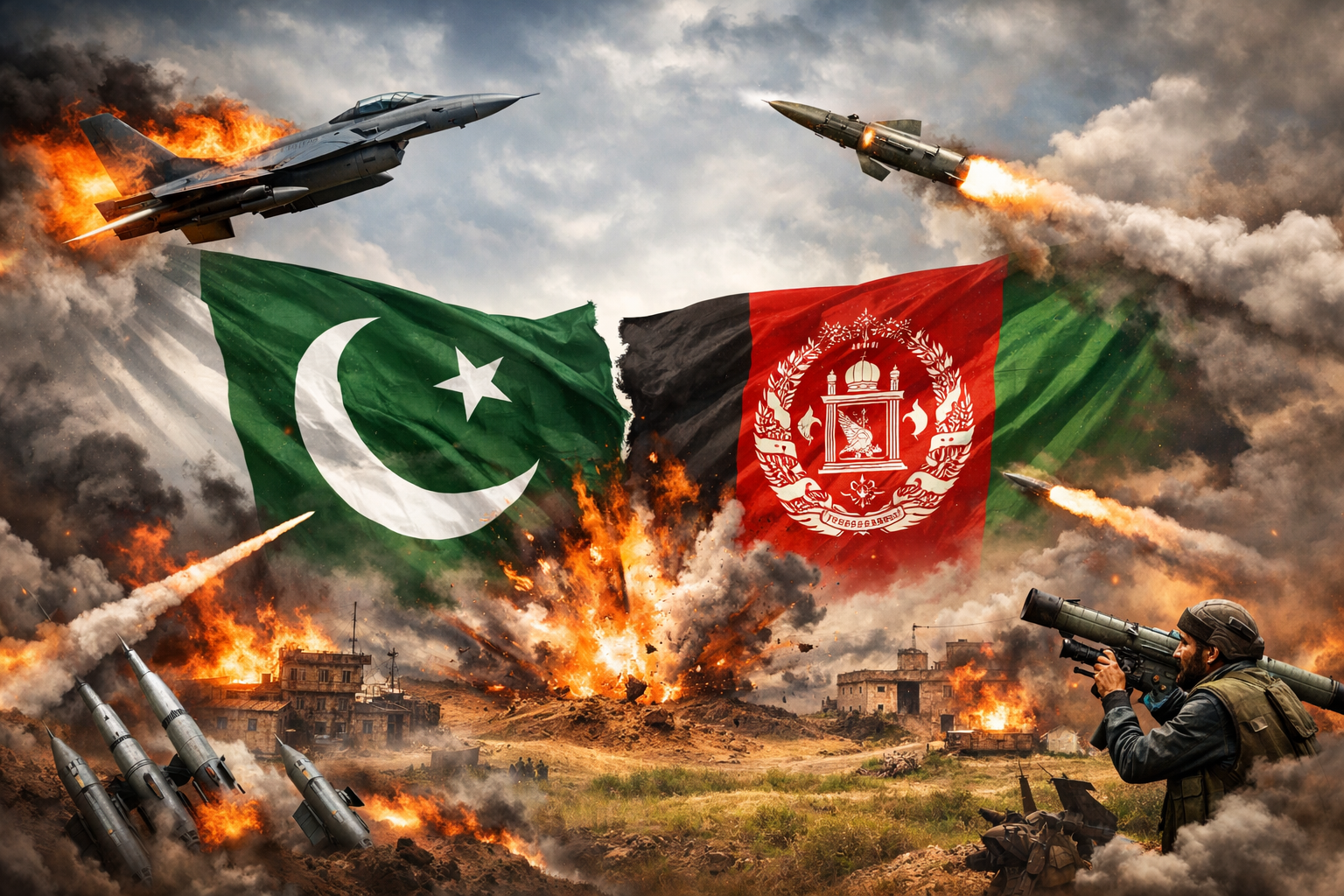
The conflict between Pakistan and Afghanistan’s Taliban government took a sharp new turn on Saturday, 28 February 2026, when Afghan forces shot down a Pakistani fighter jet over Jalalabad in Nangarhar province. The pilot parachuted from the stricken aircraft and was captured alive. The incident marks a significant escalation in what has quickly become an open military confrontation between two nuclear-armed neighbours – and one very much armed neighbour and an Islamist government with no air force but a great deal of combat experience.
What Happened Over Jalalabad
The Pakistani jet went down in the sixth district of Jalalabad city, the provincial capital of Nangarhar. Residents in the area reported seeing the pilot eject and parachute to the ground before being taken into custody. Tayeb Hammad, spokesperson for Nangarhar police, confirmed the downing, saying Afghan forces brought down the aircraft. Wahidullah Mohammadi, military spokesperson for eastern Afghanistan, corroborated the account. An AFP journalist on the ground heard a jet flying overhead, followed by two loud explosions from the direction of Jalalabad’s airport. The captured pilot has since been transferred to Kabul.
The Lead-Up: A Week of Strikes and Counter-Strikes
This did not come from nowhere. Pakistani airstrikes on Afghan territory, carried out late on 21 February and into 22 February, struck residential areas in Nangarhar, Khost, Paktika and Kunar provinces. The United Nations Assistance Mission in Afghanistan confirmed it had received credible reports of civilian casualties from those strikes. Taliban officials say over 50 civilians were killed across the four provinces, the majority of them women and children. Pakistan, for its part, launched fresh strikes on Friday, 27 February, targeting Taliban military positions in Kabul and Kandahar – where Supreme Leader Hibatullah Akhundzada is based. Taliban forces then launched a ground offensive across the Durand Line overnight. Afghanistan’s Ministry of National Defence said the retaliatory ground operation began at 8 p.m. on Friday and lasted roughly four hours. The Taliban claimed 55 Pakistani soldiers were killed, two bases captured or destroyed, and 19 military posts taken or abandoned. Pakistan disputed these figures.
Pakistan’s “Ghazab Lil Haq” Operation
Pakistan’s military has framed the ongoing campaign as a forced response to sustained provocation. The operation’s name, “Ghazab Lil Haq,” translates from Arabic as “Wrath for the Truth” – a deliberately charged choice of words that signals how Islamabad wants this campaign read at home and abroad. Defence Minister Khawaja Muhammad Asif, in a post on social media that drew wide attention, said Pakistan had invested years in diplomacy, engaged friendly countries as intermediaries, and hosted millions of Afghan refugees on its soil – only to be repaid with what he described as cross-border terrorism and an Afghan government increasingly aligned with India. His patience, he made clear, was finished. Pakistan’s military said the operation was proceeding on the direct instructions of the prime minister. Security sources claimed 274 Taliban fighters killed and 12 Pakistani soldiers dead. These numbers remain unverified. The downing of the jet is the most visible setback for Pakistan in this campaign so far – and a useful propaganda win for the Taliban.
An Asymmetric Fight
There is, on paper, no real comparison between the two militaries. Pakistan has a standing army of hundreds of thousands, a modern air force, and nuclear weapons. Afghanistan’s Taliban government has no air force and relies on light weapons and ground infantry. What the Taliban does have is decades of combat experience, knowledge of the terrain, and a demonstrated ability to absorb punishment and keep fighting. The fact that they managed to bring down a Pakistani fighter jet – using what capability is not yet confirmed – is militarily significant. It suggests Afghan forces have acquired or deployed some form of man-portable air defence. The details here remain unclear.
The World Reacts
International reaction has been swift. The United States expressed support for Pakistan’s right to defend itself, with Allison Hooker, under secretary of state for political affairs, saying Washington was monitoring the situation closely. The European Union’s foreign policy chief Kaja Kallas called on both sides to de-escalate and engage in dialogue. The EU also reiterated that Afghan territory must not be used to threaten neighbouring states. The UAE urged restraint. The International Committee of the Red Cross called on both sides to respect international humanitarian law, with ICRC President Mirjana Spoljaric warning that the protection of civilians and hospitals was a legal obligation, not an option.
What Comes Next
Taliban spokesperson Zabihullah Mujahid, speaking from Kandahar, indicated that the Islamic Emirate was open to a peaceful resolution but accused Pakistan of consistently manufacturing pretexts for war. Taliban Interior Minister Sirajuddin Haqqani warned the conflict would be costly. Neither side shows immediate signs of stepping back. With a Pakistani pilot now in Taliban custody in Kabul, Islamabad faces considerable domestic and diplomatic pressure to respond. The coming days will likely determine whether this stays a bilateral military confrontation or whether regional powers and international bodies manage to pull both sides back from a broader war neither – honestly – can afford.
Subscribe Deshwale on YouTube


