










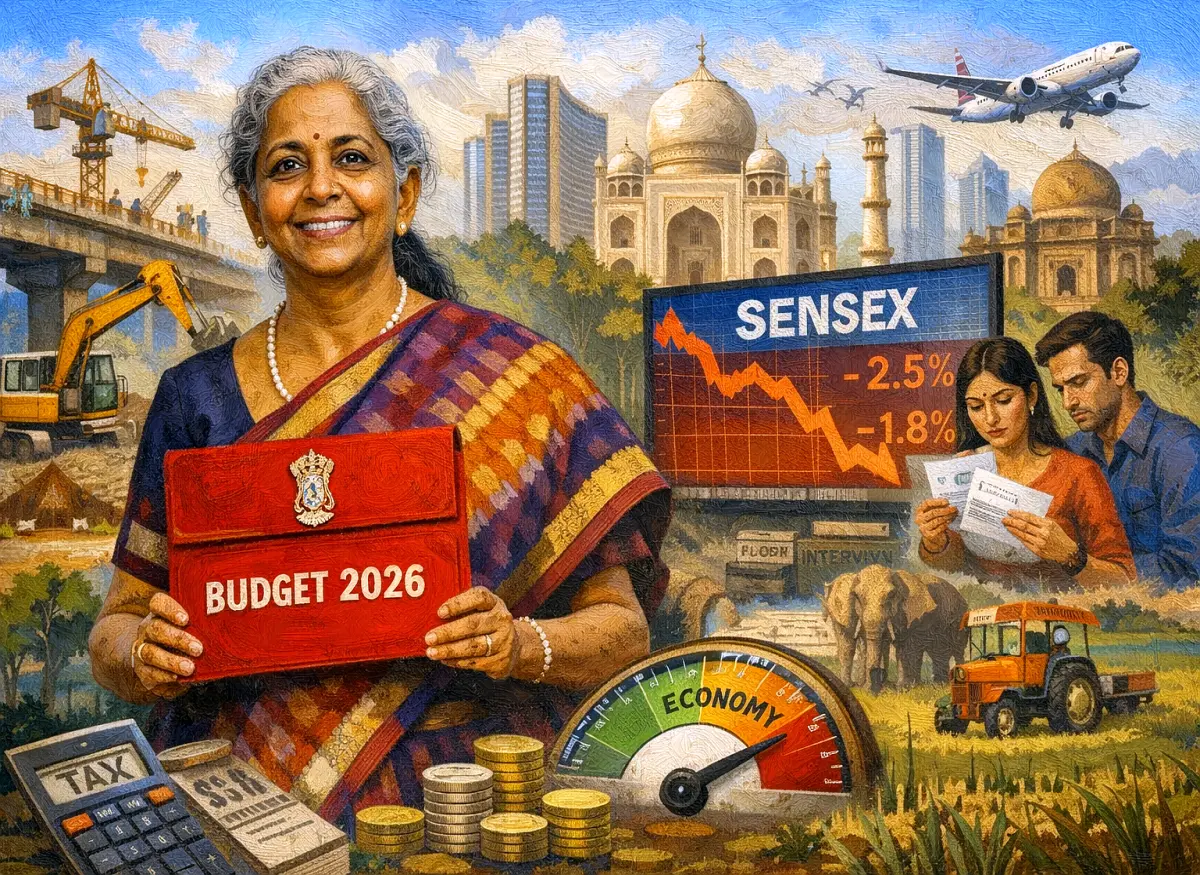
The Union Budget 2026 arrived with predictable noise. Big numbers. Big intent. Big claims. As always, the first few hours were spent decoding what the government said it wanted to do. The more important question, however, is quieter and more uncomfortable. What does this Budget actually change for the economy, for businesses, and for ordinary people who are juggling EMIs, school fees, fuel bills, and uncertain incomes?
This Budget does not feel dramatic. It does not shock. It does not radically disappoint either. Instead, it sits somewhere in the middle. Careful. Calculated. At times cautious to a fault. At times ambitious, but only on paper. Let us break it down calmly, without hype and without cynicism.
The Big Picture: Stability First, Risk Later: At a macro level, the government has clearly chosen stability over experimentation. Fiscal discipline remains the core message. The fiscal deficit path stays conservative. There is no wild borrowing spree. That will comfort global investors and rating agencies.
But stability has a cost. Growth impulses feel restrained. This is not a Budget that throws money at consumption. It is also not a Budget that fully unleashes private investment sentiment. In simple terms, this is not a Budget of instant gratification. It is a Budget of slow outcomes. Sawal yahi hai: will patience pay off?
What the Government Did Right
To be fair, several things deserve credit.
1. Capital expenditure remains protected: Infrastructure spending has not been sacrificed. Roads, railways, logistics, power, and urban infrastructure continue to get attention. This is sensible. Capex creates jobs indirectly. It supports industries quietly. Cement, steel, transport, and engineering benefit. This approach has worked in previous years. It deserves continuity.
2. Tourism finally treated as an economic system: Tourism is no longer presented as a slogan. It is linked to skills, transport, digital infrastructure, environment, and healthcare. Trekking routes. Heritage circuits. Medical tourism hubs. Guide training. These are not flashy announcements. They are structural ideas.Execution will matter, but the thinking is more mature than before.
3. Fiscal prudence is not abandoned
The government resists populist temptations. There is no reckless freebie culture here. From a sovereign risk perspective, this matters. Inflation control also benefits from this restraint. The middle-class may not clap loudly, but macro stability is a public good.
Where the Budget Feels Weak
This is where the applause fades.
1. Consumption is still underfed: India’s growth engine needs consumption to fire. Rural demand is uneven. The urban middle-class feels squeezed. Salaries have not risen in real terms. Healthcare and education costs keep climbing. This Budget does little to directly boost spending power. Tax relief exists, but it is modest. It does not create a feel good moment. For many households, the Budget feels distant.
2. Employment creation lacks urgency: Yes, there are skill programmes. Yes, there is talk of training. But job creation remains indirect. There is no bold employment mission that addresses the anxiety of educated youth. A trained person still needs a job. Training alone is not enough. Yahan disconnect dikhta hai.
3. Small businesses feel unheard: MSMEs remain vocal about credit access, compliance burden, and cash flow stress. The Budget offers continuity, not breakthrough. For lakhs of small traders and entrepreneurs, this feels like a missed opportunity.
The Middle Class Verdict: Mixed at Best
The middle class is the emotional barometer of any Budget. This year, the mood is lukewarm. Yes, there is some tax relief. Yes, compliance has improved. But the rising cost of living eats into those gains quickly. School fees. Medical insurance. Rent. Fuel. These are not abstract issues. The Budget does not hurt the middle class, but it does not excite it either. For many families, the reaction is simple. Theek hai, but aur kuch expected tha.
Markets, Mood, and Messaging
Financial markets reacted with visible disappointment. That is not because the Budget is bad. It is because expectations were higher. Markets wanted bold reforms. Clear signals on privatisation. Faster disinvestment. More clarity on capital markets. Instead, they got continuity. Markets hate uncertainty, but they also dislike boredom. Long term investors may still find value. Short term traders clearly did not.
Sectoral Snapshot
- Infrastructure gets steady support
- Railways see continued capital focus
- Tourism gets long overdue structural attention
- Healthcare benefits indirectly via medical tourism
- Manufacturing sees no major tax push
- Agriculture support remains cautious and scheme driven
- Startups see stability, not stimulus
The Political Economy Angle
This Budget is politically safe. It avoids anger. It avoids shock. It avoids populism. In an election cycle environment, that is deliberate. But safe budgets rarely inspire confidence or fear. They simply pass. This one will pass too.
Independent Rating: How Does It Score?
Let us be honest and non-partisan.
- Growth orientation: 6.5 out of 10
- Employment focus: 5.5 out of 10
- Fiscal discipline: 8 out of 10
- Middle class impact: 6 out of 10
- Reform boldness: 5 out of 10
Overall score: 6.5 out of 10
This is not a bad Budget. It is not a great Budget either. It is a careful Budget in a country that sometimes needs courage.
Final Word
Union Budget 2026 reflects a government that values control over chaos. That prefers gradualism over disruption. That trusts systems more than sentiment. Whether that approach works will depend on execution and global conditions. Inflation. Oil prices. Geopolitics. Private investment appetite. For now, the Budget offers reassurance, not inspiration. And perhaps that is exactly what it intended.


