










Introduction: Soaring into a New Era
Imagine stepping onto a high-tech platform atop a city skyscraper, boarding a silent electric air taxi, and gliding over congested streets to reach your destination in minutes. This is the future promised by vertiports – specialised hubs for electric vertical take off and landing eVTOL aircraft that are set to transform urban and regional travel. As cities worldwide grapple with traffic congestion and environmental challenges, vertiports offer a bold vision for advanced air mobility AAM. Leading this revolution is Dubai, a city known for its ambition and innovation, which is rapidly advancing vertiport infrastructure to redefine how people and goods move across the globe.
This article explores the exciting potential of vertiports, with a spotlight on Dubai’s trailblazing efforts. From cutting edge designs to global implications, vertiports are poised to reshape mobility, offering faster, greener, and more connected travel solutions for cities and beyond.
What Are Vertiports
Vertiports are purpose built facilities designed to support eVTOL aircraft – battery powered vehicles that take off and land vertically, offering the flexibility of helicopters with the efficiency and sustainability of electric propulsion. Unlike sprawling airports or basic heliports, vertiports are compact, often integrated into urban landscapes, and optimised for frequent, short range flights. They serve as the aerial equivalent of bus or train stations, facilitating seamless passenger and cargo transport.
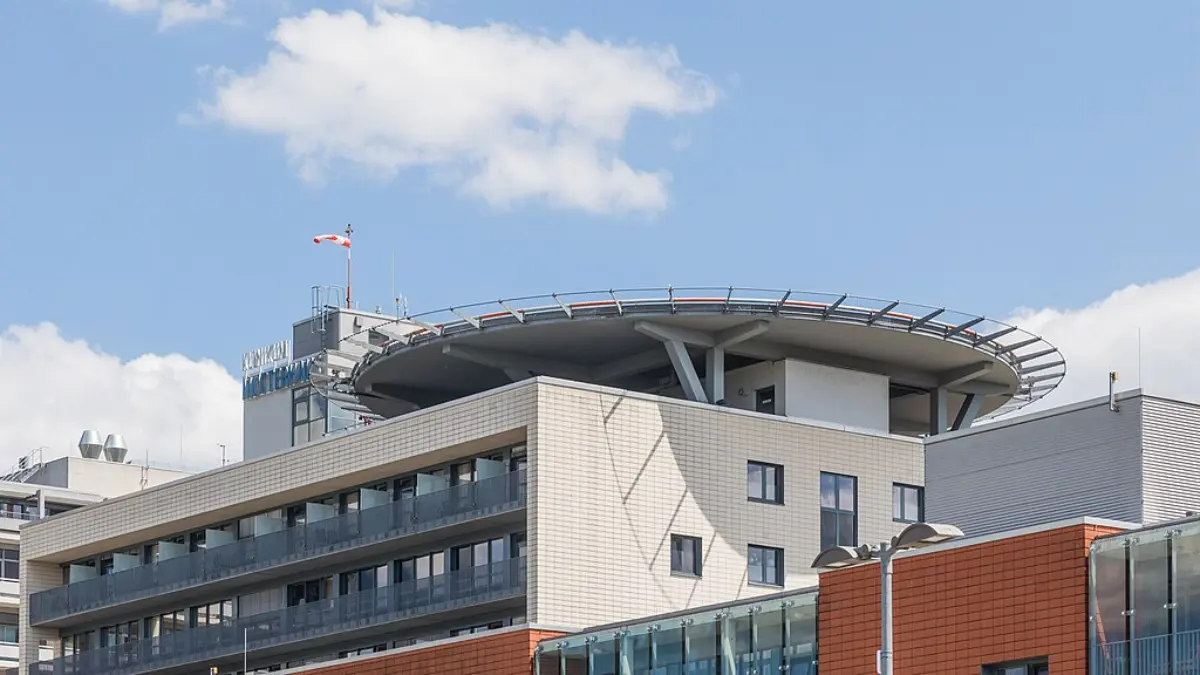
A typical vertiport includes a landing pad, fast charging stations, passenger lounges, and advanced air traffic management systems. Their small footprint allows them to be placed on rooftops, repurposed car parks, or standalone sites, making them adaptable to both crowded cities and remote regions. From megacities to rural communities, vertiports are designed to meet diverse mobility needs.
Dubai’s Leadership in Vertiport Development
Dubai is at the forefront of the global vertiport revolution, setting a benchmark for AAM innovation. In 2023, the emirate’s Roads and Transport Authority RTA, in partnership with Skyports Infrastructure and Joby Aviation, received approval from His Highness Sheikh Mohammed bin Rashid Al Maktoum for a vertiport network, with construction beginning in 2024 near Dubai International Airport DXB. This landmark facility, known as the Dubai International Vertiport DXV, is the world’s first permanent commercial vertiport, with operations expected to launch by early 2026. Three additional vertiports are planned for Palm Jumeirah, Dubai Downtown, and Dubai Marina, creating a network to connect key areas with air taxi services.
The UAE’s General Civil Aviation Authority GCAA has also led the way by publishing the world’s first national vertiport regulations CAR HVD in 2023, outlining standards for design, certification, and operation. This regulatory framework, combined with Dubai’s ambitious vision, has positioned the city as a global leader. In 2024, the International Civil Aviation Organization ICAO held its first AAM Symposium, where Dubai’s progress was highlighted as a model for scalable, safe urban air mobility.
Dubai’s vertiport network is designed to integrate with its existing transport infrastructure, such as the Dubai Metro and DXB, ensuring seamless multi modal travel. For example, a journey from DXB to Palm Jumeirah, which takes 45 minutes by car, could be reduced to just 10 minutes by air taxi. Joby Aviation, which has exclusive rights to operate air taxis in Dubai for six years, has completed test flights in the emirate’s desert conditions, proving the reliability of its eVTOLs.
Beyond Dubai, the UAE is advancing AAM through initiatives like VPorts’ 40 million dollar AAM integrator centre in Dubai South, set to open in 2024. This hub will include dedicated flight testing airspace and a Vertiport Operation Control Centre to manage air traffic, supporting both passenger and cargo operations across the UAE.
The Global Potential of Vertiports
While Dubai is leading the charge, vertiports are gaining momentum worldwide. In urban centres, where traffic congestion is a daily struggle, eVTOLs can bypass gridlocked roads, offering rapid connections between business districts, airports, and suburbs. For instance, a vertiport network could cut a 90 minute commute across a sprawling city to under 20 minutes, transforming work and leisure travel.
In rural and remote areas, vertiports could revolutionise connectivity. Regions with limited road or rail infrastructure – such as mountainous areas, islands, or deserts – stand to benefit from eVTOLs delivering medical supplies, transporting residents, or supporting tourism. A vertiport in a coastal village could enable same day access to urban hospitals, while one in a tourist hotspot could offer scenic aerial tours.
Globally, companies like Skyports, Archer Aviation, and EVE Air Mobility are developing vertiport networks in cities from Singapore to New York. NASA’s AAM mission is also researching vertiport integration, exploring how these hubs can work with existing airports or be built into urban infrastructure like train stations. Their High Density Vertiplex project is testing automation to enhance safety and efficiency, paving the way for high volume operations.
Designing the Vertiport of the Future
Vertiport design blends engineering, architecture, and urban planning to create efficient, sustainable hubs. Urban vertiports might occupy a skyscraper rooftop, featuring landing pads, passenger lounges, and fast charging stations powered by renewable energy. Rural vertiports, meanwhile, could use modular designs for quick assembly, scalable to meet demand. Dubai’s DXV, for example, is a three storey, 3100 square metre facility with two landing stands, designed for 170000 passengers annually and equipped with Joby’s Global Electric Aviation Charging System for rapid recharging.
Sustainability is central to vertiport design. eVTOLs produce zero emissions during flight, and vertiports often incorporate solar panels, energy efficient systems, and modular construction to minimise environmental impact. Safety is equally critical, with automated landing systems, real time weather monitoring, and centralised control centres ensuring smooth operations. Dubai’s vertiports, for instance, comply with the GCAA’s rigorous safety standards, setting a global precedent.
Accessibility is another priority. Vertiports must cater to diverse passengers, including those with disabilities, and integrate with ground transport like buses or trains. Dubai’s network exemplifies this, linking vertiports with metro stations and e scooter hubs for seamless travel.
Economic and Social Impacts
Vertiports could drive significant economic growth. The AAM industry is expected to create millions of jobs globally, from engineering to operations. VPorts’ Dubai South project alone is projected to generate 7 billion dollars in revenue and 1500 jobs over 25 years. Construction of vertiports stimulates local economies, benefiting architects, contractors, and technology providers, while small businesses could supply components or services like passenger apps.
Socially, vertiports can bridge geographic divides. In remote areas, they could improve access to healthcare, education, and jobs, reducing inequality. In cities, they could ease pressure on congested roads, offering an alternative to car travel. eVTOL services aim to be affordable, with costs potentially rivalling ride sharing apps, making air travel more accessible.
Challenges and Opportunities
Despite their promise, vertiports face challenges. Construction costs, estimated at 5 to 10 million pounds per urban site, require significant investment. Public private partnerships, like those in Dubai, are key to overcoming this hurdle. Regulatory frameworks must also evolve to manage low altitude airspace and ensure safety. Dubai’s CAR HVD regulations and ICAO’s global efforts are steps toward standardisation.
Public acceptance is crucial. While eVTOLs are quieter than helicopters, communities may raise concerns about noise or privacy. Transparent engagement, as demonstrated in Dubai’s public consultations, can build trust. Environmental concerns, such as battery production, also require advances in green technology to ensure sustainability.
Vertiports in Action
Dubai’s vertiport network is a real world example of AAM in action. By 2026, Joby Aviation’s air taxis will connect DXB, Palm Jumeirah, Dubai Downtown, and Dubai Marina, offering premium, sustainable travel. Elsewhere, trials are underway for cargo and medical logistics, with eVTOLs delivering supplies to remote clinics or industrial sites. Temporary vertiports are also emerging, with modular designs supporting events or disaster relief.
A Sky Full of Promise
Vertiports, led by Dubai’s pioneering efforts, are set to transform global mobility. From the DXV’s cutting edge design to the UAE’s world first regulations, Dubai is showing how vertiports can integrate with urban life, reduce congestion, and promote sustainability. As other cities follow suit, vertiports will become as common as train stations, offering a faster, greener, and more inclusive way to travel. The sky is no longer a barrier – it’s a highway to the future.


