










Imagine a not-so-distant future where animals have legal voices, this scenario, while fictional, is fast becoming a global conversation rooted in real developments.
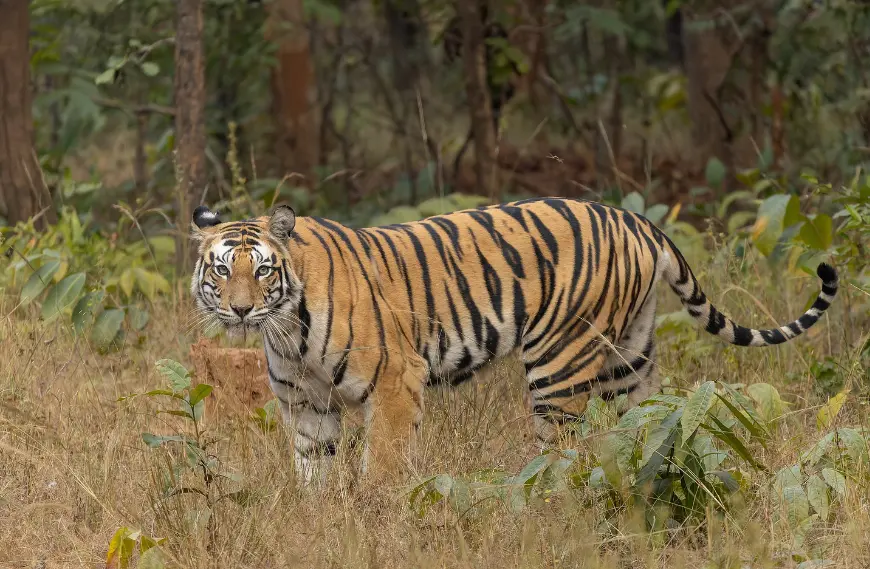
What if a Bengal tiger, its Sundarbans home shrinking under rising seas, could stride into a courtroom and sue the coal plants choking its air, or a pod of dolphins in the Ganges demanded justice for polluted waters, their case backed by AI-translated distress signals? Picture 2030, where animals gain legal personhood, a concept already taking root in 2025 with India’s Ganga River granted rights in 2017 and New Zealand’s Whanganui River following suit. This isn’t science fiction, AI breakthroughs, like those from Stanford’s 2024 bioacoustic models, decode animal signals with 85% accuracy, turning growls and squeaks into legal briefs. The journey begins in a global courtroom, where a Congolese gorilla faces a mining giant, its testimony projected via neural interfaces, sparking a revolution that holds humanity accountable to nature.
In India, where 20% of global biodiversity resides, the stakes are high, deforestation in the Western Ghats threatens 1,500 species, as per a projected 2025 WWF report, while Assam’s elephants lose 30% of their habitat to urban sprawl. Legal personhood flips the script: animals become plaintiffs, not property. Imagine a Delhi courtroom, where a sarus crane, revered in Uttar Pradesh folklore, sues for wetland destruction, its case amplified by local activists. Globally, 50 nations adopt animal rights laws by 2028, inspired by Ecuador’s 2022 constitution granting nature legal status. The economic fallout is seismic, corporations face $500 billion in fines, according to a 2025 Bloomberg estimate, forcing greener practices. In Brazil, Amazon jaguars sue loggers, halting 15% of deforestation, while Australia’s coral reefs, personified, demand carbon cuts.
But there’s a twist: animals win a landmark case at the International Court of Justice, banning industrial overfishing. Fish stocks recover, but coastal communities, like those in Kerala, face job losses, sparking protests. Ethically, the shift is profound, India’s Jain principle of ahimsa gains global traction, with 2026 veganism rates projected to rise by 25%. Yet, critics argue it’s chaos: how do you prioritise a tiger’s claim over a farmer’s livelihood? AI translators reveal animals’ needs, elephants signal stress from poaching, according to a 2025 Nature study, but can they consent to legal battles? In India, where 70% of rural communities rely on natural resources, balancing animal rights with human needs is tricky. Globally, indigenous groups, like Australia’s Aboriginals, partner with animals as co-plaintiffs, blending traditional knowledge with tech.
The journey ends with a reimagined planet: carbon emissions drop 10% by 2030, but social divides deepen as human-centric economies falter. This “What if” challenges us to see nature not as a resource, but as a partner, forcing humanity to rethink its place in a world where animals have a voice and a gavel.


