










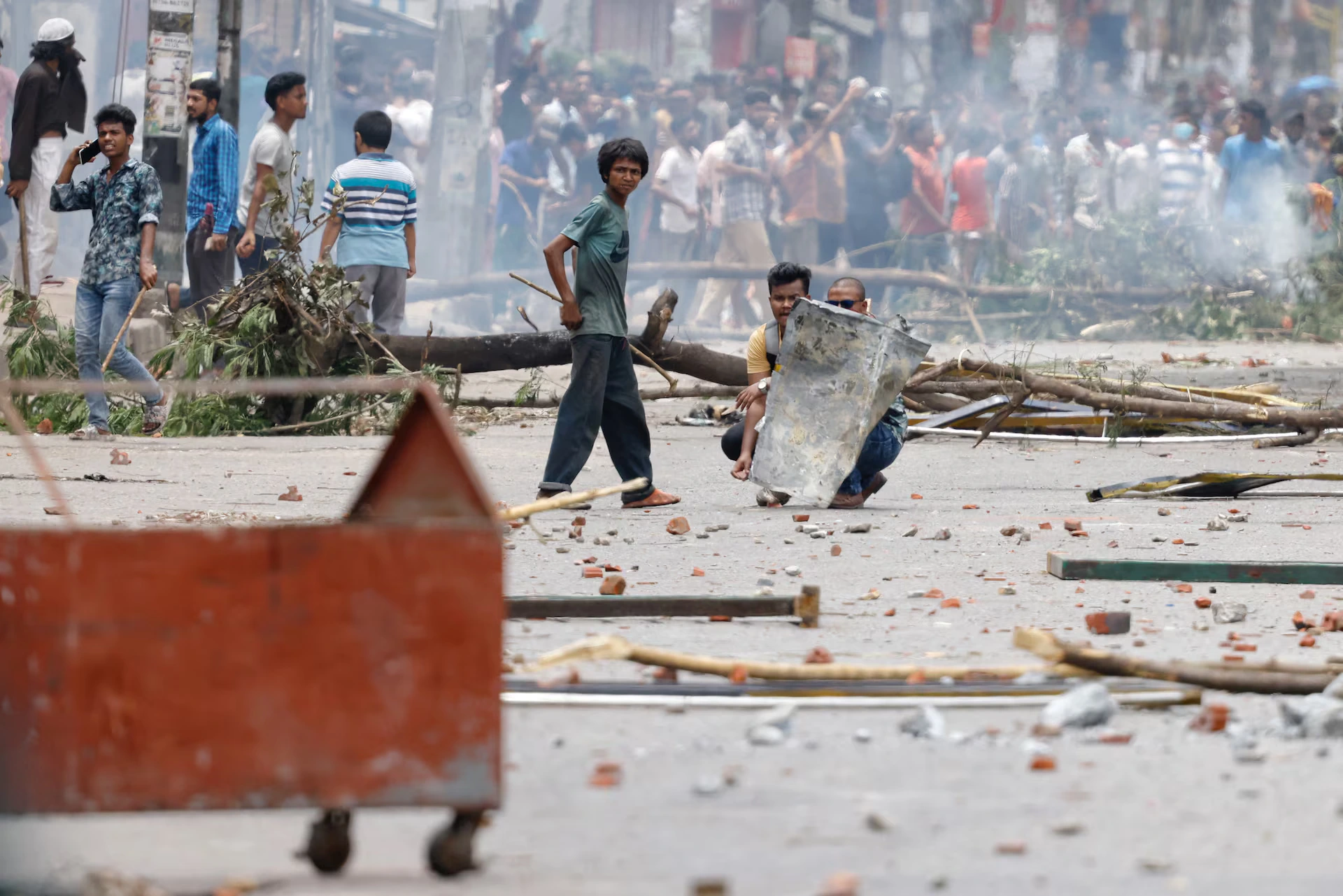
Widespread violence and unrest have broken out across Bangladesh following the death of a prominent protest leader. triggering mass demonstrations, arson, and clashes with security forces in multiple cities. The situation has raised serious concerns over public safety and political stability at a critical moment for the country.
The leader, a key figure in the recent student-led protest movement, succumbed to injuries after being shot earlier this month. His death has been widely perceived by supporters as politically motivated, igniting public anger and calls for justice. Thousands of protesters poured onto the streets of the capital Dhaka and other major urban centres soon after the news broke.
Demonstrators vandalised and set fire to several buildings, including offices linked to political organisations and media establishments. Vehicles were torched, roads were blocked, and public transport services were disrupted. In some areas, clashes erupted between protesters and law enforcement personnel as authorities attempted to disperse crowds.
Security forces were deployed in large numbers to restore order, with police using crowd-control measures to contain the unrest. Officials appealed for calm and urged citizens not to resort to violence, while assuring that an investigation into the death of the protest leader would be carried out.
The unrest has also exposed deeper political tensions within Bangladesh. The deceased leader had played a visible role in last year’s mass protests and was reportedly preparing for a more active political role ahead of upcoming national elections. His death has amplified fears of renewed instability and further confrontation between protesters and the state.
Authorities have increased security in sensitive areas, including government buildings and diplomatic zones, as sporadic incidents of vandalism and intimidation continue to be reported. Educational institutions and businesses in several areas remained closed as a precaution.
Observers warn that unless swift and transparent action is taken, the situation could escalate further, potentially affecting the country’s democratic transition and economic activity. For now, Bangladesh remains on edge as citizens await clarity, accountability, and a return to normalcy.
Subscribe Deshwale on YouTube


