










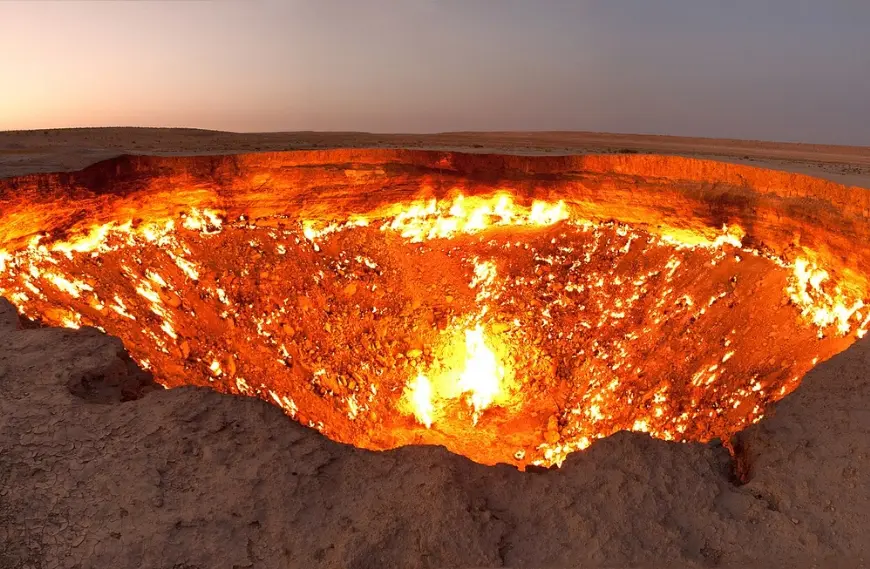
Imagine a pit in the middle of a desert, burning with flames for over 50 years straight. Sounds like something out of a sci-fi movie, right? Well, it’s real, and it’s called the Darvaza Gas Crater, or the ‘Door to Hell,’ smack in the Karakum Desert of Turkmenistan. This is not just a jaw-dropping tourist spot… it’s a blazing reminder of how one human mistake can mess with the environment and our resources. Let’s dive into its wild story and what it teaches us about climate change, sustainability, and owning up to our goof-ups.
A mistake that’s still burning
Back in 1971, Soviet scientists were poking around in the Karakum Desert, hunting for natural gas. They hit a jackpot, a massive underground gas pocket… but the ground caved in, creating a 70 meter wide crater. To stop toxic methane gas from leaking, they lit it on fire, thinking it would burn out in a few weeks. Spoiler alert… It’s still raging today! This epic blunder did not just waste precious gas, it’s been pumping out greenhouse gases for decades. It’s like a campfire that got way out of hand, teaching us that messing with nature can backfire big time.
An environmental nightmare
The Darvaza Crater is not just a cool photo-op… it’s an environmental headache. Every day, it burns millions of cubic meters of methane, a greenhouse gas that’s a major player in global warming. When methane burns, it turns into carbon dioxide and water vapor, which still add to climate change. Scientists say these uncontrolled emissions are making our planet hotter. Plus, Turkmenistan, a gas-rich country, is losing money by letting this valuable resource go up in flames. Imagine how many homes that gas could have powered! This crater screams at us to value our resources better.
The fight to put it out
In 2022, Turkmenistan’s president, Gurbanguly Berdimuhamedow, said enough is enough… They need to extinguish this fire for the sake of the environment and economy. But it’s not as simple as dumping water on it. Experts say sealing the crater is a technical nightmare and costs a fortune. Recent reports from 2025 suggest the flames are dying down, possibly because new gas wells nearby are siphoning off the methane. But is it really fading, or just a temporary flicker? And if it goes out, will tourists still flock to see a silent hole? These questions keep us guessing.
Tourism: A double-edged sword
The ‘Door to Hell’ is a magnet for adventure junkies. People camp in yurts, snap Instagram pics, and marvel at the glowing flames at night. It’s become Turkmenistan’s hottest tourist spot. But here is the catch… all those jeeps and tourist trash are stressing out the desert’s fragile ecosystem. Water’s scarce, plants are rare, and the Karakum’s delicate balance is getting shaky. It’s ironic… a place born from an environmental screw-up is now getting hammered by the crowds who come to gawk at it. Sustainable tourism is the only way to keep this spot alive without killing it.
What can we learn?
The Darvaza Crater is not just a fiery pit… it’s a wake-up call. It shows how wasting resources and being careless with nature can haunt us for decades. With climate change, deforestation, and pollution staring us down, this crater’s a warning sign. We have got to think twice about our choices… whether it’s industry, energy, or even how we travel. If we don’t shape up, we might end up with more ‘Doors to Hell’ on our hands. It’s a lesson in taking responsibility for our planet.
A global warning
The Darvaza Crater is not alone. From Chernobyl’s nuclear disaster to the Amazon’s deforestation, human errors have left scars worldwide. This crater’s a smaller but fiery example of that. Methane emissions, wherever they happen, mess with the global climate. Turkmenistan might be a small player, but its crater’s impact is a global concern. It’s a reminder that fighting climate change needs teamwork… every country’s gotta chip in to cool things down.
Sustainable tourism is the key
If the Darvaza Crater is going to stay a tourist draw, it needs to go green. Tour operators should set up eco-friendly camps, cut down on vehicle use, and make sure tourists don’t litter. Turkmenistan’s government needs to slap some strict rules around the site. Done right, this place could not only pull in crowds but also become a symbol of environmental awareness. Imagine tourists leaving inspired to fight climate change instead of just posting selfies
Inspiration for the next gen
Students and climate activists, listen up… this crater’s a goldmine for learning. It’s a real-world case study on how one mistake can ripple for decades. Schools and colleges could use it to teach environmental science, geology, or even policy-making. Activists can weave it into campaigns to show why every small step counts. The Darvaza Crater is not just a problem… it’s a chance to spark change in the young and restless.
The road ahead
Will the Darvaza Crater’s flames ever die? And if they do, will we actually learn from this mess? Turkmenistan’s efforts give us hope, but real change comes when we all start using resources smarter. This crater’s a challenge to think, learn, and do better. It’s not just Turkmenistan’s burden… It’s ours too. Let’s make sure we don’t keep opening more ‘Doors to Hell’ and start building a cooler, greener future instead.
Also Read: Myths of Snake Island: Brazil’s Forbidden Isle of Vipers


