











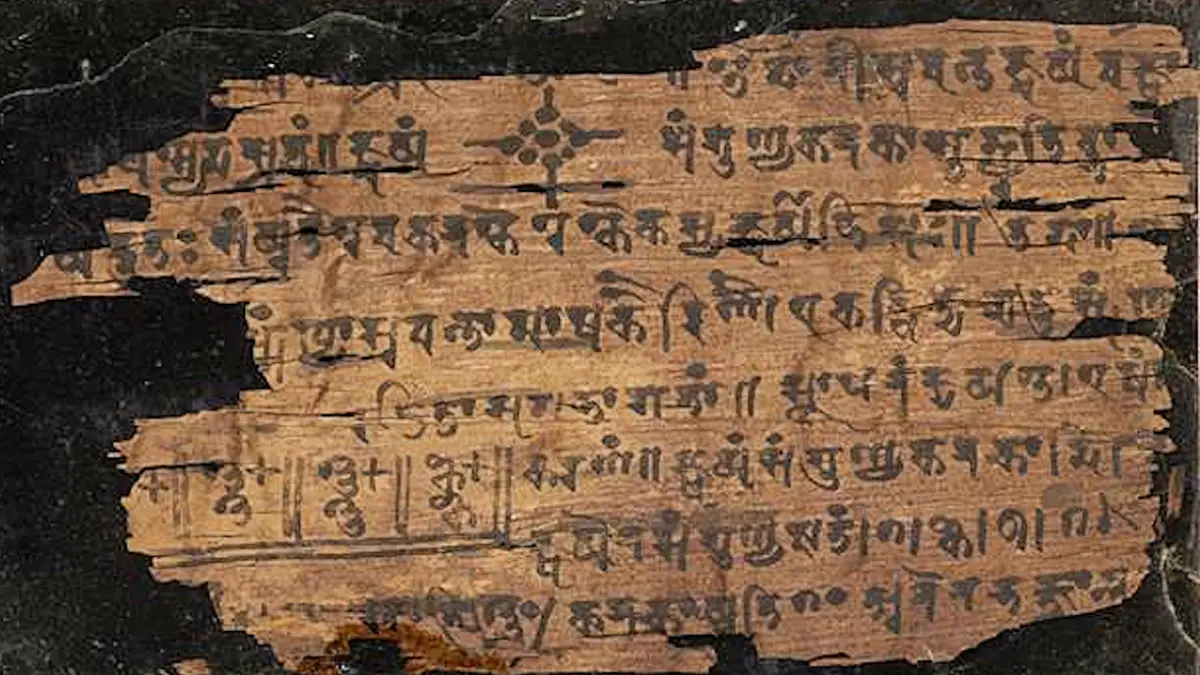
When we think of India’s past, images of temples, forts, and oral traditions often come to mind. Yet hidden in libraries, monasteries, and even homes are fragile manuscripts that tell a quieter but equally powerful story. Written on palm leaves, birch bark, and handmade paper, they hold poetry, philosophy, science, and history passed down through generations.
From 11 to 13 September, this legacy is taking centre stage at the International Conference on Indian Manuscripts in New Delhi. Scholars, researchers, and cultural leaders from across the world are gathering to discuss how to preserve, digitise, and share these treasures. The Prime Minister will join on the second day, while the Home Minister will attend the closing session, showing how much importance the government attaches to this effort.
The Gyan Bharatam Mission
The event is tied to the launch of the Gyan Bharatam Mission, with funding of ₹400 crore. This mission aims to create a central headquarters in Delhi, regional centres across the country, and promote global collaboration through the Delhi Declaration. It is a step towards rescuing and reviving manuscripts that risk being lost forever.
A Historic Coincidence
The conference also coincides with the 132nd anniversary of Swami Vivekananda’s 1893 Chicago address, a speech that introduced Indian thought to the global stage. In a way, this gathering continues that legacy by bringing the world’s attention to India’s intellectual heritage. Around 1,100 participants are expected, including academics, administrators, professionals, research scholars, students, and custodians of manuscripts.
Why Manuscripts Matter
India is estimated to have over 10 million manuscripts, one of the largest collections in the world. They are not limited to religious works but also cover subjects like medicine, mathematics, astronomy, politics, and art. Written in languages such as Sanskrit, Pali, Tamil, Persian, and Arabic, they reflect the diversity of India’s cultural past. Each manuscript is like a time machine, carrying forward the ideas and wisdom of earlier generations.
The Puzzle of the Indus Script
One of the most intriguing chapters in this heritage is the Indus script. Found on seals from the Harappan civilisation, it remains undeciphered even after decades of research. Unlike Egyptian hieroglyphs, no bilingual text has been found to help decode it. Scholars still debate whether it is a true writing system or just a collection of symbols. Its mystery reminds us how much of India’s ancient story is yet to be understood.
Interestingly, eight working groups at the conference will focus on related challenges, from deciphering ancient scripts like Indus, Gilgit, and Shankha, to improving survey and documentation methods, setting metadata standards, and advancing digitisation tools and protocols.
Why Now?
Preserving manuscripts has become urgent. Many are crumbling due to heat, humidity, insects, or neglect. Once lost, the knowledge within them cannot be replaced. Digitisation and modern preservation are the only ways to protect them. The Delhi conference is not just about academic debate but about saving a living heritage before it fades away.
The International Conference on Indian Manuscripts is a chance for India to remind the world that its intellectual and cultural wealth runs deep. By combining old traditions with new technology, the country hopes to secure its past for future generations. And perhaps, with time, even mysteries like the Indus script will reveal their secrets.


