










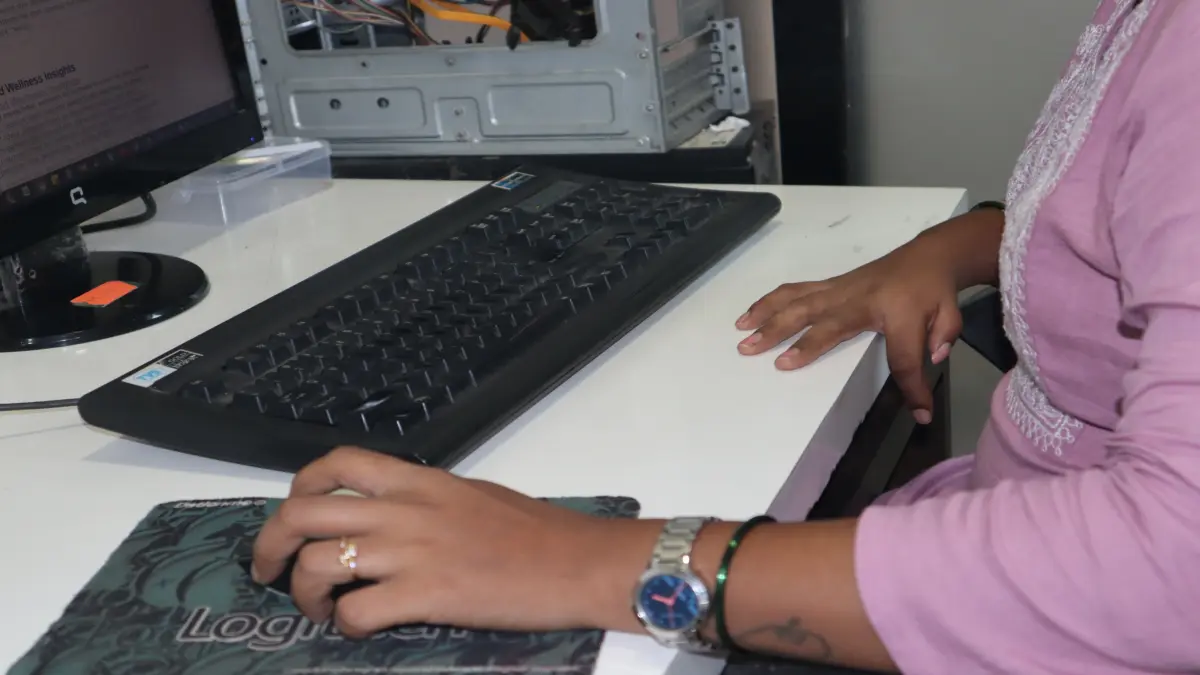
In a world built for right-handed comfort, left-handers quietly challenge norms every single day. They reach for scissors that don’t fit, write in notebooks that smudge their words, and adjust to tools that never considered their needs. Yet, instead of yielding, many thrive—creating paths less travelled, ideas less obvious. What begins as a daily inconvenience often becomes the foundation for creative thought, strategic adaptation and deep-rooted resilience.
Roughly 9.2 percent of the global population—over 700 million people—are left-handed. But in India, that figure shrinks to just 5.8 percent. The gap isn’t biological; it’s cultural. Across Indian schools, countless children are still nudged, coaxed, or outright punished into switching hands. In rural areas, this pressure intensifies. Traditional beliefs link the left hand to impurity, even misfortune. The phrase ulta haath still bears a stain, while seedha haath is upheld as correct, clean, and auspicious.
Historically, such bias runs deep. The Latin root of “left” is sinister—a word that today still means evil or unlucky. French uses gauche to mean both left and awkward. These associations weren’t just linguistic quirks; they shaped generations. In British India and early 20th-century Europe, teachers would tie a student’s left hand behind their back. Across time and cultures, being left-handed was something to be corrected, not celebrated.
But change began with understanding. Neuroscience discovered that handedness forms in the womb. It’s not rebellion or habit; it’s hard-wired. A 2019 study pinpointed multiple genes—including MAP2—that shape lateral preference. Left-handedness isn’t a choice. It’s biology, and biology doesn’t need fixing.
Even more surprising is what researchers found next. Forced hand-switching can cause real harm. Developmental psychologists link it to stammering, dyslexia, anxiety, and a range of motor issues. Children adapt, but at a cost. Their brains must rewire in ways that disrupt natural flow and self-confidence. That cost stays hidden in silence, misunderstood for clumsiness or lack of focus.
Yet left-handers often bloom under pressure. The very act of navigating a right-hand world hones their flexibility. Repeated micro-challenges strengthen their ability to innovate, spot alternatives, and push boundaries. In sports, this advantage is measurable. Studies in boxing, fencing and water polo show left-handers outscore their right-handed rivals, largely because opponents aren’t trained to counter their angles.
Cricket fans know this well. Think of Sourav Ganguly’s regal drives through cover. Or Yuvraj Singh’s fearless six sixes against Stuart Broad. Their left-handed technique wasn’t just flair—it confused bowlers used to mirror-image play. When most competitors move in predictable patterns, left-handers disrupt rhythm and expectations. That surprise becomes power.
In the arts and public life too, the left hand has carved legends. Leonardo da Vinci famously wrote in mirror script, his ulta writing preserving pages from smudges. Rani Laxmibai fought with a sword in her left hand, mounting her horse defying every norm. Closer to home, Mahatma Gandhi spun truth with the same ulta haath that stirred salt from the sea.
Yet India still lags in making space for left-handers. Walk into a classroom and observe the desks. Most have writing flaps on the right. Spice grinders, staplers, coffee mugs, even temple entry rituals assume right-hand dominance. For a child growing up left-handed, daily life demands constant mental adjustment—one that adults seldom notice.
Thankfully, quiet revolutions are underway. International Left-Handers Day on 13 August is marked in Indian cities. Awareness groups like the Indian Left Hander Club are gaining traction online. Workshops now train teachers to avoid pressuring students and ensure both-hand-friendly infrastructure. Some startups even produce left-handed kitchen tools and stationery. What once seemed niche is now design-conscious and socially inclusive.
Government policy too is beginning to acknowledge this need. Universal design principles are being discussed in public projects. From bus handles to ATM kiosks, there’s talk of ambidextrous planning. It’s early yet, but promising.
Because left-handers don’t ask for extra privilege. They ask for equal ease. Whether in metro cities or remote villages, they simply want tools that fit, systems that consider, and a society that stops forcing sameness. In that ask lies a greater truth: making the world easier for the minority makes it better for all.
India’s journey from suppression to subtle celebration of left-handedness reflects broader cultural growth. It tells us that difference is not a flaw to erase, but a dimension to include. Left-handers, often without meaning to, model what it means to persist in a world not made for you. They adapt, yes—but more importantly, they inspire. Their path reminds us that true inclusion begins not with tolerance, but with redesign.


