










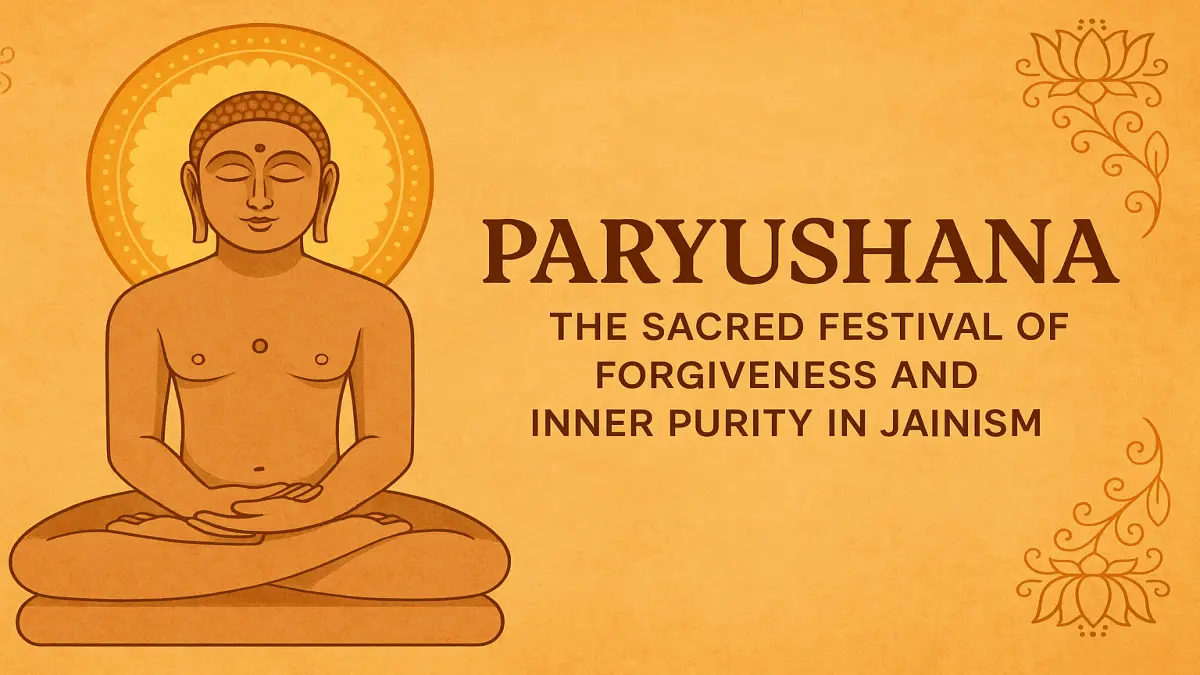
Paryushana is Jainism’s most sacred annual festival, observed by all sects through fasting, reflection, forgiveness, and reading of scriptures. Śvetāmbaras observe it for 8 days; Digambaras follow a 10-day Das Lakshana Dharma. Despite varying rituals, the unifying goal is spiritual purification and forgiveness, culminating in the moving gesture of seeking pardon through “Michhāmi Dukkaḍaṃ.”
Paryushana is one of the most revered and spiritually intense festivals in Jainism. Celebrated annually, it marks a period of deep reflection, penance, fasting, and forgiveness. What makes this observance extraordinary is not just its religious depth but its inclusivity—embracing all sects of Jainism, including the Śvetāmbara, Digambara, Terapanthi, Sthānakvāsī, and other sub-sects, each bringing unique traditions while upholding shared core values.
The word “Paryushana” is derived from Sanskrit roots meaning “to stay close” or “to come together,” symbolizing a reunion of the soul with its purest state. It typically falls in the monsoon season, around August or September, when wandering Jain monks and nuns halt their travels and settle in one place, allowing lay followers to receive their teachings and renew their spiritual focus.
Among Śvetāmbara Jains, Paryushana spans eight days and culminates in the festival of Samvatsari—the Day of Universal Forgiveness. Each day is dedicated to the recitation and reflection upon one of the ten cardinal Jain virtues: forgiveness (kṣamā), humility (mārdava), simplicity (ārjava), truth (satya), self-restraint (saṃyama), austerity (tapa), renunciation (tyāga), non-attachment (akiñcanya), celibacy (brahmacarya), and supreme penance (uttama tapa). Devotees read from the Kalpasūtra, a sacred Jain text that recounts the lives of the Tirthankaras, particularly Mahavira, the 24th Tirthankara.
In contrast, Digambara Jains observe a ten-day version known as Das Lakshana Dharma. While the Śvetāmbara emphasis is on reading and fasting, Digambaras focus on meditating upon and practicing the ten universal virtues (das lakshanas). For Digambaras, each day is dedicated to one virtue, beginning with forgiveness and culminating in supreme austerity. During this period, community members engage in pravachans (discourses), charitable acts, and increased spiritual austerities. Fasting—ranging from partial to absolute (nirjala)—is widely practiced across sects as a tool for purification.
Among Terapanthis and Sthānakvāsīs—sub-sects of the Śvetāmbara order with their own discipline and renunciatory traditions—the rituals may vary slightly, but the emphasis on inner reflection and detachment remains central. These sects often focus more on internal penance and self-discipline rather than elaborate temple rituals. Lay Jains may take lifelong or temporary vows of silence, practice scriptural reading, and partake in community ahimsa drives—such as animal rescue and environmental service.
The final day, Samvatsari (for Śvetāmbaras) or Kshamavani (for Digambaras, observed on a different date), is considered the holiest. Devotees seek forgiveness from friends, family, acquaintances, and even adversaries, uttering the heartfelt words: “Micchāmi Dukkaḍaṃ”—”If I have hurt you knowingly or unknowingly, in thought, word or deed, I seek your forgiveness.” It is a moving culmination to a period devoted to cleansing karma, rekindling compassion, and re-establishing harmony with all living beings.
While differences in observance exist among sects, the spirit of Paryushana unites all Jains. It transcends rituals and texts, directing the practitioner inward. The shared message is unmistakable—one of atonement, spiritual recalibration, and unconditional forgiveness. It is a festival that asks nothing from the world but everything from the self.
In a society grappling with division, restlessness, and materialism, Paryushana offers an oasis of introspection and peace. It reminds us that spiritual strength lies in renunciation, that true celebration begins with humility, and that the most profound victory is not over others—but over one’s own passions and ignorance.
May we carry forward the essence of Paryushana beyond its days—into every interaction, every thought, and every act. Michhāmi Dukkaḍaṃ.


