










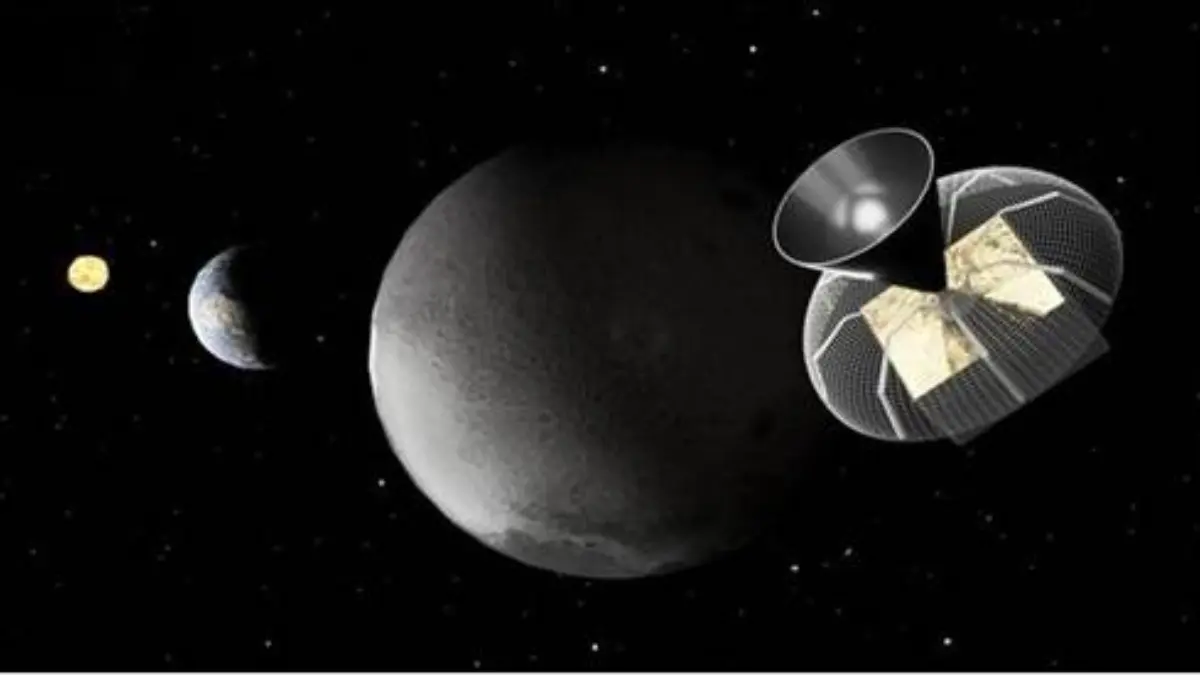
In the silent darkness of space, long before galaxies spun into shape or stars burned brightly, hydrogen atoms carried the universe’s earliest story. They emitted a faint 21-centimeter radio signal, a cosmic whisper that holds clues to how the first stars ignited and transformed their surroundings. Detecting this fragile signal has been one of astronomy’s greatest challenges. Now, scientists at the Raman Research Institute (RRI) in Bengaluru, India have designed a compact digital receiver system for PRATUSH, short for Probing ReionizATion of the Universe using Signal from Hydrogen. This homegrown innovation is bringing the world closer than ever to unlocking that ancient code.
The 21-Centimeter Key to the Cosmic Dawn
The 21-centimeter hydrogen line is more than just a frequency. It is the key to understanding the Cosmic Dawn, the era about 200 million years after the Big Bang when the first stars came to life. By studying this signal, scientists hope to map how hydrogen gas cooled, heated, and eventually ionized as starlight began sculpting the early universe.
Yet there is a catch. On Earth, the hydrogen signal is buried under interference that is millions of times stronger. Everything from mobile networks to broadcast towers drowns it out. To separate this faint cosmic fingerprint from the overwhelming noise requires extraordinary sensitivity, and that is where PRATUSH’s digital receiver system makes its mark.
A Digital Receiver Built for the Impossible
At the heart of PRATUSH lies a compact single-board computer that controls an entire radiometer system. Despite its small size, this computer serves as the brain of the operation. It manages three crucial elements:
- The antenna, which collects the faint 21-centimeter waves from space.
- The analog receiver, which carefully amplifies the fragile signals without distorting them.
- The digital processor, a Field Programmable Gate Array (FPGA) that transforms raw radio waves into usable digital data.
The computer not only synchronizes these components but also performs calibration, data storage, and real-time monitoring. By consolidating so many functions into one efficient system, the receiver achieves what once required racks of heavy hardware.
Why Compact Design Matters
Space missions demand systems that are light, reliable, and energy-efficient. PRATUSH’s digital receiver is built with these exact constraints in mind. A single-board computer, consuming very little power, supervises data capture and processing without the need for bulky equipment. This minimalistic design is not just about saving space. It allows the receiver to operate in orbit around the far side of the Moon, a radio-quiet zone free from Earth’s interference. From there, it can finally listen to the universe without the constant static of human technology.
Tested for Sensitivity, Tuned for Discovery
In laboratory conditions, the digital receiver has already demonstrated remarkable precision. Extended test runs showed that it could reduce internal noise to mere millikelvins, a level of sensitivity fine enough to distinguish the faint hydrogen line from background electronics. These results prove the system can detect signals at the razor-thin threshold required for Cosmic Dawn studies.
Engineers are now refining the algorithms that handle signal processing. Future iterations will replace commercial components with radiation-hardened hardware, ensuring the receiver can withstand the extreme conditions of space while maintaining its accuracy.
The Human Touch Behind the Technology
What makes this story compelling is not only the technology but also the people behind it. At the Raman Research Institute in Bengaluru, a team of Indian scientists and engineers set out with a bold idea: to shrink a system that usually demands racks of equipment into something so compact it could hitch a ride on a small lunar mission. Their ingenuity reflects a wider trend in space exploration, where resourceful design often matters more than raw power.
Instead of asking what could be removed, they asked how every function could be consolidated. The single-board computer does not just operate the radiometer, it also supervises the flow of data, runs calibrations, and provides storage. It is, in every sense, the brain and the backbone of the system. For India’s scientific community, PRATUSH represents not just a technological leap but also a statement of capability, proving that world-class innovation can be built locally, for a mission with global impact.
Opening the Universe’s Earliest Chapter
The development of PRATUSH’s digital receiver system represents more than a technical achievement. It reflects a philosophical shift in astronomy where profound discoveries do not always need massive telescopes or heavy payloads. Sometimes, a device the size of a credit card can become the key to answering questions as old as time.
By decoding the 21-centimeter hydrogen signal, PRATUSH could reveal how the first stars flickered into existence, how they influenced the seas of hydrogen around them, and how the universe evolved into the vast, structured cosmos we see today.
The Promise of Small but Mighty Technology
The journey to the Cosmic Dawn is still in its early stages, but the digital receiver system offers a clear path forward. Its success could inspire a new generation of compact, high-precision instruments designed to probe questions once thought out of reach.
If all goes as planned, this tiny receiver will soon be listening from one of the quietest corners of the solar system. In that silence, it may finally catch the universe’s first whisper, a signal that has traveled billions of years just to tell us how it all began.


