










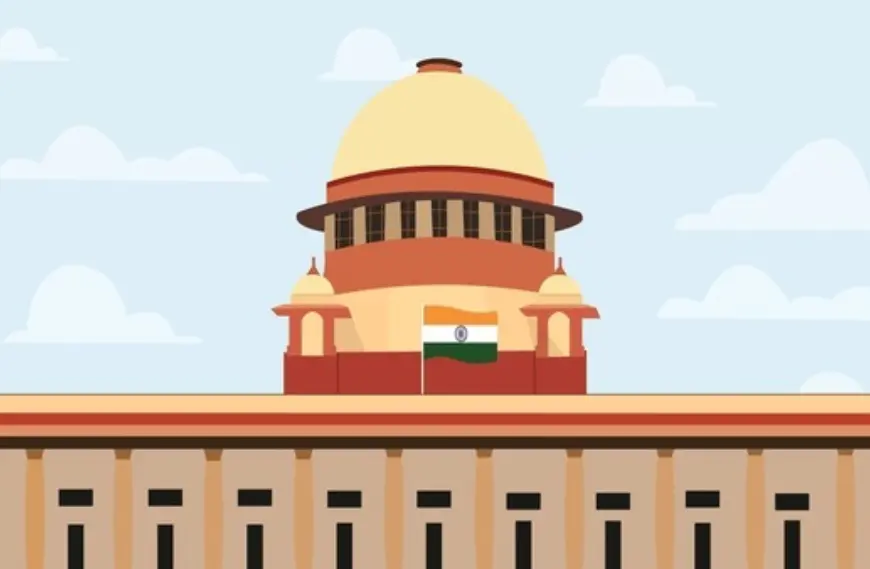
On 11 September 2025, the Supreme Court of India stepped in to correct what it called serious lapses by the Maharashtra police in the Akola communal violence case of 13 May 2023. The Court’s orders focus on concrete accountability steps: formation of a specially constituted investigation team, registration of an FIR, departmental action against erring officers, and measures to sensitize police personnel about their duties.
What the court ordered the key actions
- Set up an SIT immediately.
The Supreme Court directed the Maharashtra Home Secretary to constitute a Special Investigation Team (SIT) made up of senior police officers from both Hindu and Muslim communities. The SIT is to probe the allegations made by the petitioner, including the assault on him and the killing of an auto-rickshaw driver during the Akola clashes. - Register a fresh FIR.
The Court expressly ordered the registration of a First Information Report (FIR) in connection with the assault on the petitioner (dated 13.05.2023) so that a proper criminal investigation may proceed. - Disciplinary action against erring officers.
The state was directed to initiate appropriate disciplinary proceedings against police officials who failed in their duty, “in accordance with law and due procedure.” The judgment took a sharp view of what it described as a dereliction of duty by officers who did not investigate or act on the eyewitness account. - Timebound reporting to the Court.
The SIT’s findings and status of the FIR and related actions are to be placed before the Supreme Court within three months, creating a clear deadline for the state to show progress. - Sensitisation and training.
The Court also asked the state to sensitise the police force on basic legal obligations for example, the duty to register cognisable offences and to act impartially, without any personal or communal bias while in uniform.
- Immediate investigation with independent tone: By ordering an SIT with officers from different communities, the Court intends to build public confidence in the probe’s neutrality. The composition is aimed at removing any perception of communal bias in the investigation team itself.
- Enforcing procedure through FIR registration: An FIR is the formal legal starting point for a criminal probe in India. Ordering a fresh FIR removes procedural obstacles and allows proper evidence collection, witness statements, and forensic work.
- Discipline as a deterrent: Directing departmental action signals that police failures will have consequences, a measure designed to deter negligence or biased conduct in future incidents.
- Judicial oversight and deadline: The three-month reporting requirement ensures the matter is not left to drift and gives the Supreme Court an active supervisory role.
Practical implications for journalists and oversight bodies
- Track the SIT notification and members. Watch how the state frames the SIT names, ranks, and the exact terms of reference matter for assessing independence.
- Note the FIR number and charges. Reporting the registered FIR (and any changes) will be key to public accountability.
- Follow up on disciplinary proceedings. These are often internal; oversight bodies and legal aid organisations should request updates and, where necessary, file applications to press for transparency.
- Monitor the three-month timeline. The deadline for the SIT report provides a clear checkpoint for evaluation of state action.
The Supreme Court’s orders in the Akola matter lay out several accountability mechanisms: a specially constituted SIT, FIR registration, departmental action, sensitisation of the police, and a fixed reporting timeline. Taken together, these measures aim to restore trust that the law will be applied fairly and promptly, and to remind police officers that their duty while in uniform is to act without personal or communal bias. For journalists, legal aid groups and oversight bodies, the next steps are clear: monitor implementation closely, demand transparency on the SIT’s work, and ensure the Court’s directions are fully followed.


