










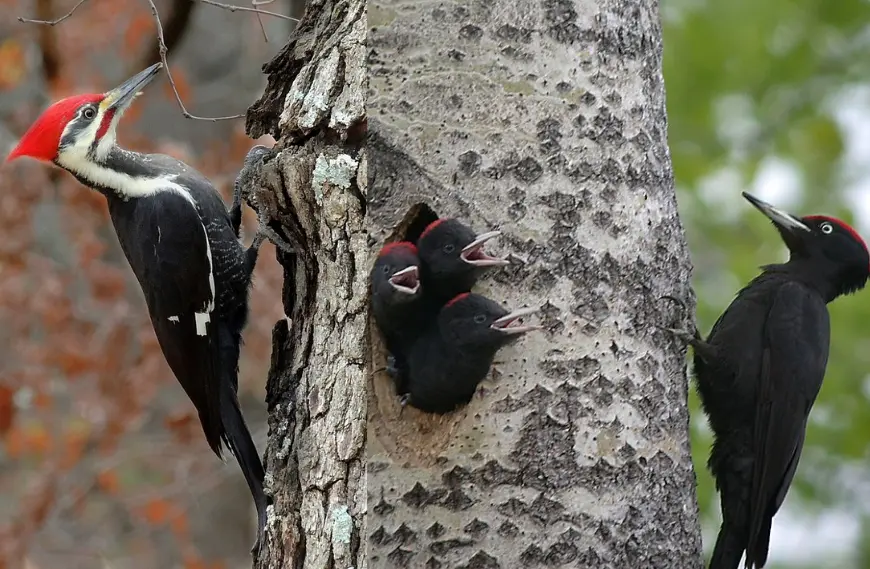
The rhythmic tapping of a woodpecker is one of the most distinctive sounds in forests worldwide. These birds are nature’s own percussionists, using their powerful beaks to drill into wood not only to find food but also to create nesting cavities. Beyond their impressive drumming, woodpeckers play critical roles in maintaining forest health and biodiversity.
The Sound of the Forest
Woodpeckers drum on tree trunks and branches to mark territory and attract mates. This drumming, which can echo through woodlands, varies by species in tempo and rhythm, functioning like a unique signature.
Unlike other birds that sing, woodpeckers rely on the percussive power of their bills. Some species even drum on metal objects like gutters and street signs, adapting to urban environments.
Incredible Adaptations
Woodpeckers have evolved a suite of physical features that let them hammer away with extraordinary force, up to 20 times per second, without injury:
- Shock-absorbing skulls with spongy bone and special cartilage protect their brains.
- A long, barbed tongue coated in sticky saliva extracts insects from deep crevices.
- Zygodactyl feet (two toes forward, two back) and stiff tail feathers provide stability during vertical climbs.
The Food Quest
Primarily insectivores, woodpeckers feed on beetle larvae, ants, and other wood-boring insects hidden beneath bark. By excavating dead or dying trees, they help control insect outbreaks and promote forest health.
Some species, like the acorn woodpecker, also cache food by drilling granaries — holes in trees where they store hundreds of acorns for winter.
Architects of the Woods
Woodpeckers are ecosystem engineers. The cavities they carve out are essential nesting sites not only for themselves but for many other species:
- Owls, swifts, and other birds use abandoned holes.
- Small mammals and reptiles find refuge in these spaces.
- Bats often roost in old woodpecker cavities.
This makes woodpeckers keystone species in forest ecosystems, maintaining biodiversity by creating habitats.
Global Diversity
There are over 200 species of woodpeckers, ranging from the tiny piculets to the massive imperial woodpecker (now possibly extinct). They inhabit forests, savannas, and even deserts across the Americas, Europe, Asia, and Africa.
Each species exhibits unique behaviour and drumming patterns adapted to local conditions.
Challenges and Conservation
Woodpeckers face threats mainly from:
- Habitat loss, especially logging of old-growth forests.
- Removal of dead trees, reducing feeding and nesting sites.
- Pesticides that reduce insect prey.
- Collisions with windows and vehicles.
Conservation efforts encourage maintaining deadwood in forests, creating nest boxes, and protecting critical habitats.
As bird ecologist Dr. John Woinarski states: “Protecting woodpeckers means protecting the lifeblood of forest ecosystems, dead trees alive with life.”


