










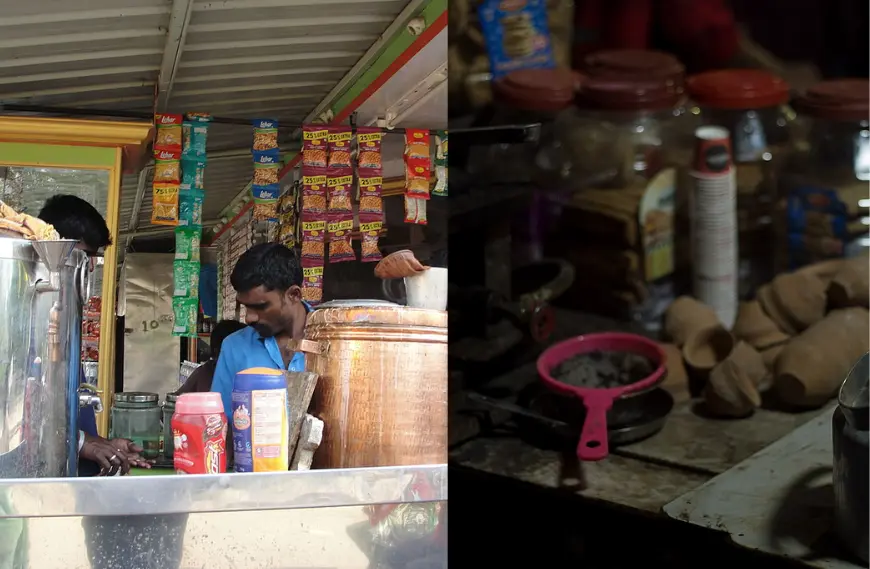
When you travel through India whether in a crowded city like Mumbai or a quiet village in Bihar you will always see a small chai ki tapri (tea stall) everywhere. It may be a wooden cart, a roadside shop, or just a man with a kettle and a few glasses. The smell of boiling tea, mixed with ginger, cardamom, and milk, spreads in the air and calls people towards it.
To an outsider, this may look like a simple food stall. But for Indians, a tea stall is much more than just a place to drink chai. It is a space of friendship, arguments, laughter, business, and community life.
Chai as a daily ritual
For millions of Indians, chai is not just a drink it is a daily habit. Many people start their morning with a hot glass of tea before they even have breakfast. For office workers and students, stopping at a tea stall on the way to work or college is a part of their routine.
Chai in India is also a symbol of sharing. Unlike coffee culture in the West, where people often drink alone, chai is almost always enjoyed with others. Friends stand together at the stall, colleagues take a break from work, travellers refresh themselves during long journeys.
A small glass of chai becomes the fuel for the day giving energy, comfort, and warmth. That is why tea stalls are so popular everywhere, from highways to railway stations, from busy markets to tiny villages.
An Incident I experienced at a tea stall
Once, I was at a small tea stall where a group of three people were sitting, sharing their life’s problems. Suddenly, an unknown person joined them and started talking about his own life. Before I knew it, the group grew from three to six people. I was amazed at how a single cup of tea could bring so many people together.
The social hub of India
A tea stall is not only a shop, it is often called an ‘adda’, a place where people gather and talk. It acts like a small community centre, open to anyone who wants to stop by.
At a tea stall, you will find people from different backgrounds standing together. A rickshaw driver, a college student, a shopkeeper, and even a businessman may all share the same space. Over a cup of tea, they talk about cricket, politics, cinema, or the latest news.
Sometimes these conversations get serious, with people debating passionately about elections or government policies. Other times, it is light-hearted gossip about a film star or a neighbour.
For many, the tea stall is also a place of relaxation and friendship. Students plan their futures there, workers share their problems, and strangers become friends. In villages, the tea stall often becomes the main source of local news, faster than newspapers or TV.
The economy of a tea stall
While it looks small, a tea stall is a powerful business. A single cup of chai usually costs between ₹10 to ₹20, but when you sell hundreds of cups daily, it adds up to a good income.
Most tea stalls are run by families, and the money they earn supports their children’s education, household expenses, and sometimes even helps them expand into bigger shops.
India is the second-largest producer of tea in the world, and much of this demand comes from local tea stalls. If you think about it, the ‘chai economy’ involves not only stall owners but also milk suppliers, sugar traders, spice sellers (for ginger and cardamom), glass manufacturers, and even transporters.
Some tea stalls have grown into famous brands. For example, Chai Point and Chaayos started as small tea-selling businesses but are now multi-crore companies with outlets across cities. This shows how something as simple as a tea stall can inspire big businesses.
The cultural symbol of togetherness
One of the most beautiful things about Indian tea stalls is that they are places where everyone is equal. Whether you are rich or poor, young or old, you stand at the same counter and drink tea from the same kind of glass.
This creates a strong feeling of unity and togetherness. A CEO of a company and a daily wage worker can both stand next to each other, enjoying the same taste of chai. No one asks who you are, what you earn, or where you come from. At the tea stall, everyone is simply a tea lover.
This is why many people say that chai stalls are not just about drinking tea, they are about breaking social barriers and reminding us of the values of equality.
Innovation and storytelling at tea stalls
Every tea stall has its own story. Some are famous for their unique recipes like cutting chai, tandoori chai, and masala chai, while others are known for their butter chai—just add butter to the tea, and there you have it: butter chai. Others are famous because of the personality of the tea seller, like ‘Dolly Chai Wala’
Some chaiwalas (tea sellers) make jokes, tell stories, or even sing songs while preparing tea. Customers come back not only for the taste but also for the experience. Over time, these stalls become local legends.
With time, tea stalls are also modernising. Many now accept digital payments, use eco-friendly kulhads (earthen cups), or experiment with flavours like green tea, lemon tea, and herbal blends. This mix of tradition and modern style keeps tea stalls alive and popular even in today’s fast-changing world.
The ripple effect on society
A tea stall is not only a place to relax but also a place where ideas are born. Many political discussions, social movements, and even small business plans have started at tea stalls. Writers, poets, and journalists often say that they get inspiration from listening to conversations at their favourite chai spot.
For young people, the tea stall is sometimes the first place they discuss their dreams. For older generations, it is a reminder of simpler times. This shows how tea stalls play a silent but powerful role in shaping India’s social and cultural life.
More than just chai
When you look carefully, a tea stall is never just about chai. It is about connection, culture, and community. It is about the simple joy of standing with others, holding a warm glass, and feeling part of something bigger.
Tea stalls remind us that life is not only about big achievements or expensive luxuries. Sometimes, the smallest places give us the biggest comfort.
Indian tea stalls may look small, but their importance is huge. They are places where business, culture, and community come together. They provide income to millions, connect strangers, create stories, and offer comfort to anyone who walks in.
So, the next time you stop at a tea stall for a quick cup of chai, remember you are not only drinking tea. You are becoming part of a tradition that has been running for generations, a tradition that makes Indian tea stalls one of the most unique social spaces in the world.


