










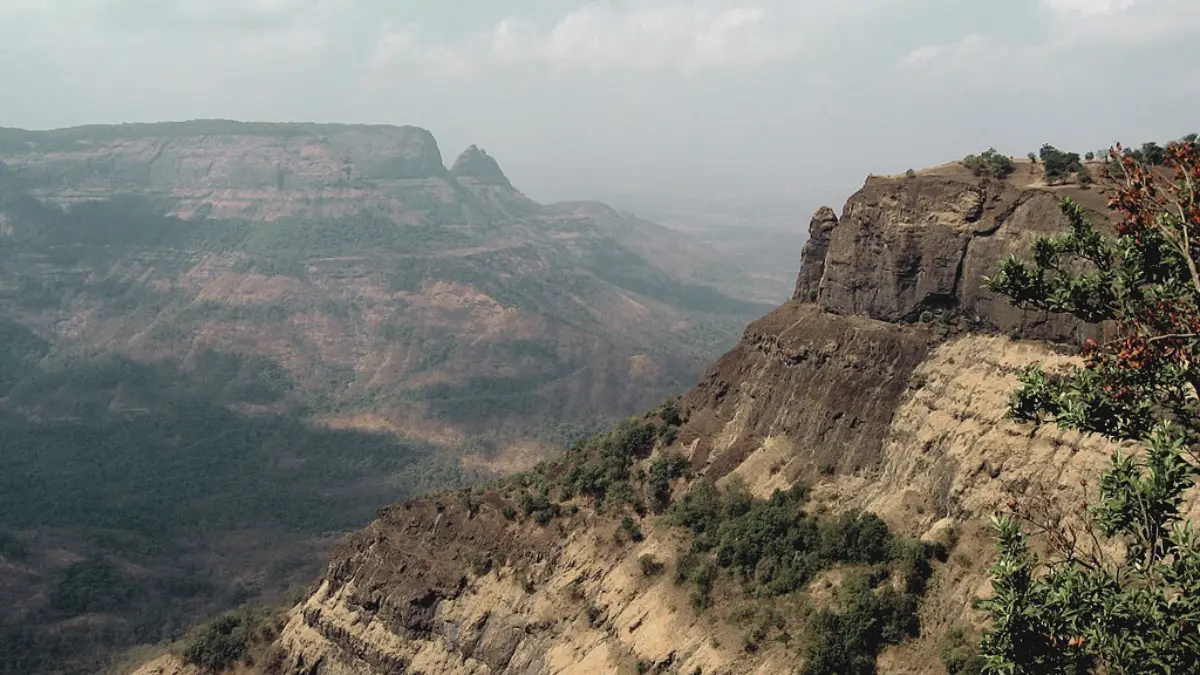
The Peninsular Plateau forms the very foundation of India. This ancient, stable landmass stretches across the Deccan, Vindhya, Satpura, Chotanagpur and Malwa regions. Although it lacks towering peaks, it is far older than the Himalayas. In fact, some of its rocks date back over 3.5 billion years. It serves as the geological core of the Indian subcontinent.
To truly understand India, its rivers, natural resources, agriculture and ancient civilisations—it is important to understand the plateau itself.
How the Plateau Came Into Being
Before the Indian tectonic plate began drifting north to meet Asia, it was part of the ancient supercontinent Gondwana. Over hundreds of millions of years, volcanic eruptions, crustal shifts and erosion shaped the rugged terrain we now call the Peninsular Plateau.
Unlike the Himalayas, which are still rising due to tectonic activity, this plateau remains geologically stable. Around 65 million years ago, a massive volcanic event created the Deccan Traps, a vast region of layered basalt that now spans over 500,000 square kilometres.
Dividing the Plateau: Regions and Ranges
The plateau can be divided into three broad regions:
- The Deccan Plateau, located south of the Narmada River, covers parts of Maharashtra, Karnataka, Telangana, Andhra Pradesh and Tamil Nadu. Its black basaltic soils are among the most fertile in India, especially good for growing cotton and pulses.
- The Central Highlands, lying between the Vindhya and Satpura ranges, include parts of Madhya Pradesh, eastern Rajasthan and Chhattisgarh. These highlands feature forests, hills and mineral-rich valleys.
- The Northeastern Plateau, which includes the Chotanagpur Plateau across Jharkhand, Odisha and West Bengal, holds India’s largest reserves of coal, iron ore and mica.
In each region, rivers carve out deep valleys. The landscape includes flat-topped hills known as mesas and scattered rocky hills called tors.
Rivers That Shape the Plateau
Several major rivers drain the Peninsular Plateau. These include the Godavari, Krishna, Kaveri, Mahanadi and Narmada. Over time, these rivers have eroded the hard rock, forming dramatic gorges and waterfalls. Examples include the Marble Rocks in Bhedaghat and Hogenakkal Falls on the Kaveri.
Because the plateau gently slopes from west to east, most rivers flow into the Bay of Bengal. However, the Narmada and Tapi rivers flow westward, forming rift valleys before entering the Arabian Sea.
These rivers irrigate farmland, support towns and cities, and serve as key sources for hydroelectric power.
Soils That Feed the Land
The soils of the Peninsular Plateau have supported farming for thousands of years. Each soil type offers unique agricultural advantages:
- Black cotton soil (Regur), derived from basalt, holds moisture and is rich in minerals. It is ideal for growing cotton.
- Red soil, common in Karnataka, Tamil Nadu and Odisha, forms from crystalline rocks. Though less fertile, it can support crops like millets and groundnuts with proper management.
- Laterite soil, found in areas with heavy monsoon rainfall such as Kerala and the Western Ghats, is acidic but useful for growing spices and plantation crops.
Forests and Mineral Wealth
The plateau hosts dense forests of teak, sal, sandalwood and bamboo. These provide habitats for a variety of wildlife including tigers, elephants and sloth bears. National parks such as Bandipur, Kanha and Simlipal showcase this biodiversity.
In terms of minerals, the plateau is vital to India’s industrial economy. It provides iron ore from Bailadila and Noamundi, coal from Jharia and Raniganj, manganese from Balaghat and bauxite from the Eastern Ghats.
Ancient Civilisations That Once Thrived
Because of its rivers and resources, the plateau became a cradle of early human settlements. Neolithic sites like Piklihal and Tekkalakota in Karnataka, megalithic burial grounds in Vidarbha and the ancient city of Sisupalgarh in Odisha are important archaeological sites.
Later, great empires such as the Satavahanas, Chalukyas, Rashtrakutas and Vijayanagara rose in this region. Their architectural legacy lives on in places like Badami, Pattadakal and Hampi.
The Plateau in Modern India
Today, the Peninsular Plateau is home to major cities like Bengaluru, Hyderabad, Pune, Nagpur and Raipur. These urban centres have become hubs for information technology, manufacturing and education.
However, the region faces serious environmental challenges. Deforestation, soil erosion, water shortages and pollution from mining continue to threaten the plateau’s ecosystems.
The Peninsular Plateau is more than just a physical feature on the map. It is a witness to India’s ancient past, a support for its present and a key to its future. From billion-year-old rocks to vibrant cities and sacred rivers, the plateau tells stories worth preserving. Protecting its forests, soils and waters is essential for ensuring long-term balance and sustainability.


