




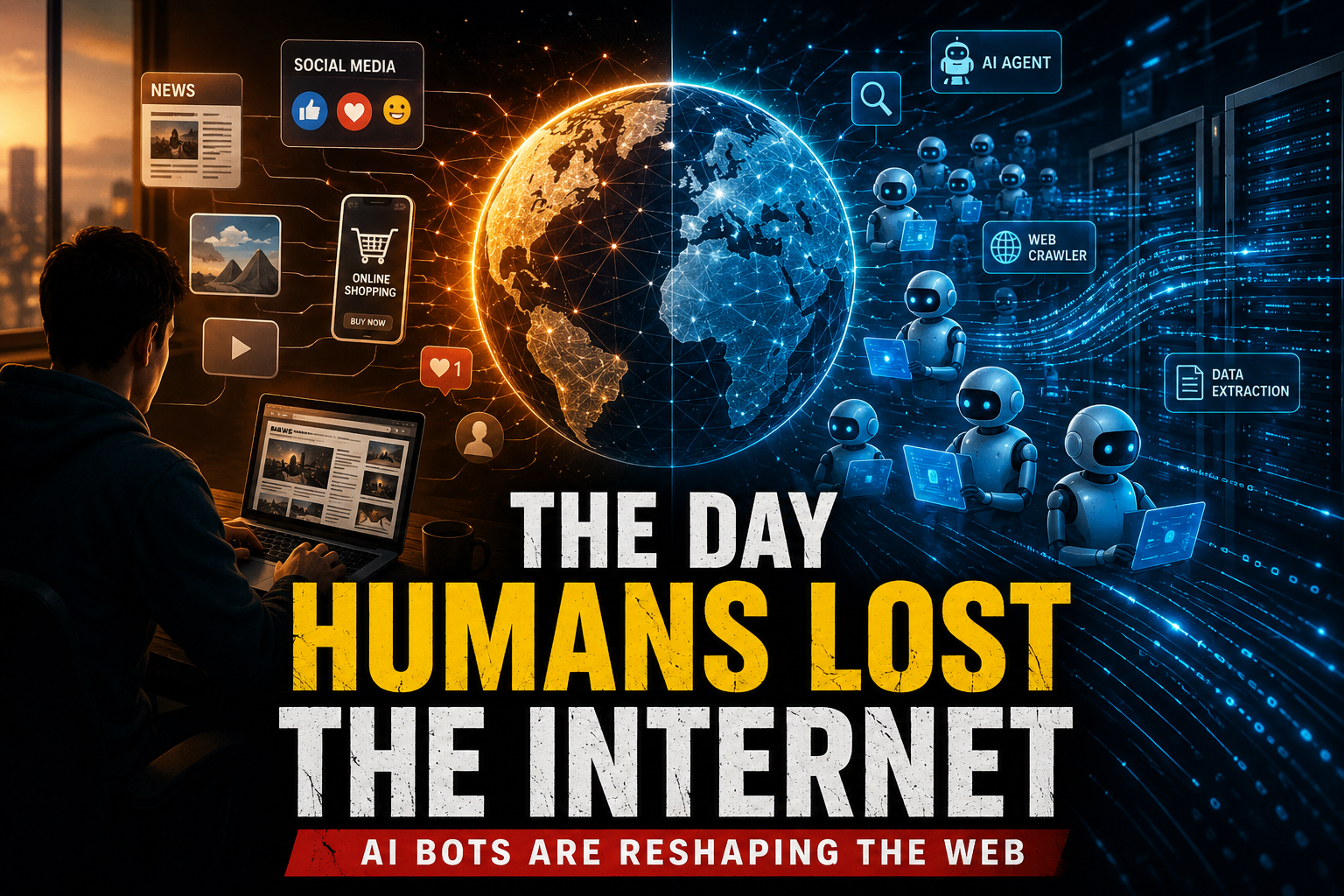
For nearly three decades, the internet has operated on a simple assumption: a human being sits behind every click.
Whether it was searching on Google, scrolling through social media, reading the news or shopping online, the web was built primarily for people. Yet a growing body of evidence suggests that the internet is entering a new phase, one in which machines are increasingly interacting with other machines on behalf of humans.
The latest sign of this shift comes from Google. The technology giant is exploring new ways to verify that users are human, moving beyond traditional CAPTCHA systems that have long been used to distinguish people from automated software. While the move may seem like a routine security upgrade, it reflects a much larger transformation taking place across the digital world.
According to Cloudflare, one of the world’s largest internet infrastructure companies, automated traffic now accounts for a significant share of the web activity it monitors. The company has reported that bot traffic has grown rapidly in recent years, fuelled in part by the rise of artificial intelligence tools and automated agents.
The development marks an important moment in the evolution of the internet.
The rise of AI agents
Bots are not new. Search engines have relied on automated crawlers for decades to index websites and organise information. Businesses use bots to monitor prices, analyse market trends and track inventory. Cybersecurity firms deploy automated tools to identify threats and suspicious activity.
What is different today is the emergence of AI agents.
Unlike traditional bots that perform a single function, modern AI systems can carry out more complex tasks. They can browse websites, compare products, gather information and complete actions with limited human involvement. In many cases, they can interact with online services in ways that increasingly resemble human behaviour.
Industry observers say the growth of AI powered tools is accelerating a broader shift in internet traffic patterns. As AI assistants become more capable, machines are spending more time navigating the web on behalf of users.
In simple terms, the internet is no longer just a place where humans use machines. Increasingly, machines are using other machines for humans.
Why CAPTCHAs are becoming less effective
For years, internet users have been familiar with CAPTCHAs, those tests that ask people to identify traffic lights, bicycles, buses or crosswalks in a set of images.
These challenges were designed to stop automated programs from creating fake accounts, posting spam or abusing online services. However, advances in artificial intelligence have made many of these traditional verification methods less reliable.
AI systems have become increasingly capable of recognising images, solving puzzles and mimicking human actions. As a result, technology companies are looking for alternative ways to confirm that a real person is behind a particular action.
Google’s latest efforts are part of this broader trend. Rather than relying solely on image based tests, companies are exploring methods that use device signals, browsing patterns and other verification technologies to distinguish humans from bots.
The goal is to reduce friction for genuine users while improving protection against increasingly sophisticated automated systems.
A growing challenge for publishers
The rise of AI agents is also creating new concerns for publishers, content creators and businesses.
Traditionally, websites attracted human visitors who read articles, watched videos or viewed advertisements. That traffic helped fund journalism, research and original content creation.
Today, many AI tools can gather information from websites and present summaries or answers directly to users. In some cases, the user may never visit the original source.
This has sparked an important debate within the media and technology industries. If AI systems become major consumers of online content, how will publishers continue to generate revenue from the information they create?
The answer is still unclear, but the conversation is becoming increasingly urgent.
The security implications
The growth of automated traffic also raises security concerns.
Cybercriminals are using more advanced bots to scrape data, create fake accounts and automate fraudulent activities. Some systems are now capable of imitating human browsing behaviour, making them more difficult to identify.
In response, researchers and technology companies are developing new ways to distinguish between human users and AI driven systems. Behavioural analysis, device verification and cryptographic authentication are among the approaches being explored.
As artificial intelligence continues to advance, the contest between bot developers and security experts is likely to intensify.
The future of the internet
Despite concerns about growing automation, humans are not disappearing from the internet.
People still drive much of the activity associated with communication, entertainment, social media and online communities. What is changing is the role machines play in helping users navigate the web.
The internet is gradually evolving into a hybrid environment where humans and AI agents work together. Companies such as Google, Cloudflare and Microsoft are already adapting their systems to reflect this reality.
The next chapter of the internet may not be defined solely by how humans use technology. Instead, it may be shaped by how intelligent machines interact with one another while carrying out tasks on behalf of people.
For the first time since the birth of the modern web, verifying that someone is genuinely human is becoming one of the most important challenges facing the digital world. How technology companies respond could help define the future of the internet itself.
Subscribe Deshwale on YouTube
