




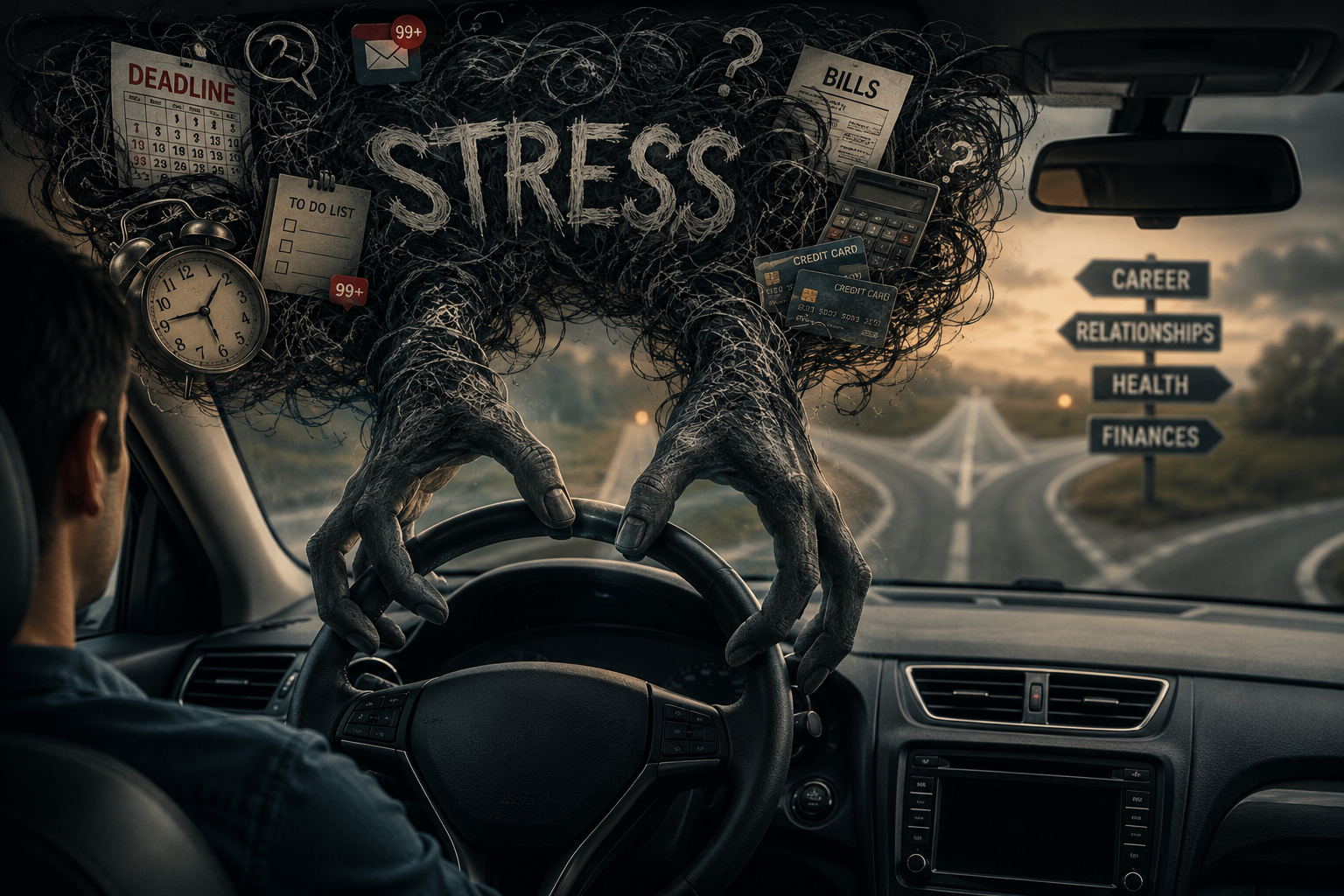
Most people think stress is easy to recognise. They imagine sleepless nights, constant worry, racing thoughts or feeling overwhelmed. Yet stress does not always announce itself so clearly. Sometimes it slips quietly into everyday life and begins influencing the choices we make without us even noticing.
You may believe you are making rational decisions about your career, relationships, finances or health. However, stress could be affecting your judgement more than you realise.
Psychologists have long studied the impact of stress on the human mind. Research suggests that prolonged stress can affect attention, memory, emotional regulation and decision-making. As a result, people under sustained pressure may find it harder to evaluate situations calmly and make balanced choices.
Why stress changes the way we think
When the brain perceives a threat, the body activates its stress response. Hormones such as cortisol and adrenaline are released, helping us react quickly to danger. This response can be useful in emergencies. It allows us to focus our attention, respond rapidly and protect ourselves.
The challenge arises when stress becomes a regular part of daily life.
Modern living exposes people to a range of ongoing pressures. Work deadlines, financial concerns, family responsibilities, health worries and constant digital connectivity can keep the body in a prolonged state of alertness. Research suggests that long-term stress can affect functions associated with brain regions involved in reasoning, planning, attention and self-control.
When stress becomes chronic, people may find it more difficult to think clearly. They may become less patient, more emotionally reactive and more likely to make decisions based on immediate feelings rather than careful reflection.
The rise of impulsive decisions
One common effect of stress is an increased tendency towards impulsive behaviour.
Many people can recall buying something they did not need after a difficult day, sending a message they later regretted or making a rushed decision simply to escape an uncomfortable situation. These actions are not always caused by stress alone, but stress can increase the likelihood of such behaviour.
Under pressure, people may become more focused on immediate relief and less attentive to long-term consequences. The desire to reduce emotional discomfort can become stronger than the desire to carefully weigh every option.
This may lead to overspending, abandoning important goals, taking unnecessary risks or turning to unhealthy coping habits. The decision can feel right in the moment because it provides temporary relief. Later, when the pressure eases, the drawbacks may become more apparent.
When overthinking becomes a trap
Stress does not always make people act too quickly. Sometimes it has the opposite effect.
Many individuals become trapped in cycles of overthinking. They repeatedly analyse possible outcomes, replay conversations in their minds and struggle to make even simple choices.
A decision that should take minutes can begin to consume hours or even days.
This experience is often described as decision paralysis or analysis paralysis. While not a medical diagnosis, it is a recognised behavioural pattern in which fear of making the wrong choice makes it difficult to make any choice at all.
In such situations, stress is still influencing behaviour. The result is not impulsive action but prolonged hesitation.
The hidden impact on relationships
Stress rarely affects only one part of a person’s life.
Someone dealing with work pressure may become impatient with family members. A person worried about finances may withdraw from social interactions. Small disagreements can suddenly feel much larger than they really are.
Mental health professionals often identify irritability as a common sign of stress. When people are already carrying a heavy emotional burden, they may have less capacity to deal calmly with everyday frustrations.
As a result, decisions made during stressful periods can affect relationships. An argument, a harsh comment or an emotional reaction may create consequences that last longer than the stressful situation itself.
Why smart people are not immune
There is a common belief that intelligence protects people from poor decisions. Research suggests otherwise.
Highly educated professionals, successful business leaders and experienced decision-makers can all make questionable choices when facing sustained pressure.
The issue is not a lack of intelligence. Rather, stress can place additional demands on mental resources that are needed for concentration, self-control and careful judgement.
When the mind is occupied by worry, uncertainty or emotional strain, it may become harder to process information effectively. Even people who are normally thoughtful and disciplined can struggle to maintain their usual level of judgement.
Recognising the warning signs
The difficulty is that stress often disguises itself as normal behaviour.
You may notice that you are procrastinating more than usual. You may struggle to focus, feel unusually impatient or find routine tasks more difficult than they once were. Decisions that previously seemed straightforward may suddenly feel overwhelming.
Some people become emotionally reactive. Others become emotionally withdrawn.
These changes are not always signs of a serious problem, but they can indicate that stress is beginning to affect daily functioning and decision-making.
Taking back control
The good news is that stress does not have to control your choices.
The first step is awareness. Before making an important decision, it can help to pause and ask a simple question: “Am I responding to the situation itself, or am I responding to stress?”
Creating space before major decisions can also be valuable. A good night’s sleep, physical activity, time outdoors or a conversation with someone you trust may provide a clearer perspective.
Research consistently shows that healthy sleep, regular exercise, social support and effective stress-management habits can help improve emotional regulation and cognitive performance.
More than a mental health issue
Stress is often discussed as a mental health concern, but its effects extend into many areas of life. It can influence careers, finances, relationships and everyday decisions.
Many of the choices that shape our futures are made during periods of uncertainty and pressure. Understanding how stress affects thinking can help people make more informed decisions and recognise when they may need support or time to reflect.
The next time you find yourself acting impulsively, delaying an important choice or struggling to think clearly, it may be worth looking beyond the decision itself.
The issue may not be a lack of intelligence, experience or willpower.
It may simply be that stress has been influencing your judgement more than you realise.
Subscribe Deshwale on YouTube
